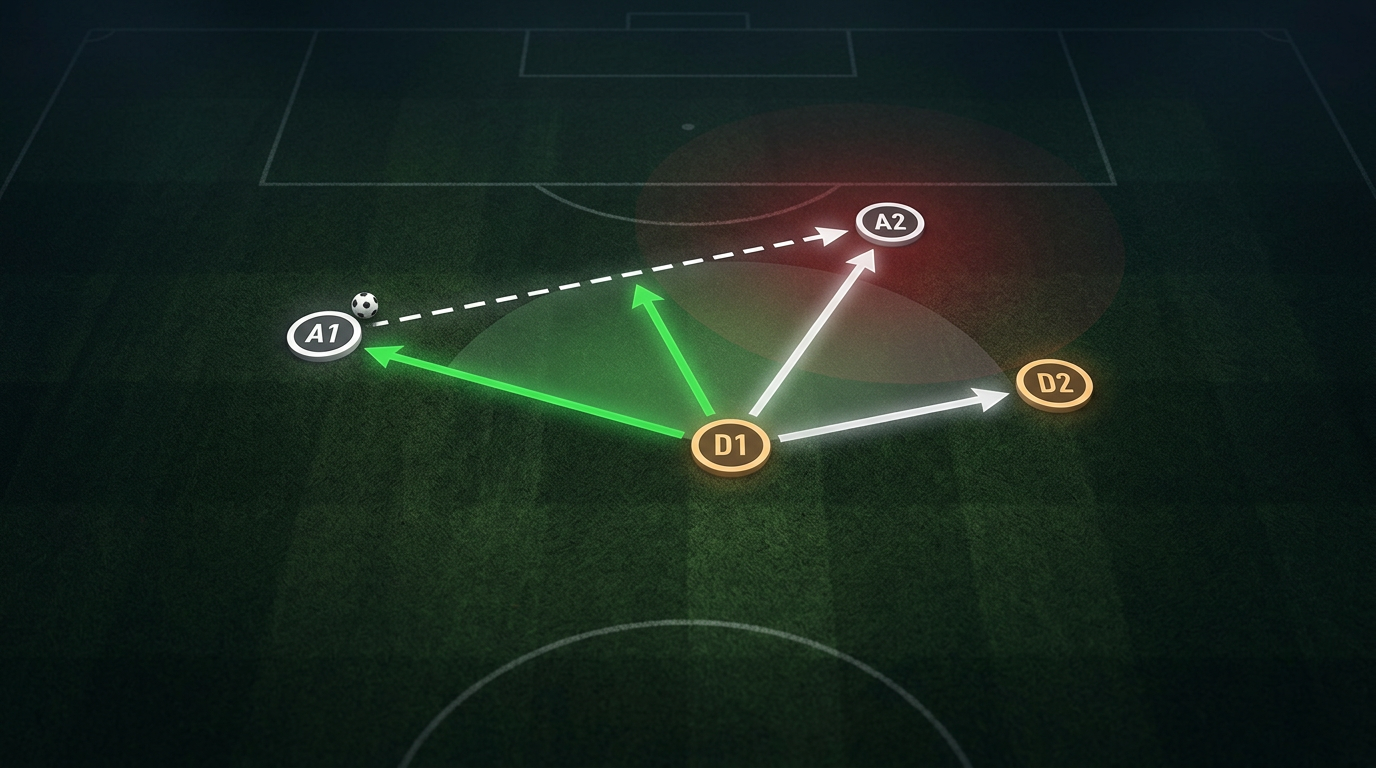
Picture this: your child is playing in defence, an opponent has the ball, and then you spot it – another opposition player starts making a clever run, heading for goal. You can see the danger unfolding, but on the pitch, your child seems momentarily frozen, or perhaps they make a choice that doesn't quite seem to cover both threats.
It’s a situation that plays out in countless youth matches, leaving us, the parents, wondering what was going through their heads. Why didn't they close down the ball carrier more quickly? Or, why did they let that runner get free? The truth is, these moments present a complex challenge, one where a young player often has to defend two things at once.
The Pull of the Ball
For many young footballers, the ball is the most magnetic object on the pitch. It's what they're instinctively drawn to, the 'thing' to be won. When an opponent has possession, the natural inclination is to get as close as possible and try to tackle or pressure them. This direct approach feels proactive and impactful.
However, this single-minded focus, while understandable, can sometimes leave other threats open. They might be so focused on winning the ball that they momentarily forget about the space behind them, or the clever run an opposing player is making into that very space.
Defending the Ghost Threat
While the ball is tangible, a 'passing lane' isn't something you can see or touch. It’s an imaginary line, a potential route the ball could take. For a child, positioning their body to block this invisible pathway, rather than directly engaging with the player or the ball, requires a different kind of awareness.
It means thinking a step ahead, understanding where the ball might go, not just where it is. It's about denying the opponent options, which is a more subtle form of defending than a straightforward tackle. This takes experience and a developing understanding of the flow of the game.
Balancing Two Dangers
Imagine being told to guard your lunchbox and also make sure no one opens the fridge, all at the same time. This is a bit like what a young defender faces: one opponent has the ball (the lunchbox), and another is making a dangerous run into space (the fridge door opening).
The real challenge is trying to solve both problems simultaneously. Do they go hard for the ball, knowing a pass might slip through? Do they cover the runner, leaving the ball carrier with more time? Or do they try to position themselves somewhere in between, blocking the potential pass while still being close enough to the player with the ball? There's no single 'easy' answer in the moment, especially under pressure.