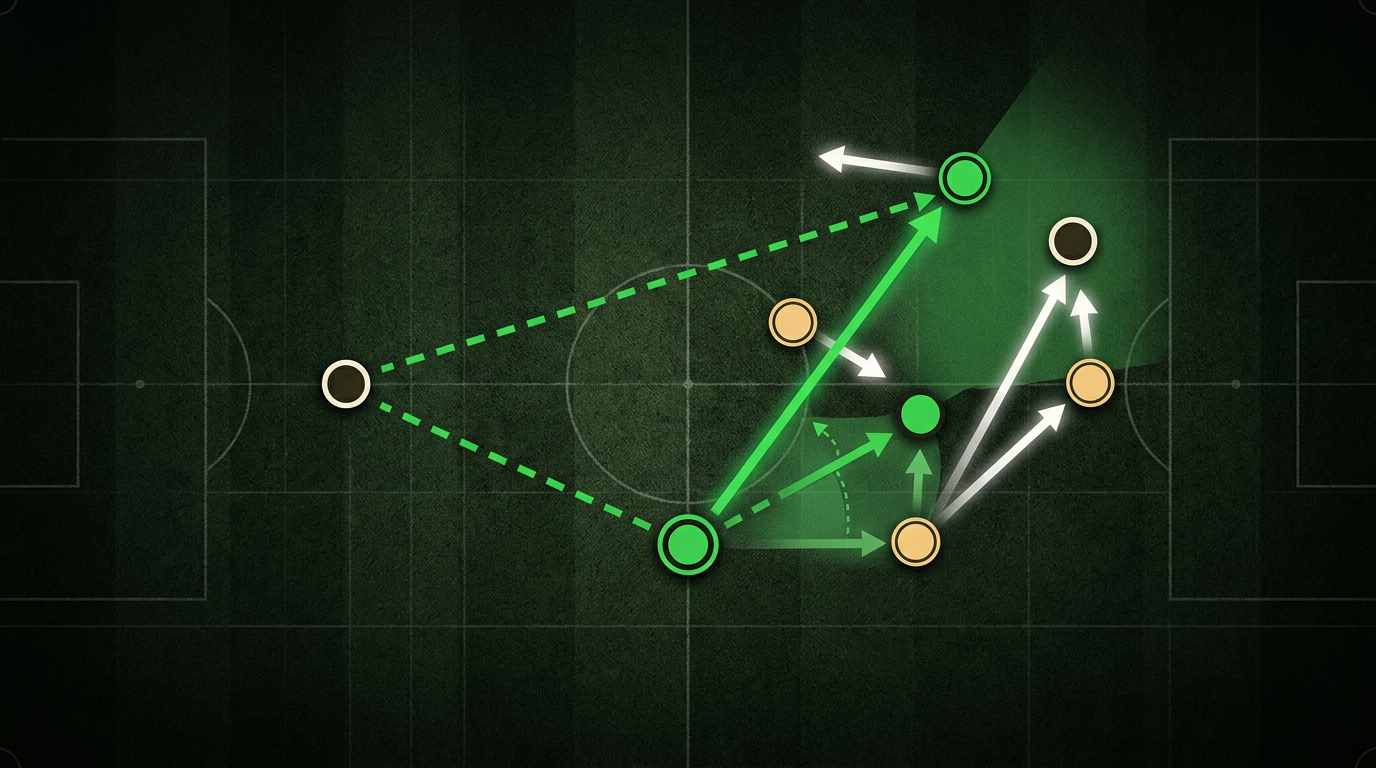
Picture this: your child has just won the ball, maybe in the middle of the pitch. They look up, perhaps a little frantically, and then launch a pass towards a teammate who seems to be surrounded by three opposition players. Meanwhile, another teammate is standing completely by themselves, waving their arms, seemingly forgotten.
From our vantage point, it can look like an obvious mistake. Why didn't they pass to the 'free' player? But the pitch is a very different place when you’re down there in the thick of it, especially for young players learning the game.
The World Through Their Eyes: Information Overload
When a young player gets the ball, their brain is suddenly flooded with information. Where’s the opponent? Where’s the goal? Where are my teammates? All of this is happening at speed, often under pressure, and with the added challenge of controlling a bouncing, rolling ball.
For an adult, scanning the pitch and quickly identifying who is 'free' might feel instinctive. For a child, this is a complex skill that takes years to develop. They might be so focused on just keeping possession, or on the closest defender, that the wider picture momentarily shrinks.
Recognising 'Marked' vs. 'Free' is Tough
Even if they do look up, deciding who is genuinely 'free' is trickier than it looks. A player might look free for a split second, only for an opponent to close them down just as the pass is made. Or, a teammate who appears marked might suddenly create a tiny pocket of space. It's a moving puzzle, and the pieces are constantly shifting.
Sometimes, a child might pass to a marked player because that player is usually reliable, or because they're simply the first teammate they see. It’s not necessarily a tactical error, but more about their developing ability to process a chaotic environment and make split-second risk assessments.
The Impulse to Connect
Another factor is the natural human desire to connect. Young players often want to involve their friends, or perhaps they have a strong bond with a particular teammate they often pass to. This social aspect can sometimes, understandably, override a purely tactical decision, especially at younger ages.
They might also be driven by a desire to get rid of the ball quickly if they feel pressure, and the nearest option, even if marked, seems like the safest escape route in their immediate perception.