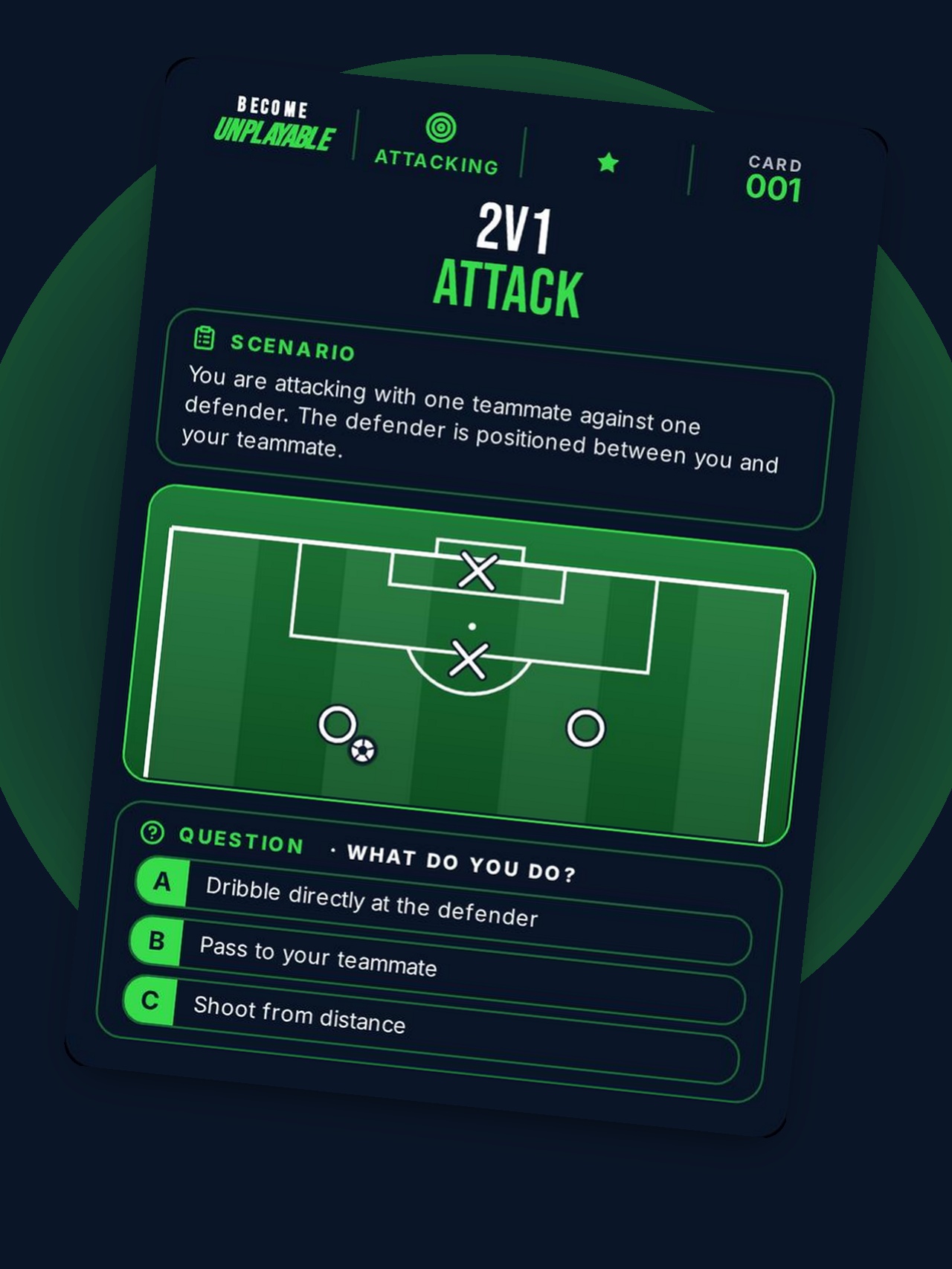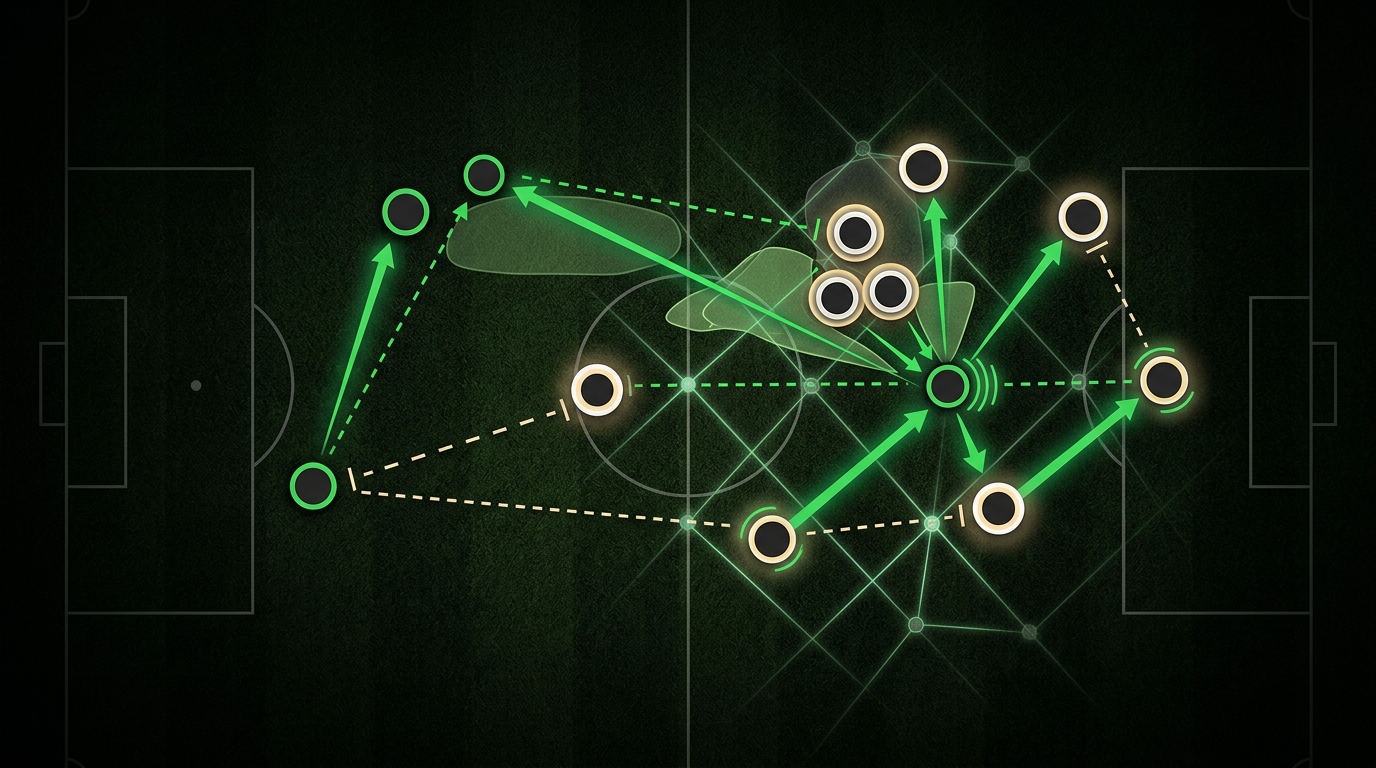
Picture this: the ball is with your child out wide, they’ve beaten one defender, and suddenly, a teammate comes steaming past on the outside. It looks like an open invitation, a clear path to goal, a moment begging for a simple pass into space. Yet, more often than not, the ball stays with your child, or it goes backwards, or perhaps even into a defender. From the touchline, it seems obvious what should have happened. But in the hurly-burly of a match, what feels straightforward to us can be incredibly complex for a young player.
That surging run, the ‘overlap’, is a brilliant piece of attacking play that creates confusion for defenders. But it also creates a split-second dilemma for the player on the ball, one they might not even consciously register at the time.
Seeing the Whole Picture Takes Time
For many young players, their focus is very much on the ball itself, and perhaps the immediate defender. It’s hard enough to keep control of the ball, navigate the space, and decide where to go next, all while an opponent is trying to take it away. To then also scan the pitch, recognise a teammate's run developing behind them, understand its intent, and then execute a pass into a moving target – that’s a lot for a developing brain to process in a fraction of a second.
Their ‘field of vision’ in those moments can be quite narrow, almost like looking through a tunnel. They might genuinely not see the runner until it’s too late, or they might only glimpse them as a blur, not enough to act upon.
The Instinct to Keep and Control
When a child has the ball, especially after doing something positive like beating a defender, there’s a natural instinct to keep it. They’ve worked hard to win possession or keep hold of it, and giving it up – even to a teammate in a better position – can feel counter-intuitive. They might be thinking, “I’m in a good spot, I can still dribble past this player,” without fully appreciating the extra advantage the overlapping run has created.
Passing the ball means letting go of control, and that can feel risky. What if the pass isn't good? What if the teammate loses it? It’s often safer, in their mind, to continue what they’re already doing, even if a better option has just presented itself.
Timing and Communication are Key (and Hard)
An effective overlap relies on exquisite timing from both players. The runner has to time their burst into space, and the player on the ball has to time their pass. If the pass comes too early, the runner might be offside; too late, and the space might be closed down. This requires a level of synchronisation and communication that takes years to develop.
Sometimes, the teammate making the run might not communicate it clearly enough – or perhaps your child doesn’t hear or register the shout in the heat of the moment. Without that clear signal, it’s even harder for them to make the right decision instantly.