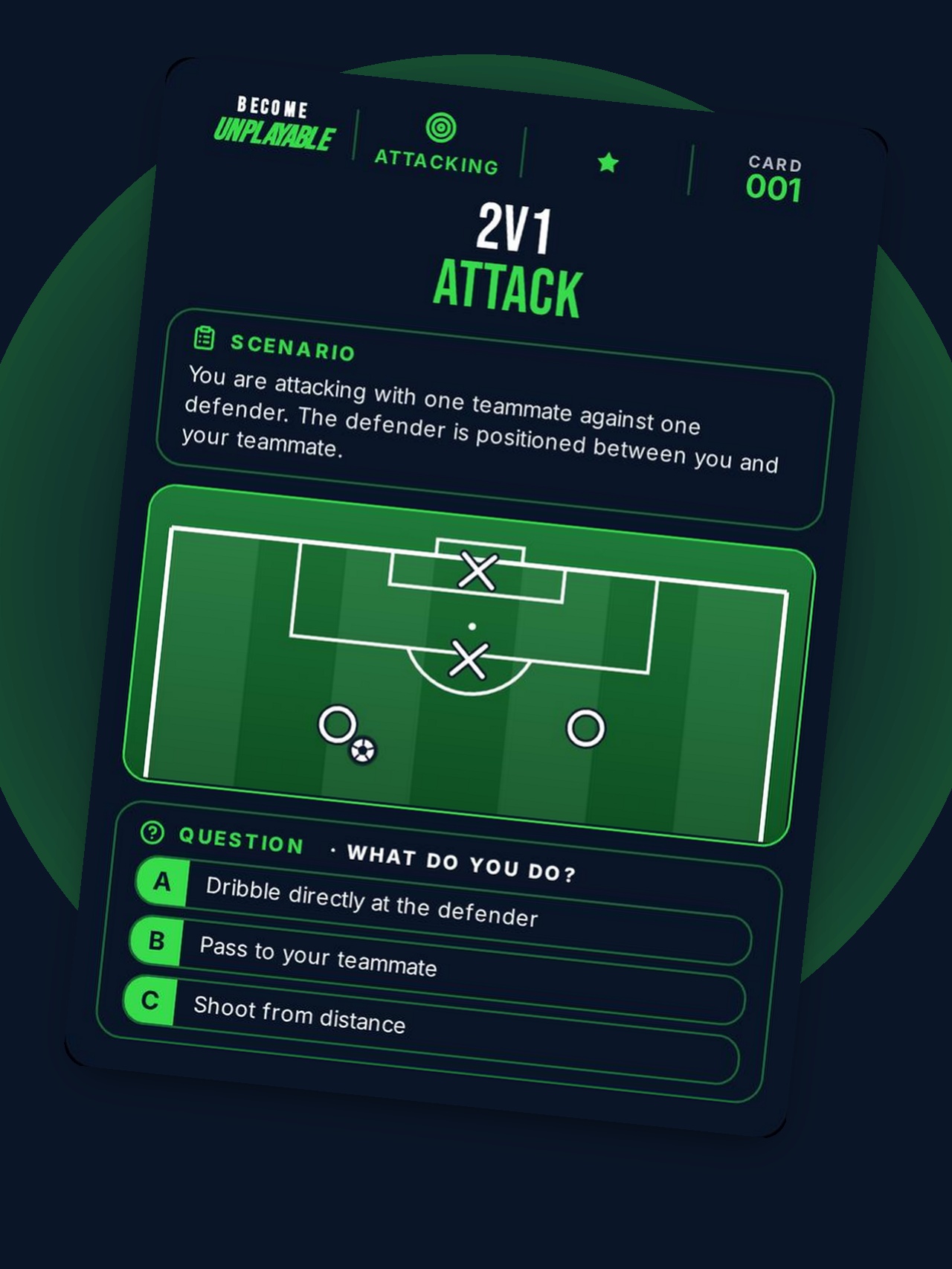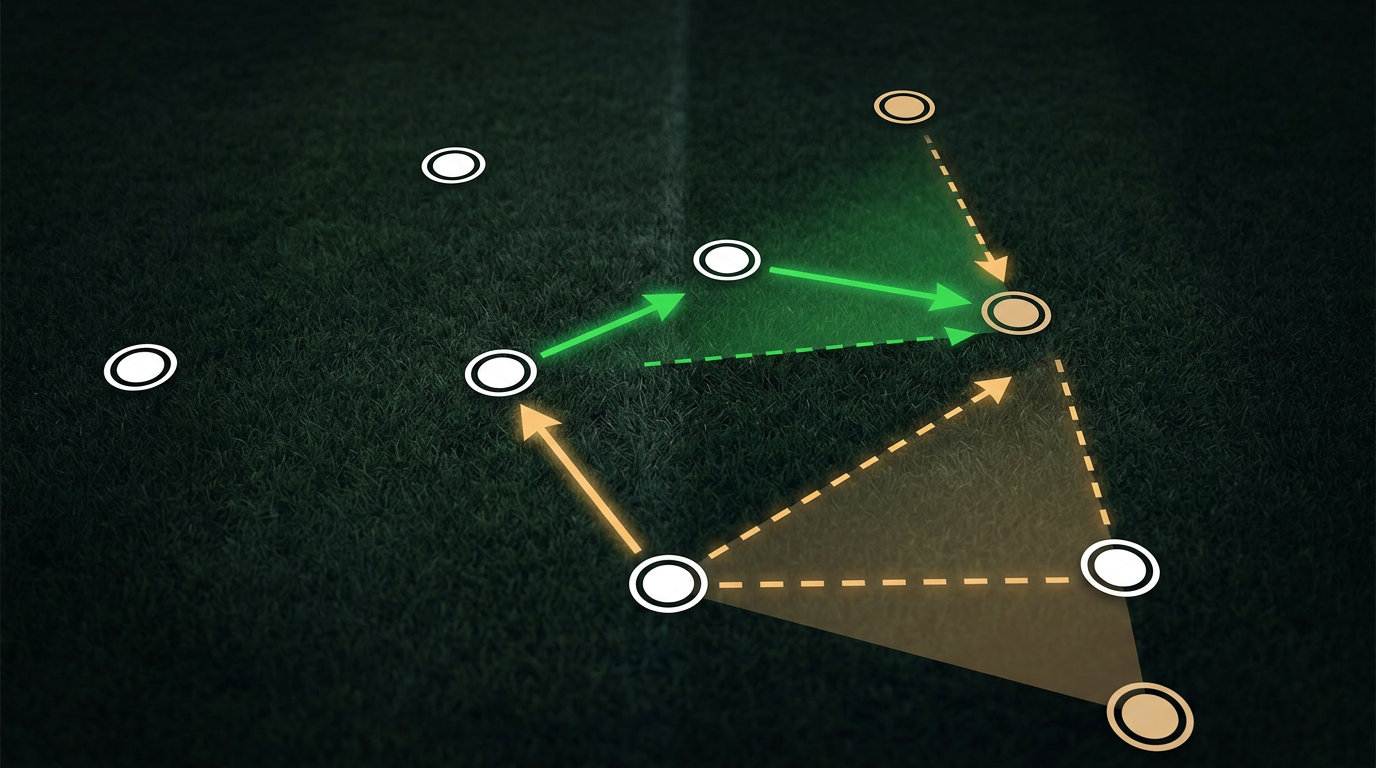
It’s a common sight from the touchline: an opposition player gets the ball, deep in your team’s half, maybe out wide or just outside the box. They’ve got a moment, a second or two, to look up. And then you see your child, a defender, sizing them up. Do they rush in and try to win the ball straight away? Or do they hold back, waiting for backup, trying to block a passing lane?
It’s a split-second decision, and whichever way they go, there are consequences. For us parents, it can be a nail-biting moment. For the children on the pitch, it’s a mental tussle, even if they don’t always realise it.
The Attacker's Options: A Defender's Nightmare
When an opponent has the ball in a dangerous area, they’re not just looking at the goal. They're scanning for teammates, potential through-balls, or maybe even a shot. If they have a few good passing options, it puts real pressure on your child.
For a young defender, seeing multiple threats at once is incredibly hard. Their focus might be on the ball, or the player, or maybe just one passing lane. Trying to account for three or four things at speed? That’s a lot for a developing brain to process under pressure.
The Instinct to 'Win the Ball'
Young players are often driven by an eagerness to 'win the ball back' or 'be first'. It’s an admirable quality, a sign of their commitment. But sometimes, in defence, that instinct can lead them into trouble.
If they sprint in to challenge the ball without much support, and the attacker manages to sidestep them, suddenly a huge space opens up behind. It's not a mistake of effort, but a moment where their enthusiasm perhaps overrides a more cautious approach. It's a fine line to tread for them.
The Difficulty of Holding Your Ground
Sometimes, the best defensive action is to do 'nothing' – that is, to hold position, block a passing lane, or simply delay the opponent. But for a child, standing still or slowly retreating can feel passive, even wrong, especially when the crowd (or a well-meaning coach) is shouting 'get it!'
Holding ground means trusting that a teammate will arrive to support, or that the attacker will make a mistake. It requires a different kind of courage and a good sense of the game unfolding around them – qualities that develop over many, many matches.