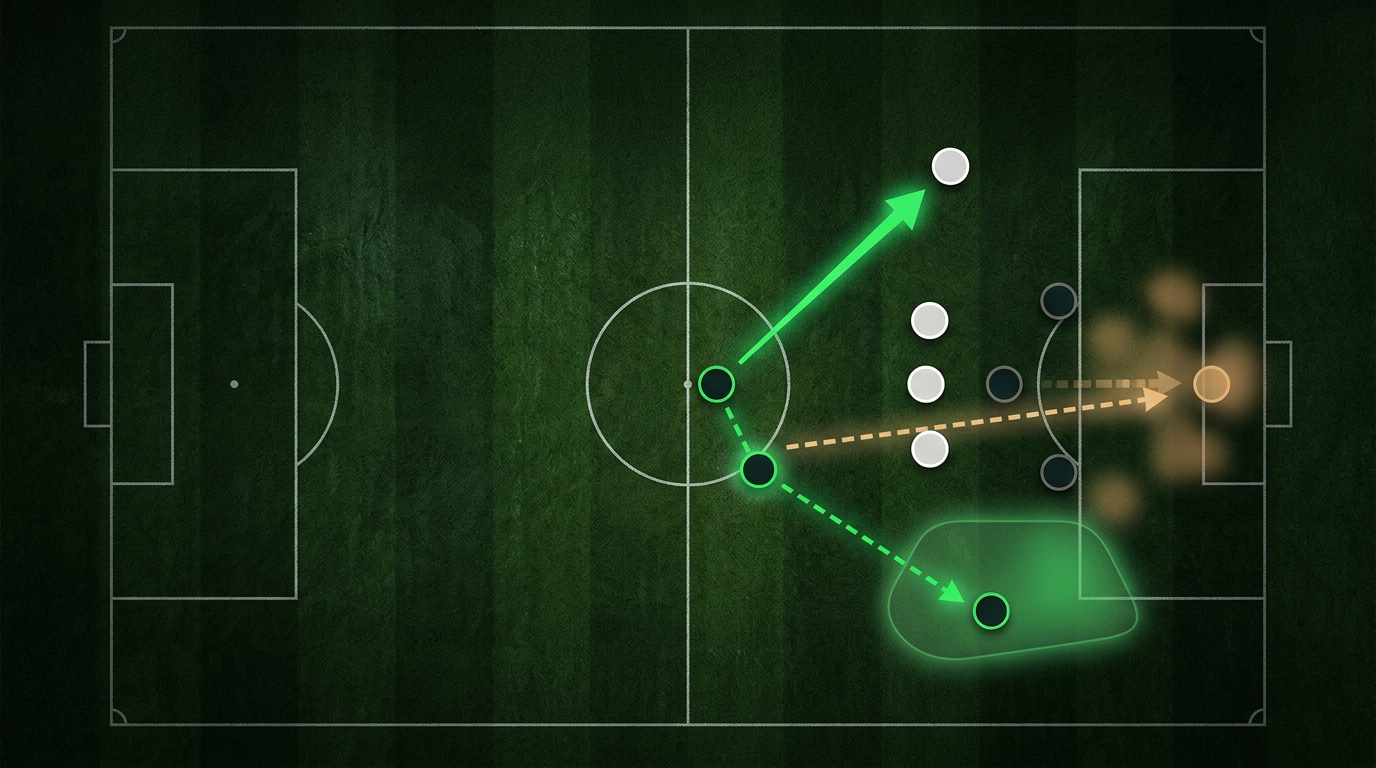
The 'Extra Pass' Dilemma: Why Sharing the Ball Can Be So Hard

By Become Unplayable Team· 28 August 2026· 3 min read
The 'Extra Pass' Dilemma: Why Sharing the Ball Can Be So Hard — Become Unplayable Playbook

We've all seen it: a child with the ball, a teammate wide open, but they try to score anyway. It's a common moment on the pitch, and often, a really difficult one for young players.

Picture this: it's Sunday morning, the rain's holding off, and your child’s team is on the attack. Your player has the ball, they've worked hard to get it into the penalty area, maybe they've even beaten a defender or two. They're close to goal, hearts are pounding on the touchline… and then you see it. A teammate is completely unmarked, shouting for the ball, with a much clearer shot. But your child puts their head down and tries to squeeze one through a forest of legs, or perhaps even worse, they hesitate, and the chance is gone.

It’s a moment that can be frustrating to watch, especially when the 'right' pass seems so obvious to us from the sidelines. But for a young player, that decision isn't as simple as it looks.

The Allure of the Goal

For many young footballers, scoring a goal is the ultimate reward. It’s what they dream of, what they practice, and what often gets the biggest cheer. Getting the ball into the penalty area is a significant achievement in itself, a big step towards that coveted moment. Once they're in that zone, with the goal looming large, the instinct to shoot can be overwhelming. It feels like 'their' moment, earned through their efforts to get there.

The idea of passing up that personal glory, even for a better chance for the team, can be really tough. It requires a level of selflessness and perspective that develops over time, and it's something that even professional players sometimes struggle with.

Seeing the Whole Picture Takes Time

From our vantage point, high up or far away, we can often see the entire pitch and every player's position. For a child with the ball, their world shrinks. Their focus is often on the ball itself, the defender immediately in front of them, and the goal. To then lift their head, process where a teammate is, assess the defender's position relative to the teammate, and decide to make a pass, all in a split second, is a huge cognitive load.

Their 'vision' of the game is still developing. They might genuinely not see the unmarked teammate until it’s too late, or they might see them but be unable to quickly process that the teammate has a significantly better scoring opportunity. It’s not necessarily selfishness; it's often a case of limited information processing under pressure.

The Pressure of the Moment

Imagine the scenario: you've got the ball in the box, a defender is charging at you, the crowd (even if it's just a few parents) is buzzing, and you know this is a chance. There's immense pressure to do something decisive. In that moment, falling back on a familiar action – shooting when close to goal – is a natural response.

Making an 'extra pass' means adding another layer of complexity to an already high-pressure situation. It means consciously overriding a powerful instinct, trusting a teammate, and executing a pass accurately, all while the defender is closing in. That's a lot to ask of a young player trying their best.
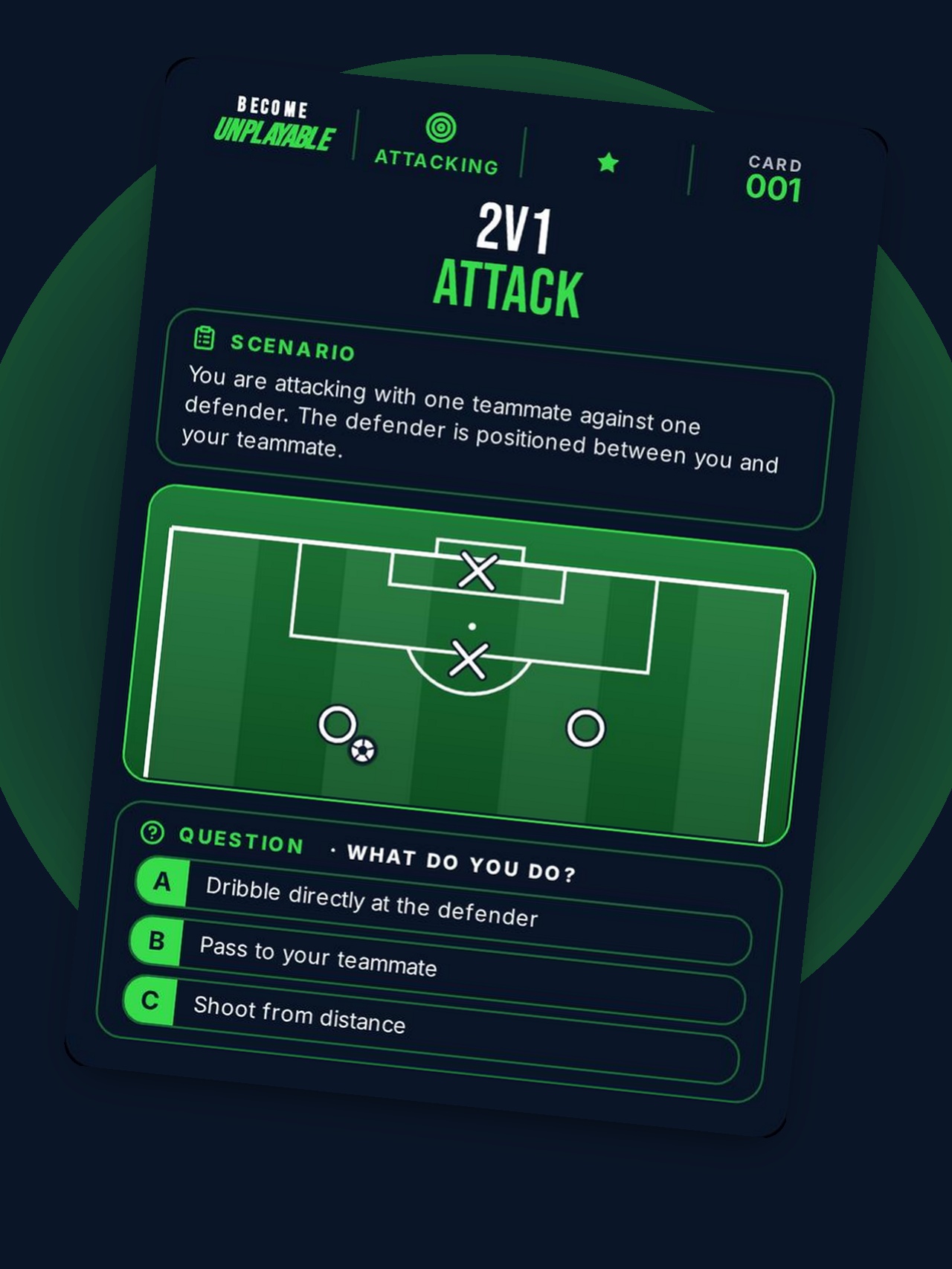
A moment to discuss

What do you think your child would do here?

Your child has broken through with the ball into the penalty area. A defender is rushing towards them, but you also spot a teammate completely unmarked to your child's left, closer to the goal.

There isn't a right or wrong answer — the value is in the conversation that follows.

Common questions

Why do young footballers often try to shoot instead of passing to an open teammate?

Young players are strongly driven by the excitement of scoring a goal. When they get close to the target, the instinct to shoot can be very powerful. It's often not selfishness, but a combination of personal ambition, developing spatial awareness, and the high pressure of the moment that makes seeing and acting on the 'extra pass' difficult.

Is my child being selfish if they don't make the extra pass?

Not usually. From a child's perspective, they might not even register the unmarked teammate, or they might believe their own shot is the best option because their focus is so narrow. Their decision-making under pressure and ability to see the whole pitch are still developing. It's more about what they are capable of perceiving and processing in that split second, rather than a deliberate choice to ignore a teammate.

How can I encourage my child to make better decisions in these situations?

Instead of telling them what they 'should have done', try asking open-ended questions after the match. For example: 'What did you notice around you when you got the ball in the box?' or 'Did you feel like you had lots of options, or just one?' This helps them reflect on their own, encouraging them to develop their game understanding without feeling criticised. Praise effort and teamwork, not just goals.

About the author

Become Unplayable

Become Unplayable creates tools and resources designed to help young footballers think about the game, understand situations and develop better decision-making habits.

The card game that teaches kids how to think like a footballer.

Help young players improve their decision-making, positioning, teamwork and football intelligence through fun match-day scenarios. Designed for ages 7–13. No coaching experience required.

Become Unplayable Foundation Pack cards and box

Join the waiting list

By joining you agree to receive Become Unplayable updates by email. Unsubscribe anytime.

Continue reading

More from The Playbook to help you understand your young footballer.

Back to The Playbook

Explore all our articles for parents of young footballers.