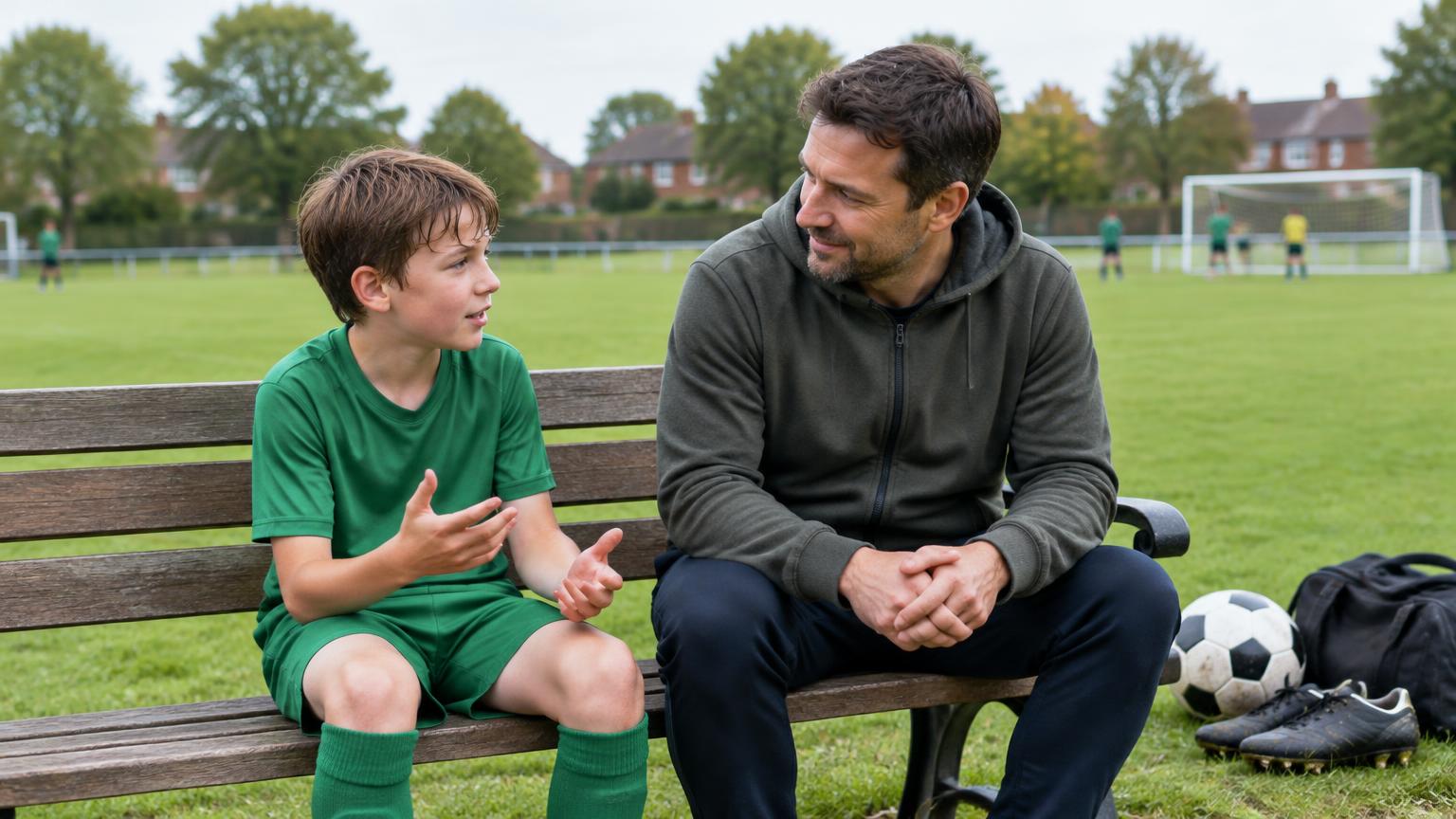
The final whistle blows. Your child walks off the pitch, grabs their water bottle and heads towards the car.
You've watched the entire match. You've seen the opportunities they missed, the passes they could have made and the moments where they might have done something differently. And naturally, you want to help.
But sometimes, the best thing you can do after a match isn't to tell your child what they should have done. It's to get them thinking about what they saw. That's where Become Unplayable cards can help.
The journey home doesn't need to be another coaching session
We've all seen it. A parent spends the journey home explaining everything that happened during the match.
"You should have passed earlier." "Why didn't you shoot?" "You had loads of space!"
It's usually coming from a good place. But there's something important to remember. You watched the game from the touchline. Your child experienced it on the pitch.
They didn't have the same view as you. They were dealing with opponents, teammates, pressure and decisions happening in seconds. What looked obvious from the sideline might not have been obvious to them. And that's exactly why helping them recognise situations is so valuable.
Use one Become Unplayable card to start a conversation
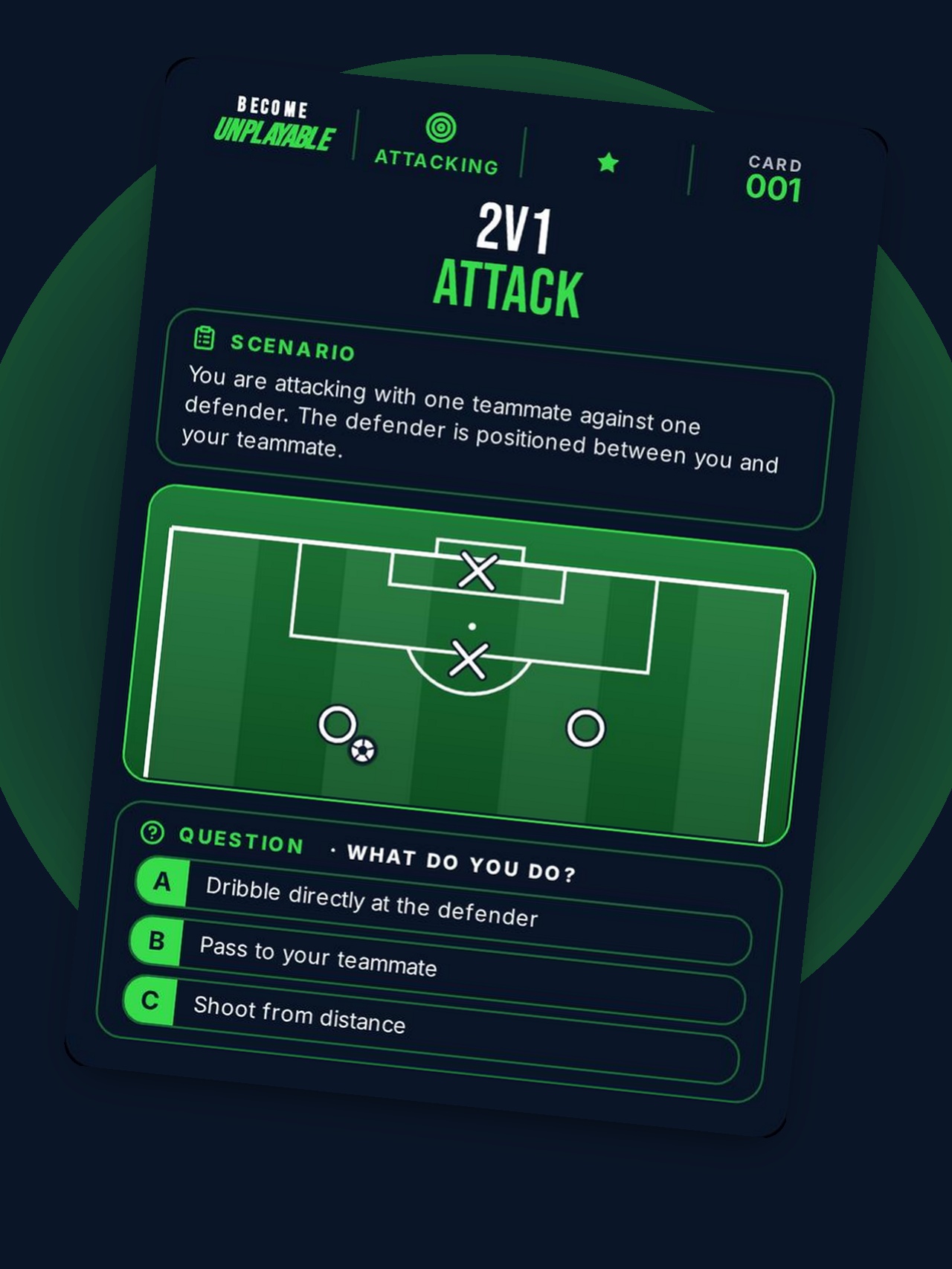
Rather than analysing the entire match, try something different. When your child is ready to talk about the game, choose one Become Unplayable card featuring a situation similar to something that happened. It might involve:
- Finding an unmarked teammate.
- Recognising space to run into.
- Deciding whether to pass or dribble.
- Supporting a teammate in possession.
- Choosing when to shoot.
Show them the scenario and ask: "Did anything like this happen in your match today?" Then listen.
They might remember a similar situation. They might explain what they were thinking. They might even tell you something you hadn't noticed. And that's where the conversation becomes useful.
Ask why, not just what
One of the simplest ways to help young footballers develop their decision-making is to ask them to explain their thinking.
Let's say the card shows a player with the ball and an unmarked teammate nearby. You ask: "What would you do here?" Your child chooses to dribble. Instead of immediately telling them they should pass, ask: "Why would you dribble?"
Perhaps they've spotted space ahead. Perhaps they think the defender is too far away to challenge. Perhaps they believe carrying the ball forward would create a better opportunity.
Now ask: "What might make passing the better option?" Suddenly, they're thinking about more than one decision. They're considering the position of opponents, the movement of teammates and how the situation could change. That's the kind of thinking we want to encourage.
Because football isn't always about choosing one perfect answer. It's about understanding your options and recognising when each decision makes sense.
Help them recognise situations for next time
Here's where things get interesting. Once you've discussed the scenario, ask one final question: "If you see something like this in your next match, what will you look for?"
Perhaps they'll start looking for teammates moving into space. Maybe they'll begin noticing when defenders leave gaps. Or they might become more aware of their options before receiving the ball.
You're not telling them exactly what to do next time. You're helping them recognise what to look for. And that's an important part of becoming a better decision-maker.
Keep football enjoyable
There's one thing we think is particularly important. Not every journey home needs to involve football development.
Sometimes your child will be disappointed. Sometimes they'll be tired. Sometimes they'll just want to talk about the goal their teammate scored or what they're having for dinner. That's absolutely fine.
Become Unplayable cards aren't supposed to turn every spare moment into a lesson. They're there to make conversations about football easier and more enjoyable when your child wants to have them.
One card. One scenario. A few questions. That's enough.
Better decisions start with better understanding
As young players develop, they'll face increasingly difficult situations on the pitch. Less time on the ball. More pressure from opponents. More decisions to make.
Technical ability is important, but knowing when and how to use those skills matters too. That's why we created Become Unplayable. To give young footballers opportunities to explore realistic match situations, consider their options and explain their decisions.
Whether it's before training, at home or after a match, the aim remains the same. Help them see more, think quicker and make better decisions on the pitch. And sometimes, that starts with a simple conversation on the journey home.
Help Your Child Become a Better Decision-Maker with Become Unplayable
The Become Unplayable Foundation Pack introduces young players to common football situations through visual scenarios and questions designed to encourage discussion.
It's a simple way for parents to support their child's football development without needing to be a coach. Use the cards at home, before training, on the way to matches or whenever your child wants to talk football.