How can I help my child keep the ball under pressure in football?

By Become Unplayable Team· 16 October 2026· 5 min read
How can I help my child keep the ball under pressure in football? — Become Unplayable Playbook

Losing the ball under pressure is common for young players. Help them by focusing on looking before the ball arrives, simple body positioning, and encouraging good decisions over avoiding mistakes.

My child keeps giving the ball away under pressure, what can I do?

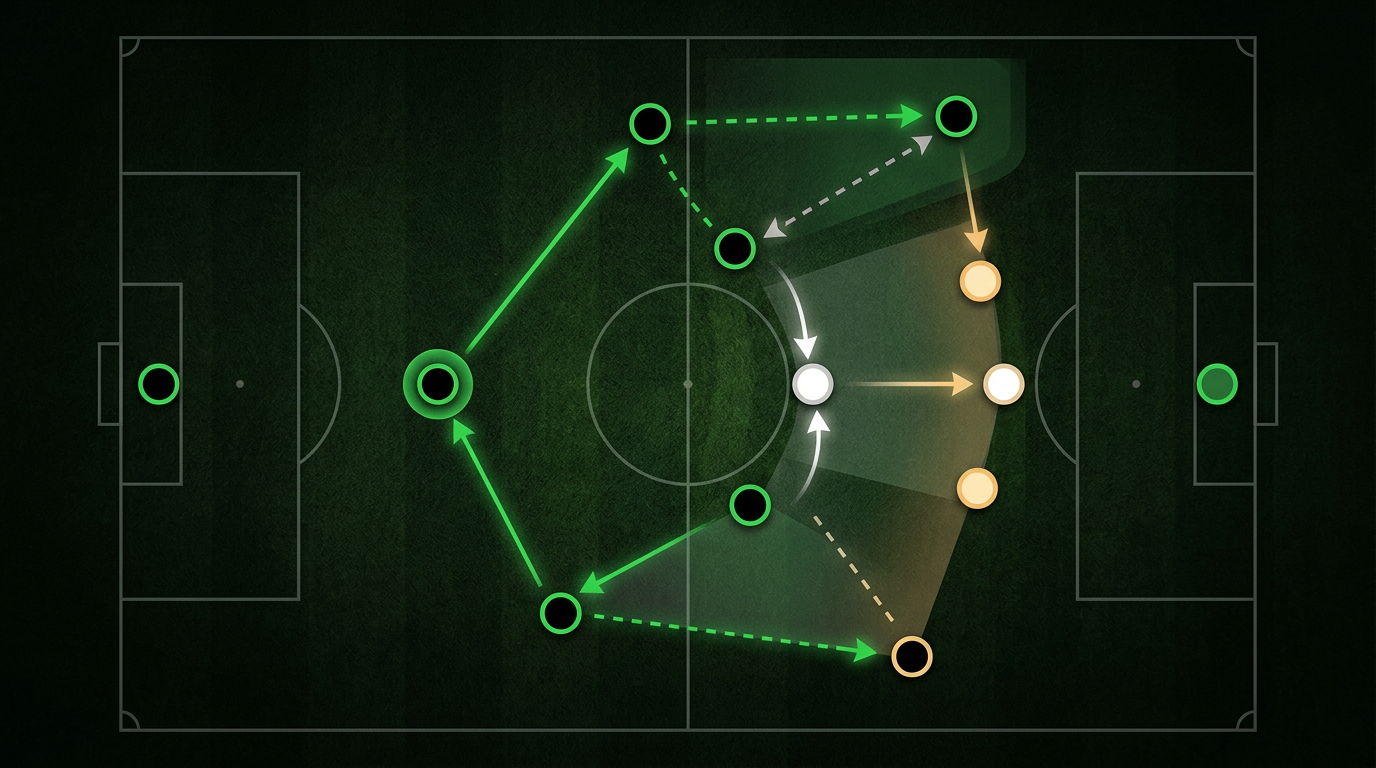
Help your child by focusing on what happens before the ball arrives. Encourage them to look for space and defenders before they receive a pass. Simple practice can focus on taking a first touch away from pressure and using their body to shield the ball. Most importantly, praise the attempt to make a good decision, like trying to turn or pass, even if it doesn't work out. This builds confidence and encourages learning over a fear of mistakes.

It’s a common sight in youth football: a player receives a pass, and an opponent immediately closes them down, winning the ball back. For a parent, it can be frustrating to watch, but for the player, it's a key learning moment. The solution isn't about being stronger or faster, but about thinking smarter before the ball even arrives.

Why do young players struggle to keep possession when marked?

Young players often struggle to keep the ball when marked because their focus is almost entirely on the football itself. They concentrate so hard on controlling the pass that they are not aware of the opponent closing them down until it's too late. At the U7-U10 stage, players are still developing their spatial awareness and the ability to divide their attention. An opponent creating pressure can feel overwhelming, leading to a panicked action or freezing, making it easy for the defender to take the ball.

How can young footballers improve their first touch under pressure?

They can improve their first touch by changing its purpose from 'stopping the ball' to 'moving the ball'. A player under pressure who stops the ball dead is a stationary target. A player who uses their first touch to move the ball into space, away from the defender, immediately gives themselves more time.

This relies on gathering information before the pass arrives. By taking a quick look—often called 'scanning'—a player can see where the defender is and where the safe space is. Their first touch can then be a deliberate action to exploit that space. The instruction isn't 'control the ball', but 'touch the ball where the defender isn't'.

What are good techniques for young players to protect the football?

Protecting the ball is about body position, not brute force. The most effective technique is for a player to place their body between the football and the approaching defender. Coaches often encourage players to get 'side on', which creates a barrier.

  • **Get side on:** Instead of facing the defender or the ball directly, turn your body sideways. This makes you a wider object and naturally puts one side of your body between the opponent and the ball.
  • **Keep the ball on the 'safe side':** The foot furthest from the defender should be the one controlling the ball.
  • **Use your arm:** Not to push or foul, but as a 'sensor' to feel where the defender is and to maintain balance. The forearm can be bent at the elbow.
  • **Bend your knees:** A lower centre of gravity makes a player much more stable and harder to push off the ball.

What can parents do to help?

Your role is to be a supporter, not another coach. The goal is to build your child's confidence and encourage them to think for themselves, free from pressure. Shouting instructions from the sideline often adds to the confusion and pressure they feel.

  • **Play in the garden:** Simple games where you act as a gentle defender can be hugely beneficial. Pass the ball to your child and slowly close them down, encouraging them to try turning away from you or using their body to shield the ball. Keep it light and fun.
  • **Change your praise:** Instead of 'Great goal!', try 'That was a great turn to get away from that player!' or 'I saw you look over your shoulder before you got the ball, well done!'. This reinforces the thinking process, not just the outcome.
  • **Ask curious questions:** After a match, instead of 'Why did you lose the ball there?', try 'What were you thinking when that player was closing you down?' or 'It looked really tight in midfield today, was there much space?'. This opens up a conversation about what they are seeing and feeling on the pitch.
Related reading

Common questions

My child keeps giving the ball away under pressure, what can I do?

Help your child by focusing on what happens before the ball arrives. Encourage them to look for space and defenders before they receive a pass. Simple practice can focus on taking a first touch away from pressure and using their body to shield the ball. Most importantly, praise the attempt to make a good decision, like trying to turn or pass, even if it doesn't work out. This builds confidence and encourages learning over a fear of mistakes.

My child's coach shouts 'Man on!' - is this helpful?

It can be helpful in the moment, as it alerts a player to immediate danger they haven't seen. However, the long-term goal is for players to develop their own awareness by scanning, so they don't need the shout. If a player becomes reliant on the 'Man on!' call, they aren't learning to look for themselves. As a parent, it's best not to join in shouting from the sideline; let the coach do the coaching.

At what age should my child be good at keeping the ball?

There is no set age. Developing composure and skill under pressure is a gradual process that continues throughout a player's career. For players in the U7-U10 age range, the focus should be on learning the basic ideas of looking for space, shielding, and taking a good first touch. Expect them to lose the ball often – it's a critical part of how they learn what works and what doesn't.

Should I get my child to do strength training to hold off players?

No. For players aged 7-10, formal strength training is not recommended and is unnecessary. Protecting the ball is a technical skill based on body position, balance, and timing, not pure strength. A small player can be incredibly effective at shielding the ball by using their body smartly. Focus on fun games that teach these techniques, not on physical conditioning.

Is it ever okay just to kick the ball away?

Yes, sometimes clearing the ball is the best decision, especially when under intense pressure near your own goal. While we want to encourage composure and possession, players also need to recognise danger. Kicking the ball out of play or up the pitch to relieve pressure is a valid choice. The key is whether it was a panicked kick or a deliberate decision to reset play and get organised.

About the author

Become Unplayable

Become Unplayable creates tools and resources designed to help young footballers think about the game, understand situations and develop better decision-making habits.

The card game that teaches kids how to think like a footballer.

Help young players improve their decision-making, positioning, teamwork and football intelligence through fun match-day scenarios. Designed for ages 7–13. No coaching experience required.

Become Unplayable Foundation Pack cards and box

Join the waiting list

By joining you agree to receive Become Unplayable updates by email. Unsubscribe anytime.

Continue reading

More from The Playbook to help you understand your young footballer.

Back to The Playbook

Explore all our articles for parents of young footballers.