The Lonely Journey: Why Taking on the Last Defender is So Tricky

By Become Unplayable Team· 24 August 2026· 3 min read
The Lonely Journey: Why Taking on the Last Defender is So Tricky — Become Unplayable Playbook

That moment when your child has the ball, there's just one defender left, and a sea of green grass to the goal. What happens next isn't always what you expect.

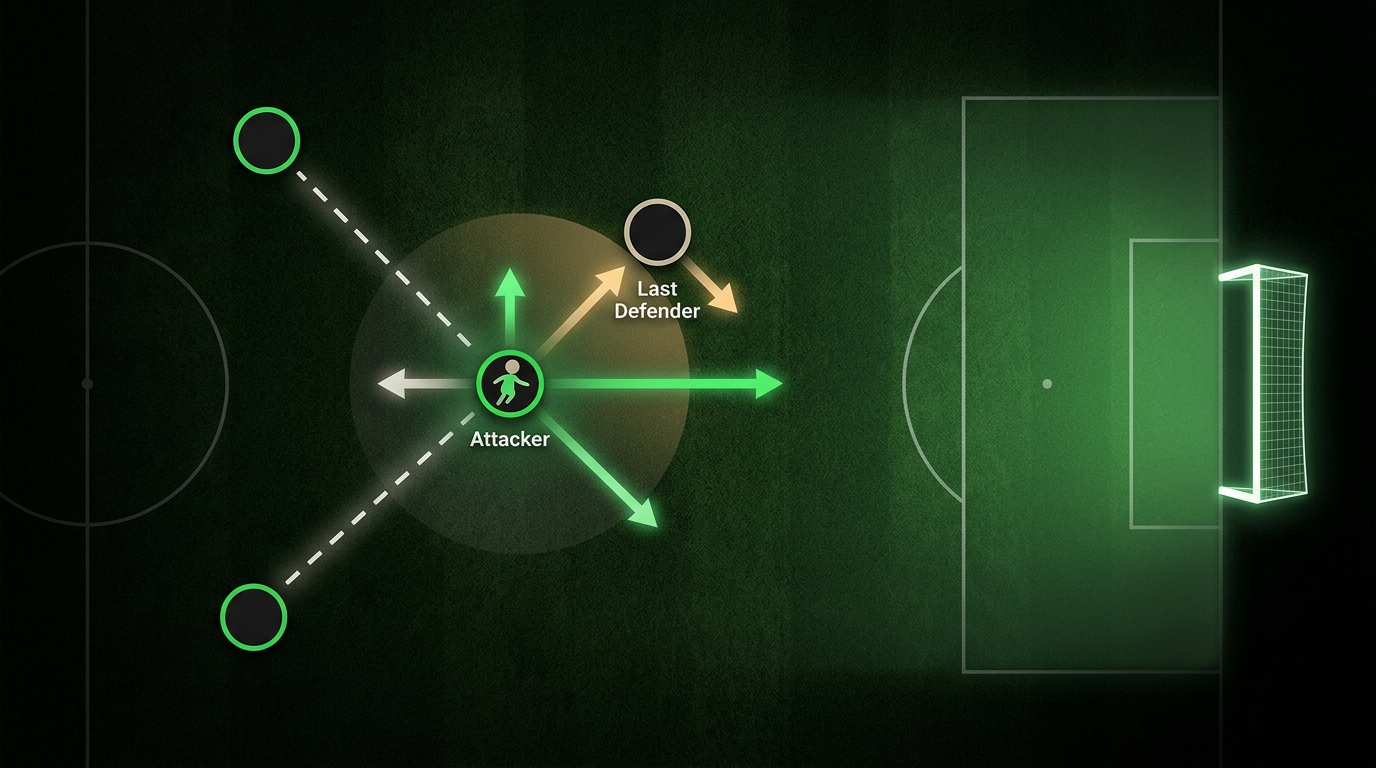
Picture this: the ball breaks free in midfield, your child latches onto it, and suddenly they're running towards the opponent's goal. There's just one defender between them and the keeper, and maybe a lot of space. From the touchline, it looks like a golden opportunity. You hold your breath, expecting a daring dribble or a shot. But then, sometimes, things unfold a little differently.

Perhaps they hesitate, perhaps they turn back, or maybe they try to take on the defender and lose the ball quickly. It’s a moment that can be confusing for us watching, but for a young player, it's often a whirlwind of thoughts and feelings all happening at once.

The Pressure of the Spotlight

When a young player finds themselves in a 1v1 situation against the last defender, especially if they're close to goal, they know everyone is watching. All eyes from both sets of parents, the coaches, and even their teammates are on them. This isn't just about football; it's about being the centre of attention, and for some children, that can be a heavy burden.

The perceived pressure to do something 'amazing' can make them rush, or conversely, freeze up. They might be acutely aware that if they lose the ball, the chance is gone, and everyone will have seen it. This self-awareness, while a part of growing up, can often overshadow the simple act of trying to play.

Understanding Their Options in the Moment

What we see as a clear path to goal, a child might see as a series of complicated choices. Do I try to dribble past? Do I wait for support? Do I pass if a teammate runs into space? They’re constantly evaluating the defender's position, their own speed, the ball's position, and the goal – all at once, often in a fraction of a second. This is a complex problem-solving exercise, not just a physical one.

Sometimes, if other defenders are starting to recover, waiting for support can seem like a sensible choice to them, even if it allows the opposition to get back. Or, running into what seems like empty space, even if it's away from goal, might feel safer than directly confronting the defender. It's their attempt to control a situation that feels very high-stakes.

The Confidence to Commit

Successfully taking on a defender, especially the last one, requires a blend of skill and confidence. It means being comfortable with the ball, being able to change direction or speed quickly, and having the belief that you can beat your opponent. This isn't something that just clicks into place; it’s developed over many practices and matches.

If a child has tried and failed before, or if they haven't yet mastered a particular dribbling move, they might be reluctant to attempt it in such a critical moment. It’s a learning process where they're figuring out what works for them, and sometimes, that means not taking the most direct path.
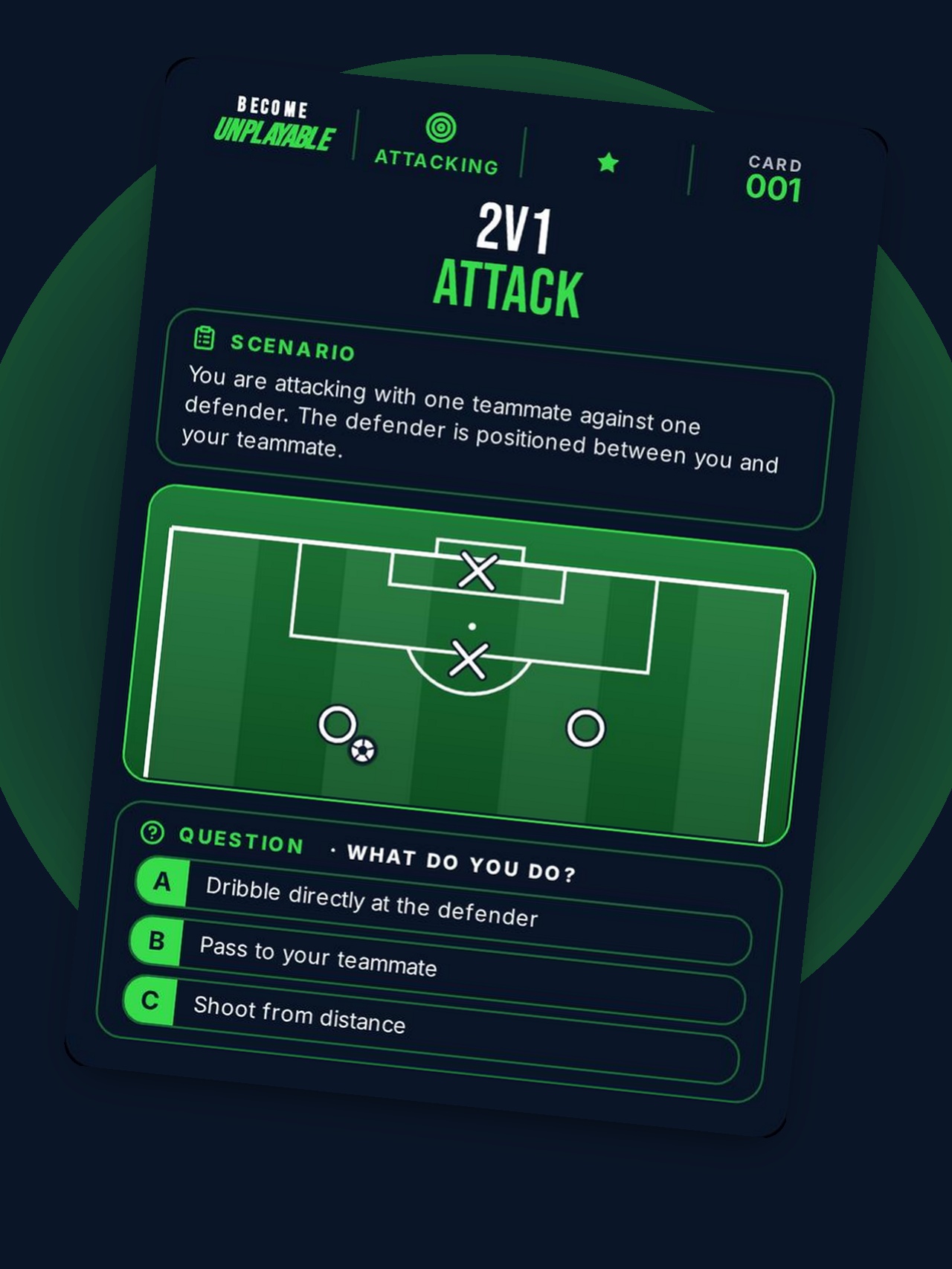
A moment to discuss

What do you think your child would do here?

Your child is playing striker, and the ball bounces over the defence. They're through, with only one opposition defender between them and the keeper, about 25 yards from goal. That defender is already running back towards their own goal, but your child has the ball under control and is gaining ground.

There isn't a right or wrong answer — the value is in the conversation that follows.

Common questions

Why do children sometimes turn away from goal when they're through 1v1?

This can happen for several reasons. They might be feeling overwhelmed by the pressure of being the last attacker, lacking confidence in beating the defender, or genuinely scanning for a teammate to pass to. Sometimes, turning away feels like a safer option to retain possession rather than risking a direct confrontation and losing the ball in a critical area.

How can I encourage my child to be more confident in 1v1 situations?

Encourage them by focusing on effort and learning, rather than just outcomes. Praise their attempts to take players on, regardless of success. Talk about how much fun it is to try new moves, and remind them that every player makes mistakes. Reassure them that it's okay to try and fail; it's part of getting better. Avoid putting pressure on them to 'score' or 'beat' the defender every time.

My child hesitates too much when they are 1v1, what does that mean?

Hesitation often comes from a child processing too much information at once, or a lack of confidence in their immediate decision. They might be worried about making a mistake, or unsure of their options. It's a sign they're thinking, which is good, but they're still learning to make those decisions quickly under pressure. It's not a lack of effort, but a sign of developmental learning.

About the author

Become Unplayable

Become Unplayable creates tools and resources designed to help young footballers think about the game, understand situations and develop better decision-making habits.

The card game that teaches kids how to think like a footballer.

Help young players improve their decision-making, positioning, teamwork and football intelligence through fun match-day scenarios. Designed for ages 7–13. No coaching experience required.

Become Unplayable Foundation Pack cards and box

Join the waiting list

By joining you agree to receive Become Unplayable updates by email. Unsubscribe anytime.

Continue reading

More from The Playbook to help you understand your young footballer.

Back to The Playbook

Explore all our articles for parents of young footballers.