From the touchline, it often looks so simple, doesn't it? Your child's teammate has the ball, head up, looking to play it through. You see the space, you see the opportunity, and you can practically feel the pass coming. Then your child sets off – perhaps a moment too soon, perhaps a moment too late – and the chance is gone. Maybe they're flagged offside, or the defender nips in first, or the ball just rolls harmlessly out of play. It can be frustrating to watch, but for the child on the pitch, that 'right moment' is a much trickier thing to pinpoint.
What seems like a simple decision to an adult eye is a complex calculation for a young player, happening in a split second amidst all the chaos and excitement of a match. They're not being 'lazy' or 'slow' to react; they're navigating a fast-moving puzzle with limited information.
The moving picture on the pitch
Imagine trying to hit a moving target, while also moving yourself, and trying to predict where a third moving object (the ball) is going to be. That's essentially what a young player is doing when they try to time a run. Defenders are shifting, teammates are positioning themselves, and the ball itself might take an unexpected bounce. It's not a static picture like on a tactics board; it's a constantly evolving scene.
For a child, focusing on their own movement and the ball can take up most of their mental energy. Trying to add the nuances of a defender's position or a teammate's readiness to pass often comes later in their development. They might start their run based on what feels right, or what they did successfully a few minutes ago, rather than a finely tuned read of the current situation.
Why being 'on the same wavelength' is so hard
A perfectly timed run requires a kind of silent communication, an understanding between the player with the ball and the player making the run. The runner needs to interpret signs from their teammate: are they looking up? Is their body shape ready to pass? Are they about to take another touch, or is the ball about to leave their foot?
These are subtle cues that older, more experienced players pick up almost instinctively. For children, it's a skill that takes countless hours of playing together, of making mistakes, and of slowly building that shared understanding. Until then, a player might make their run a fraction too early because their teammate looked up, only for the passer to take an extra touch they didn't anticipate.
The tricky balance of risk and reward
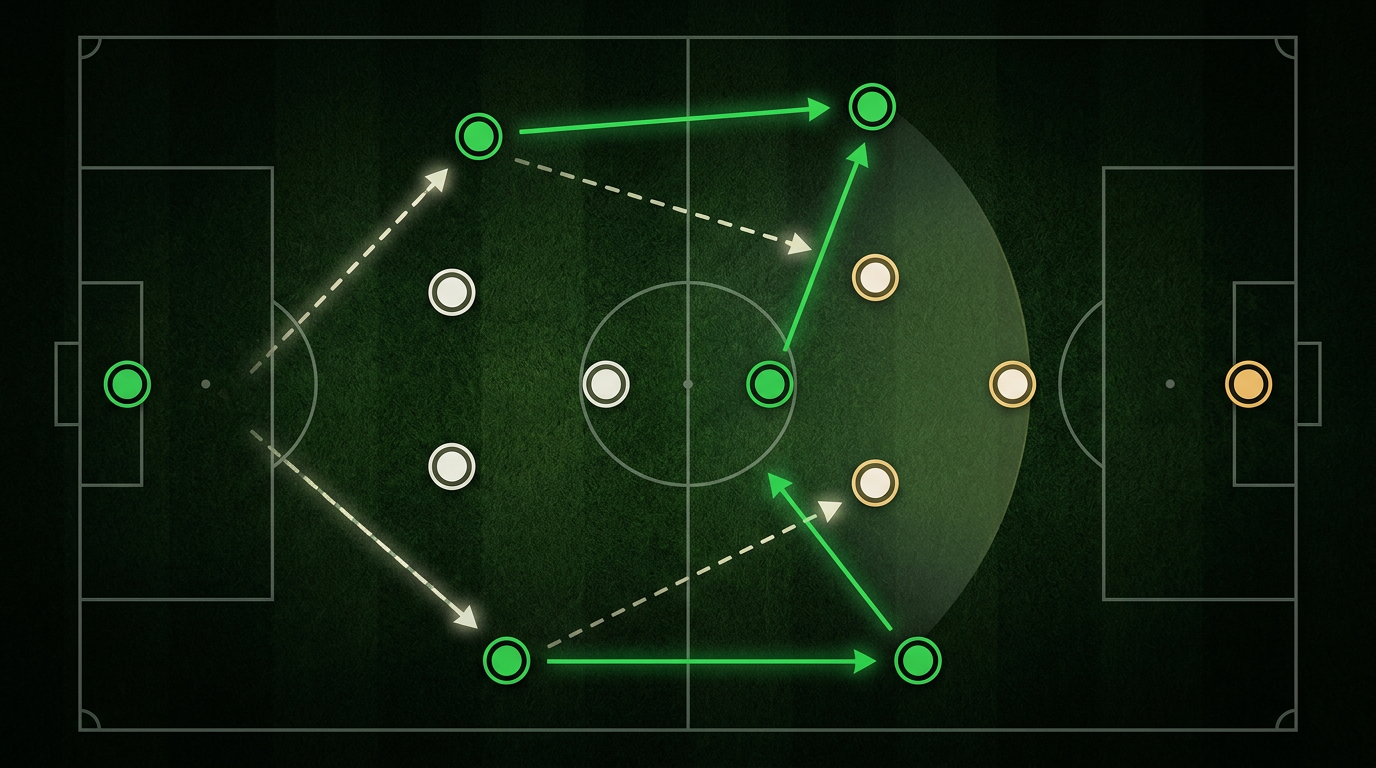
Starting a run too early risks being offside, a rule that can be notoriously difficult for young players to grasp and apply in real-time. Start too late, and the defender has already closed the space, or the ball is long gone. There's a sweet spot where they stay onside, get into a dangerous position, and receive the pass at full stride. Finding that balance under pressure is a huge part of developing football intelligence.
Sometimes, a child might err on the side of caution, waiting until the ball is definitely played before making their move, just to avoid being offside. This is a perfectly understandable decision for a young player who is still learning the game's rules and rhythms. It might mean they miss an opportunity, but it also means they avoid the 'mistake' of being offside.