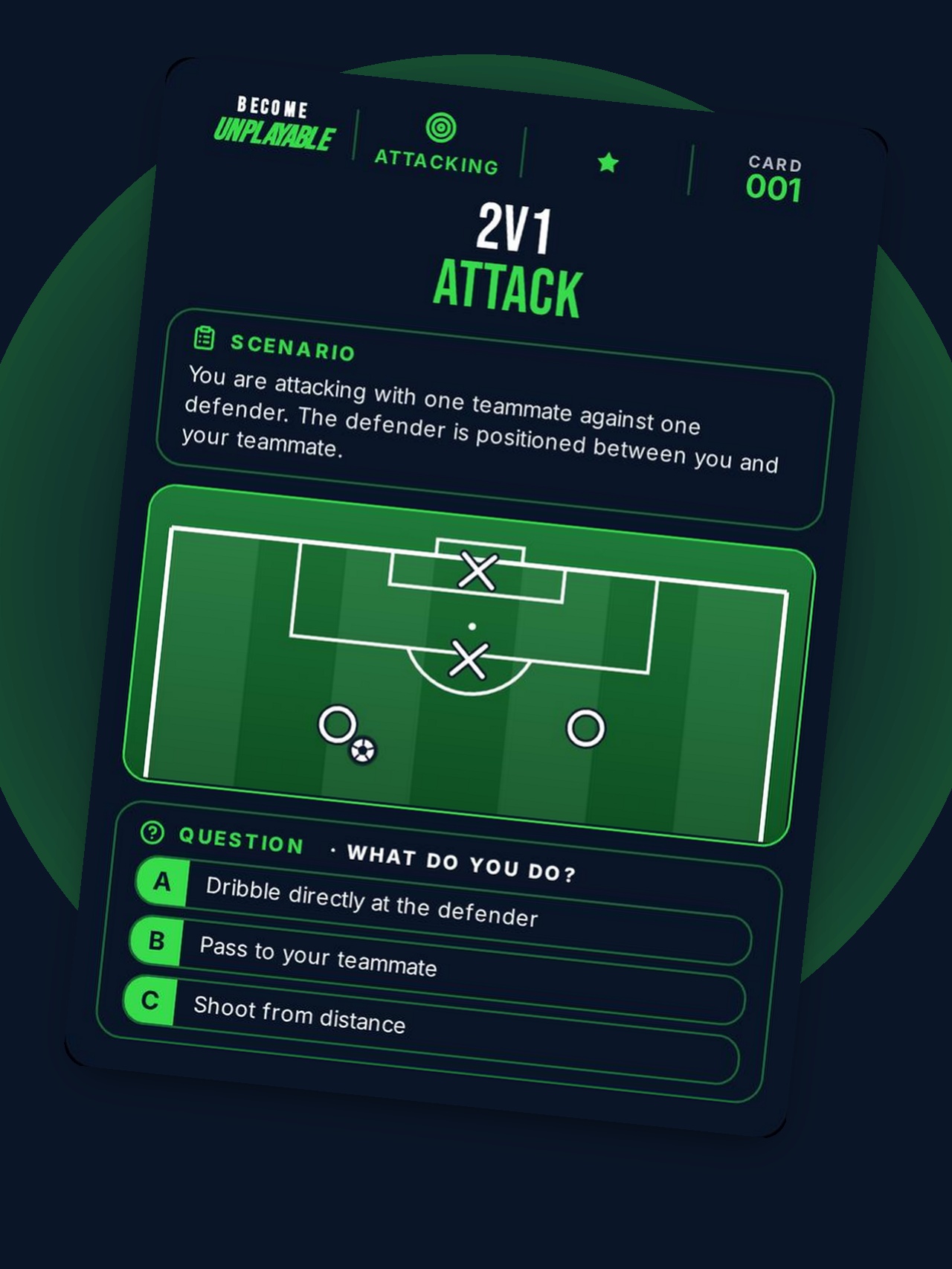
It’s a common scene on a Sunday morning pitch. Your child’s teammate has just won the ball, perhaps after a bit of a tussle in midfield. Your child is nearby, maybe even just a metre or two away, watching the play unfold. From the touchline, it can look like they’re in a great position to help, ready to receive a pass or jump into the action. But sometimes, being 'next to' the ball isn't quite the same as being 'in the play'.
What happens in those few seconds can be a real head-scratcher for us parents. Why don't they just make themselves available? Why do they stand so close, sometimes almost hiding behind their teammate, when everyone else seems to be looking for space?
The Challenge of Creating Space
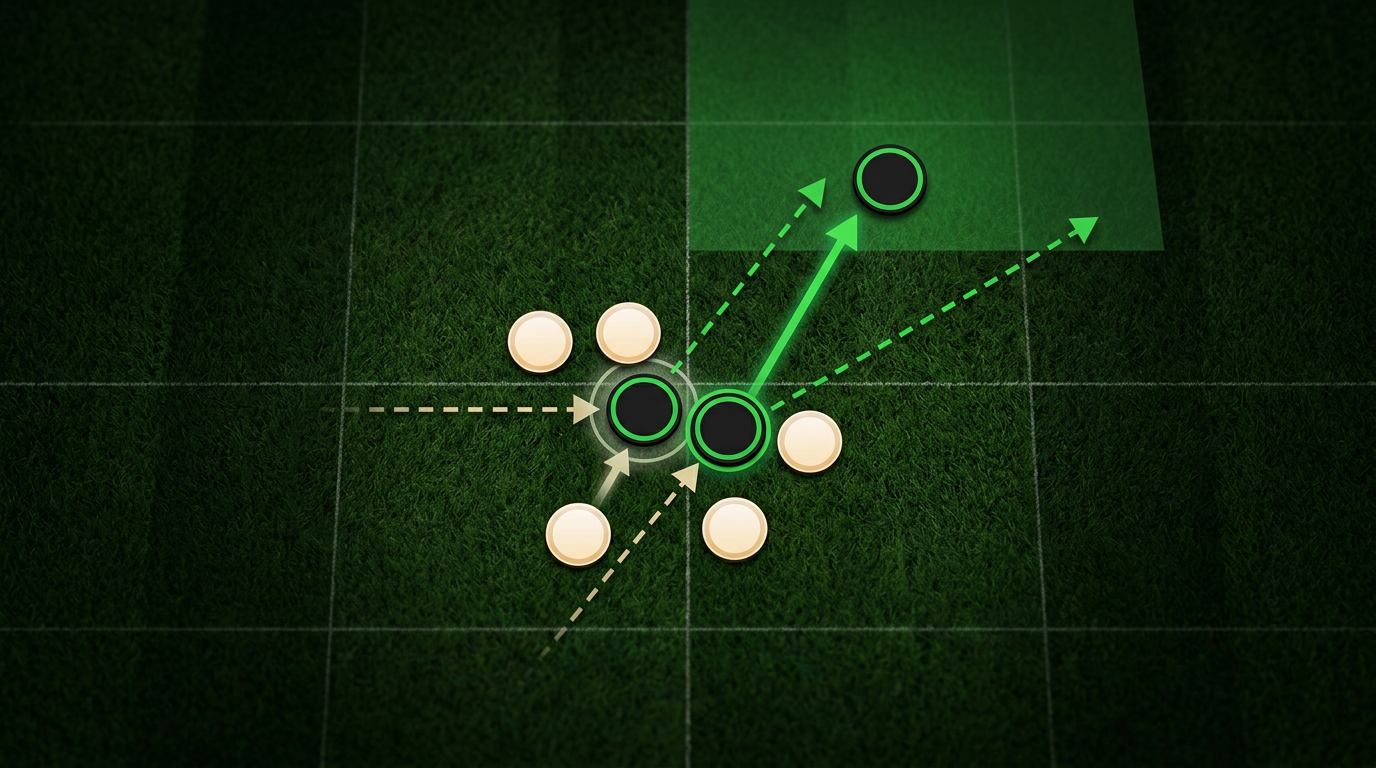
For young players, creating space for themselves and their teammates is much harder than it sounds. When a teammate has the ball and they’re nearby, a child might naturally think, 'I'm close, I can help!' But in reality, being too close can actually make things more difficult.
Imagine two players standing side-by-side with the ball. If an opponent comes to defend, they can often mark both of them with relative ease. It’s a bit like two birds with one stone for the defender. Your child isn't intentionally making things difficult; they're simply learning the spatial dynamics of the game.
What's Going Through Their Mind?
When their teammate has the ball and they're standing right next to them, a young player might be thinking several things. They might feel an urge to be 'involved' and believe proximity is key. They might be waiting for instructions, or perhaps they're not yet seeing the bigger picture of where the defenders are and where new space could open up.
Sometimes, they might shout for the ball. This seems like a proactive step, and it is in a way, but if they're still in the same congested spot, it doesn't solve the core problem of being easy to mark. Their teammate might hear them but still have no 'easy' pass to make.
The Instinct to Stay Close
The instinct to stay close to the ball carrier is strong in younger age groups. It feels safe, like being part of the action. Moving away, seemingly 'leaving' the play, can feel counterintuitive to a child who wants to contribute. It takes time, observation, and repeated exposure to understand that moving *away* from the ball can sometimes be the most helpful thing they can do for their team.
It's about learning to 'see' the pitch not just as where the ball is, but where it *could* be, and where a pass could be made with less pressure. That takes a few more years of playing and understanding, so don't be surprised if your child is still working it out.