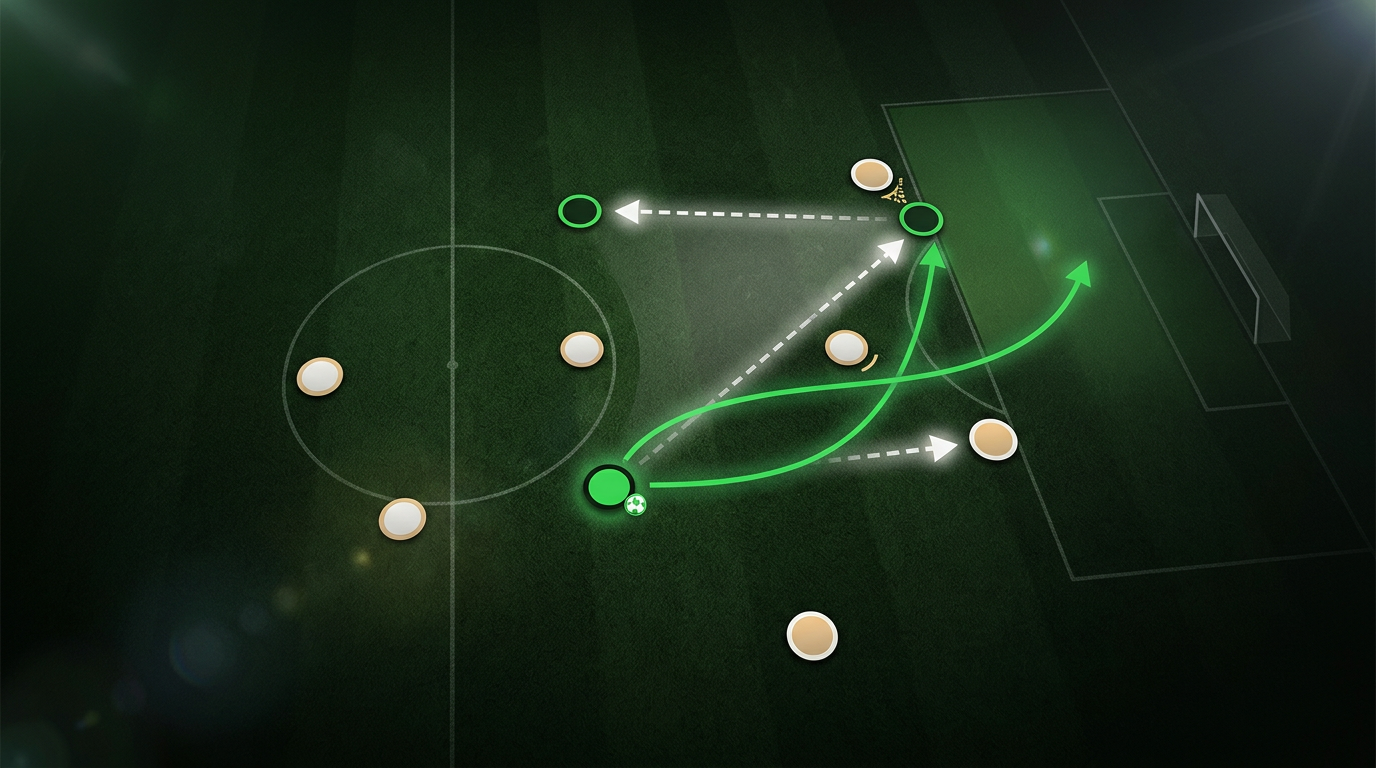
When a pass goes begging: Why spotting an attacking run is harder than it looks

By Become Unplayable Team· 16 August 2026· 3 min read
When a pass goes begging: Why spotting an attacking run is harder than it looks — Become Unplayable Playbook

We've all seen it: the striker making a fantastic run, but the pass just doesn't come. What's happening in your child's head at that moment?

It’s a familiar sight from the touchline, isn't it? Your child's teammate starts to peel off the defender, making a darting run into that lovely pocket of space behind the opposition's back line. You see it, the other parents see it, and perhaps even the dog walker passing by sees it. But then the ball goes somewhere else entirely – perhaps a safe pass sideways, or maybe held onto a little too long, allowing the defence to regroup.

It can be frustrating to watch, especially when it looks like such a clear opportunity missed. But what seems obvious to us adults, with our broader view and years of experience, often isn't so simple for a young player in the thick of the action.

The whirlwind of the pitch

Imagine being your child for a moment. They have the ball, and suddenly there’s a lot to process. Where are the opponents? Where are their own teammates? Is someone about to tackle them? All this information floods in, and it's not neatly presented on a screen; it's a dynamic, ever-changing picture.

That brilliant run from a teammate? It might just be one of many things vying for their attention. Their focus might be on keeping possession, or on the defender rapidly closing them down. Spotting that 'killer pass' requires a certain level of awareness and calm that develops over time, and through countless experiences.

Timing is everything

It's not just seeing the run; it's also about judging the weight and timing of the pass. A through ball needs to be played with precision – too soft and it's intercepted, too hard and it rolls out of play. Then there’s the speed of the runner and the pace of the defender to consider. It’s a complex calculation, often needing to be made in a fraction of a second.

For younger players, simply executing a clean pass to a stationary teammate can be challenging enough. Adding the variable of a moving player and a tight window of opportunity layers on another level of difficulty. Sometimes, the safer option feels like the only option.

Building the picture in their mind

Developing the ability to recognise and act on these attacking runs is a gradual process. It comes from playing, watching, and understanding how different actions can create opportunities. It’s about building a 'picture' of the game in their mind before they even receive the ball, and then constantly updating that picture as the play unfolds.

That takes practice, not just in passing, but in simply observing the game. It’s why sometimes a child might hold onto the ball a bit too long – they’re still trying to form that picture, or perhaps they’ve just spotted the run a moment too late for the pass to be effective.
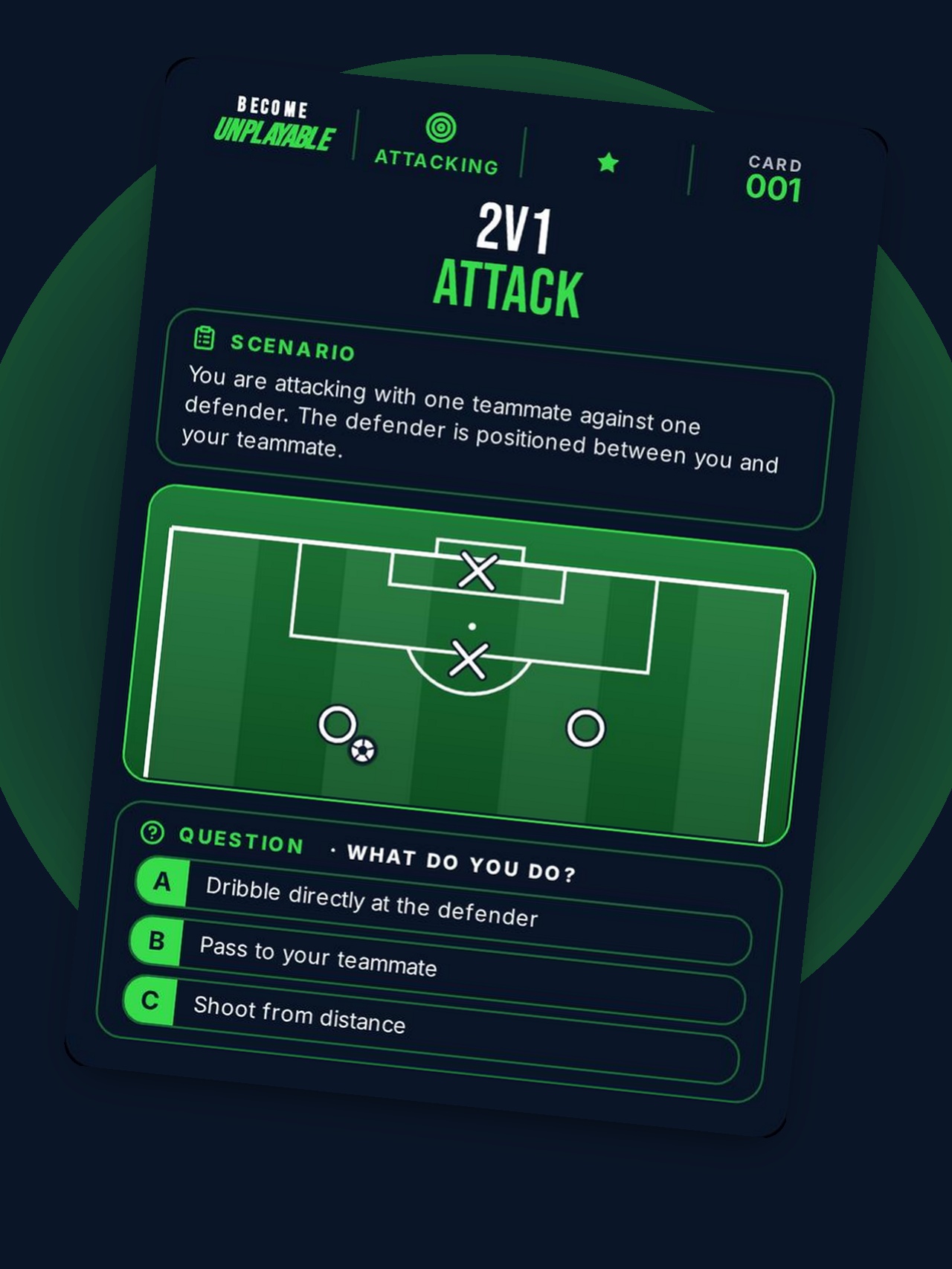
A moment to discuss

What do you think your child would do here?

Your child is playing in midfield. Their striker makes a fantastic sprint beyond the last defender, and for a split second, there's a clear channel to play the ball through. The keeper is off their line, but the defender is closing fast.

There isn't a right or wrong answer — the value is in the conversation that follows.

Common questions

Why does my child struggle to see attacking runs?

Young players are still developing their pitch awareness and ability to process multiple pieces of information quickly. Spotting an attacking run requires them to look up, understand where teammates and opponents are moving, and then make a fast decision, all while handling the ball. This cognitive load is challenging and improves with experience.

Should I tell my child to 'look up' more during games?

While well-intentioned, simply telling a child to 'look up' often isn't very helpful in the moment. It's a skill that develops through practice and understanding the benefits. Instead, focusing on conversations after the match about what they noticed, or what options they saw, can help them build that awareness naturally.

How can I help my child improve their vision on the pitch?

Encourage them to watch football, talk about what players notice, and play small-sided games where they get more touches and decision-making opportunities. Focus on observation and understanding the flow of the game, rather than just technical skills. Ask open-ended questions about what they saw during their own games.

About the author

Become Unplayable

Become Unplayable creates tools and resources designed to help young footballers think about the game, understand situations and develop better decision-making habits.

The card game that teaches kids how to think like a footballer.

Help young players improve their decision-making, positioning, teamwork and football intelligence through fun match-day scenarios. Designed for ages 7–13. No coaching experience required.

Become Unplayable Foundation Pack cards and box

Join the waiting list

By joining you agree to receive Become Unplayable updates by email. Unsubscribe anytime.

Continue reading

More from The Playbook to help you understand your young footballer.

Back to The Playbook

Explore all our articles for parents of young footballers.