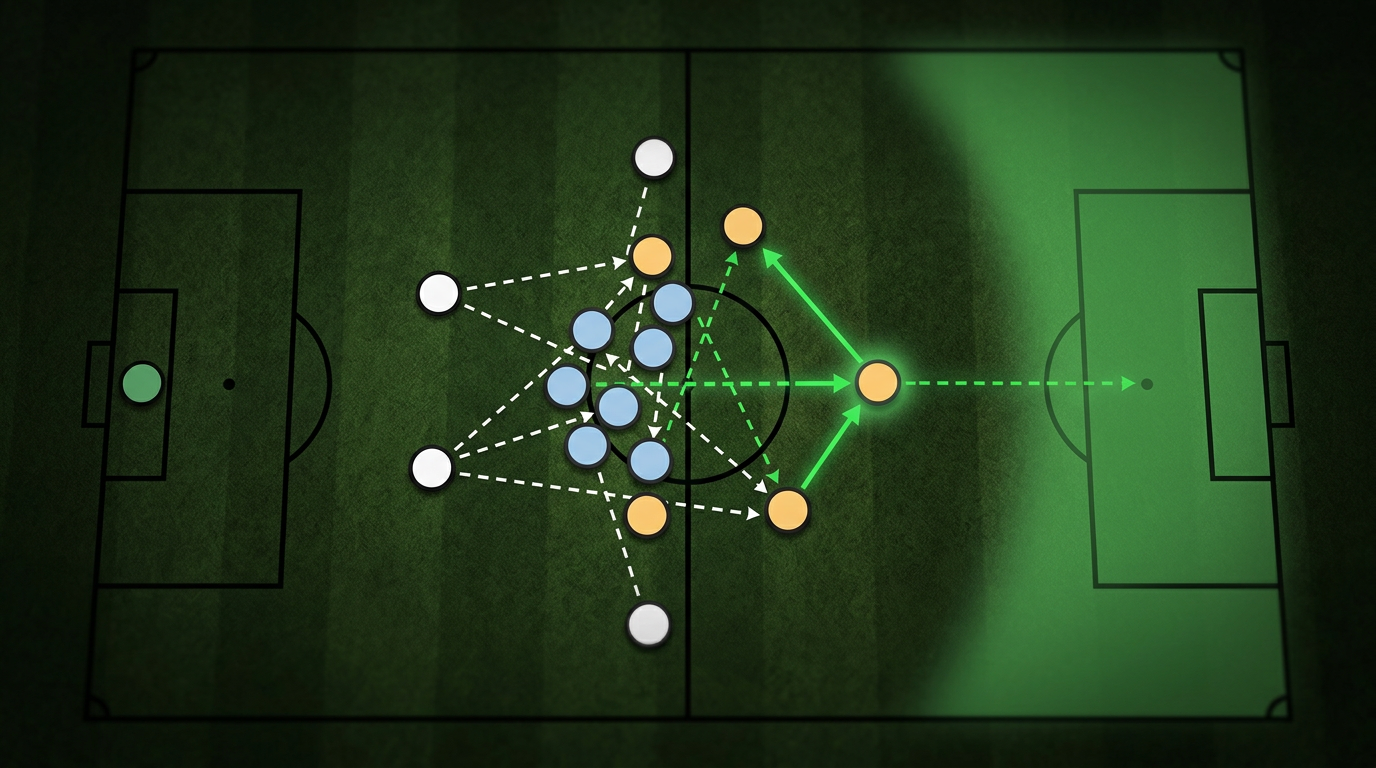
Picture this: your child's team has the ball, pushing up the pitch. You look around, and it seems like everyone, including your own little one, is drawn towards the middle, like magnets to a fridge. The touchlines, sometimes seem to stretch into another postcode as far as many young players are concerned. It’s a natural instinct, but it can make the pitch feel very small for their teammates.
From our vantage point on the sideline, it often looks clear what's needed. But for a young player in the thick of it, with so much happening, recognising the benefits of moving away from the play can be a real challenge. It's not about lacking effort; it's about how they're processing a fast-moving, complex game.
The Pull of the Ball
For many children, the ball is the most exciting thing on the pitch. It's where the action is, where goals are scored, and where praise often comes from. The natural inclination is to be *near* the ball, to join the huddle, to try and get a touch. This isn't a flaw in their play; it's a very human response to the focal point of the game. They want to be involved, to contribute, and the ball represents that opportunity.
When their team gains possession in midfield, the instinct might be to converge on the area where the team holds the advantage. It feels like supporting, like being ready for a pass. What isn't always instantly apparent to a young mind, however, is that sometimes the best way to support the player with the ball is to create space for them, rather than to crowd it.
Understanding Space, From the Inside Out
Seeing the 'big picture' of the pitch and how space works is a skill that develops over time. For younger players, their focus is often narrower – on the ball, on their immediate opponent, or on the goal. Recognising that moving *away* from the ball can actually make a positive impact is a leap in understanding. It means thinking steps ahead, anticipating how their movement will affect not just their own chances, but those of their teammates too.
When a child moves towards the touchline, they're not just moving themselves; they're pulling a defender with them, or at least forcing the opposition to consider that wide space. This 'stretching' effect might feel counter-intuitive. Why run to an empty area when the ball is somewhere else? But it's this very movement that can open up vital channels in the middle for their teammates to pass, dribble, or shoot. It's an unselfish act that contributes to the team's overall success, even if it doesn't always result in them touching the ball.
The Challenge of Decision-Making Under Pressure
Making these 'stretching' movements also requires a healthy dose of confidence and game awareness. They need to trust that by taking up a wide position, they're doing something valuable, even if the ball doesn't come their way immediately. They're weighing up quick decisions: 'Do I get close to help?', 'Do I run forward?', 'Do I go wide?' All this is happening in a split second, with opponents closing in and their own teammates making movements too.
It’s a lot to process for a young player, far more than simply kicking a ball. The ability to see opportunities to 'make the pitch big' and pull defenders out of shape comes with experience, observation, and repeated exposure to match situations. It's a developmental journey, not something that magically clicks into place after one piece of advice.