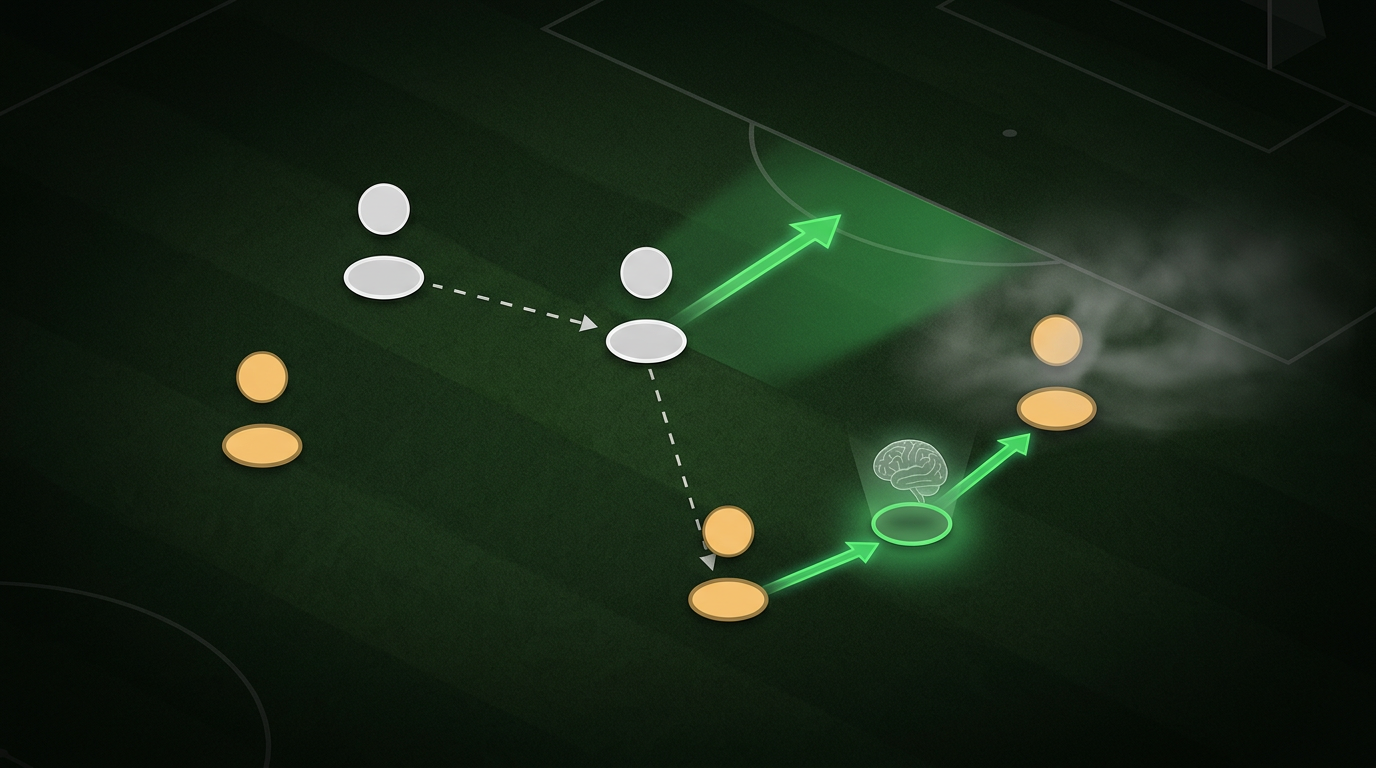
You’re watching from the touchline, the match is flowing, and suddenly an opposition player bursts from deep, running right through the gap in your team’s defence. Your child is nearby, perhaps even marking that player a moment before, but somehow doesn’t seem to spot the danger. The ball might be played, or it might not, but the heart-in-mouth moment for you is that the runner was left free, heading towards goal. It can be a frustrating moment to watch, but for a young player, it’s often far more complex than simply 'not seeing' what was happening.
What makes this such a common occurrence in youth football? Let's peel back the layers and consider what's going on for your child on the pitch.
The Ball is a Magnet
For young players, the football itself is the absolute centre of their universe on the pitch. It's what everyone is chasing, what they want to touch, and what they need to keep an eye on to play the game. Their eyes are naturally drawn to it, almost like a magnet. This intense focus on the ball means that everything else around it – teammates, opponents making runs, space opening up – can become secondary, or even invisible for a moment.
When a defender is watching the ball, and an attacking player makes a darting run from behind them, it takes a deliberate effort to break that ball-focus and scan the space. This 'head on a swivel' habit is something that develops with experience and awareness, and it's not always instinctive when you’re seven, ten, or even thirteen.
The World Shrinks Under Pressure
Imagine being in a match, the pace is quick, there’s shouting, other players running, and the ball is fizzing around. For a young player, this can be an overwhelming environment. Their perception of the pitch can actually 'shrink' under pressure. They might only be able to process a very small area around themselves and the ball, struggling to take in the bigger picture.
A run behind them is often an 'out of sight, out of mind' situation. If they can’t see it clearly in their immediate field of vision, or if they haven’t developed the habit of regularly checking over their shoulder, that player can effectively disappear from their awareness. It’s not that they don’t care; it’s that their brain is trying to cope with so much information in a high-stakes, fast-moving situation.
The Challenge of Multitasking
Defending isn't just about tackling or clearing the ball. It's about constant decision-making and anticipating danger. For a young player, trying to watch the ball, stay in position, possibly mark an attacker, and then also 'scan' for other threats, like a runner bursting through, is a huge ask. It's like trying to listen to two different conversations at once – one of them is bound to get less attention.
The ability to process multiple pieces of information simultaneously, and switch attention quickly and effectively, develops over time. What seems obvious to an adult watching from the sideline, with a broad view of the pitch and no immediate pressure, is a significant cognitive challenge for a child immersed in the match.