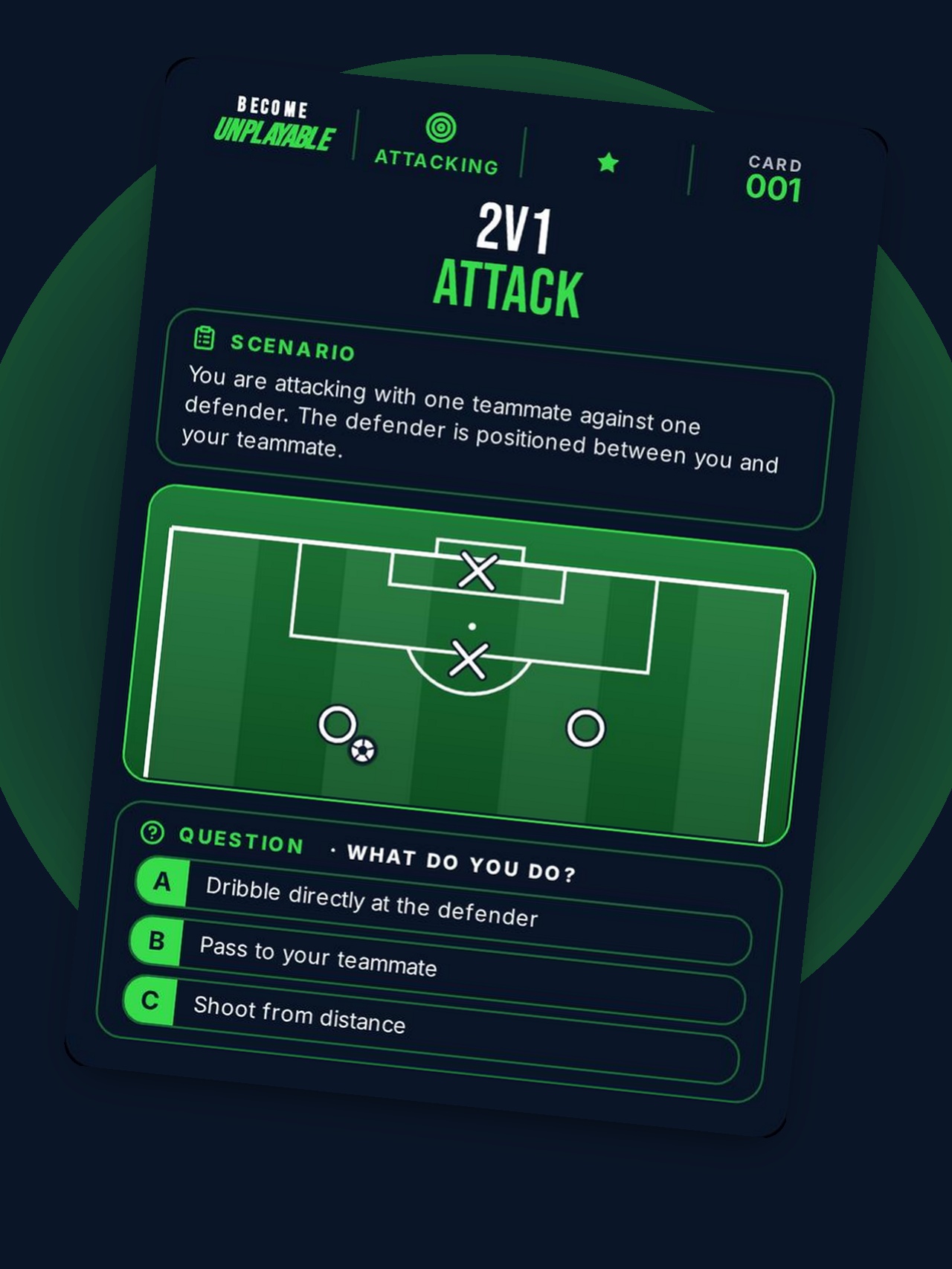
Picture this: your child, during a Sunday morning match, finds themselves in a fantastic attacking position. It's them and a teammate against just one lone defender. It's a prime chance to score, but what's the best way to make the most of it? These 2v1 situations are really common in youth football, and knowing what to do – or helping your child understand their options – can make all the difference.
Understanding the Advantage
The key thing about a 'two against one' is that you have a spare player. That might sound obvious, but it's often overlooked in the heat of the moment. We instinctively want to dribble or shoot, don't we? But having that extra teammate means you can create problems for the defender that they simply can't solve on their own. Their job is to try and nullify your numerical advantage, to make it feel like 1v1 or even 2v2.
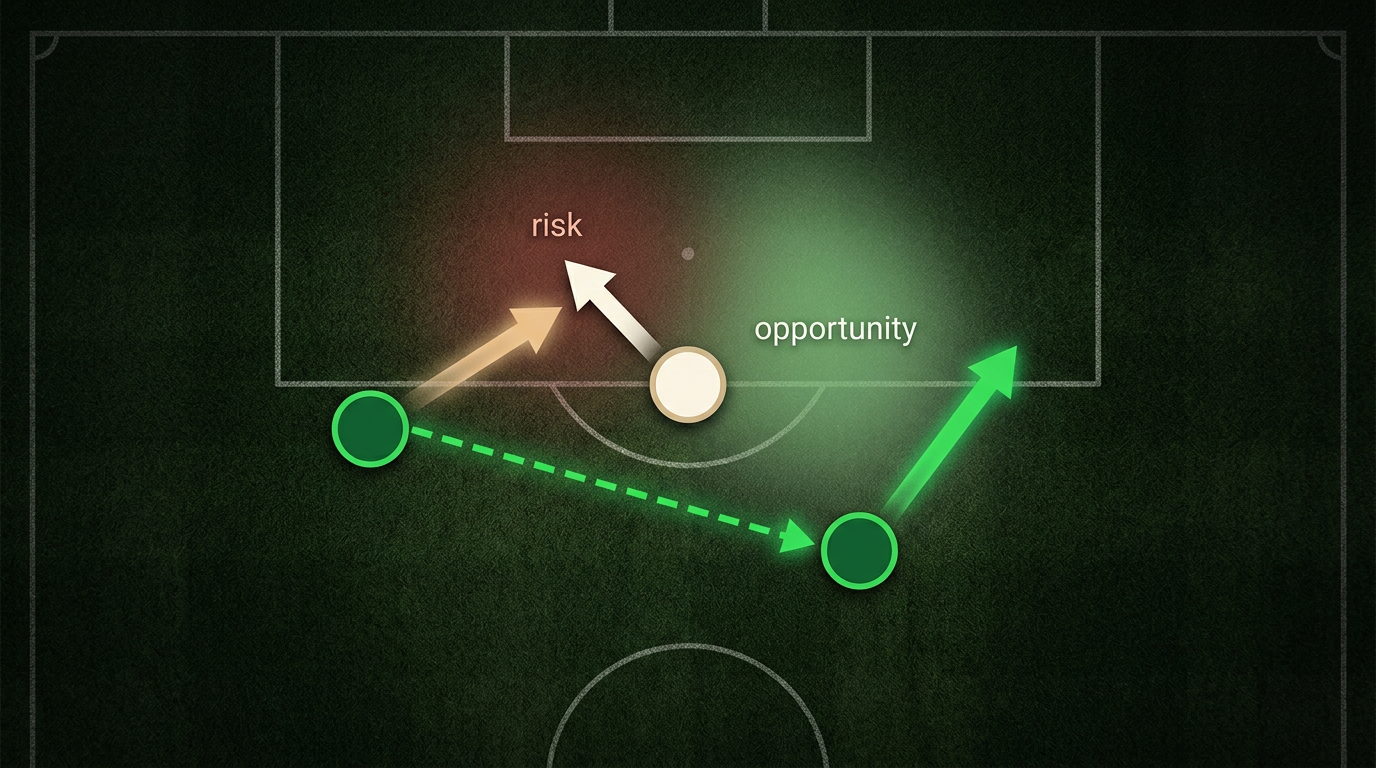
Think about it from the defender's perspective. They have two attackers to worry about but only one body. If they commit to one attacker, the other is free. If they try to cover both, they'll be caught in two minds and likely allow space for a pass or a run. This is the 'problem' we want our young players to understand they can create.
The Pass That Unlocks Opposition
Often, the most effective choice in a 2v1 is the pass. Not just any pass, but one that takes the defender out of the game entirely. Imagine the defender running towards your child. If your child passes the ball to their teammate at the right moment, the defender can't tackle both of them. Suddenly, the teammate is through on goal with a clear shot. It’s about timing and vision, knowing when to release the ball so your spare player is in the best possible position.
This isn't to say dribbling is always wrong. Sometimes, a defender might be slow to react, or commit too early, and a quick dribble past them could be on. But generally, especially when you have a teammate open, that pass is your highest percentage play. It’s what we call 'using the spare player' – a really important concept in football.
Why Not Just Shoot?
Shooting from distance can be exciting, and sometimes it comes off beautifully. But in a 2v1 situation, especially when your teammate is in a good position, it's usually not the best option. The keeper still has a chance, and you're not making the most of your numerical advantage. Why take a harder shot when a simple pass could create a much clearer opportunity right in front of goal?
Encouraging a young player to make the extra pass shows great maturity and understanding of the game. It's about being a team player and seeking out the best chance for the team, not just for themselves. These are the kinds of decisions that truly make a player 'unplayable'.