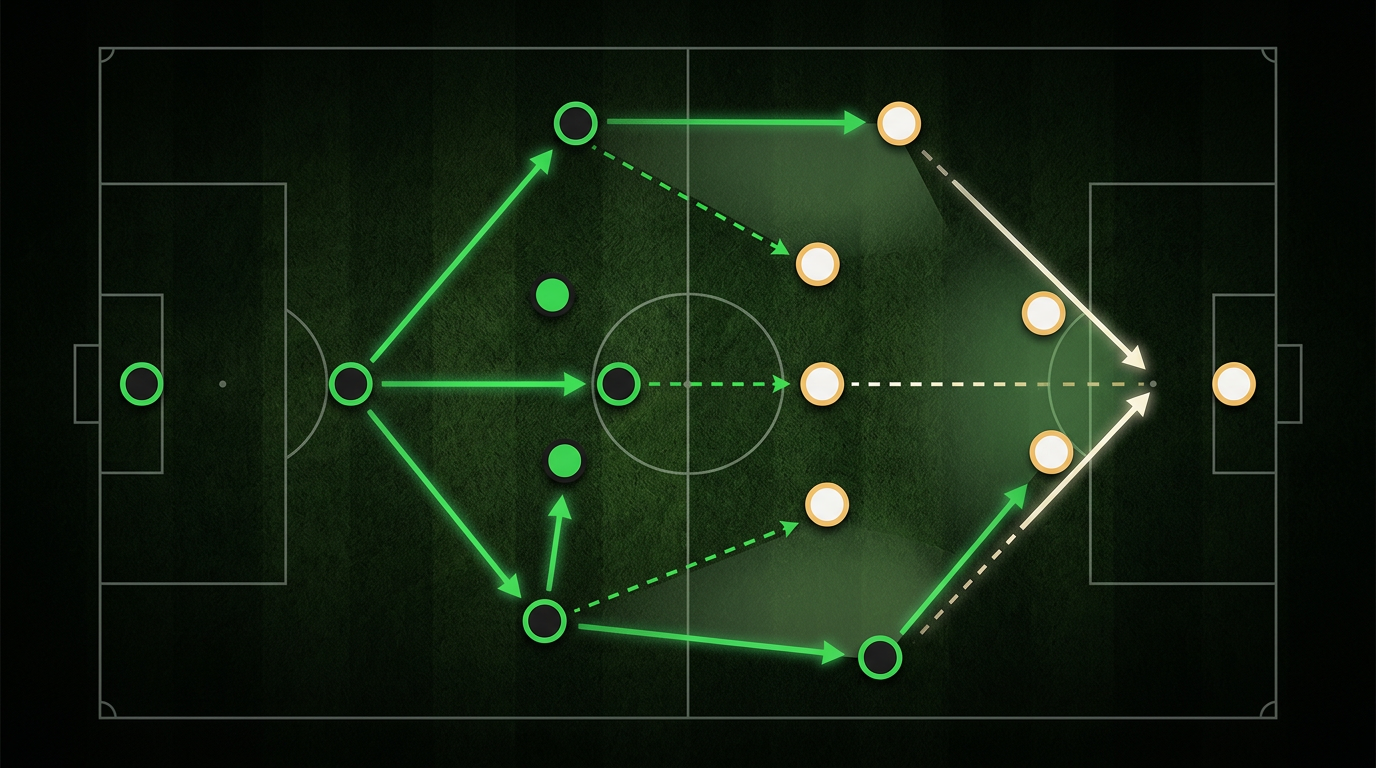
We’ve all seen it: the opposition is pressing high, pushing players forward, and then – suddenly – your child’s team wins the ball. The whole pitch seems to open up. There are pockets of space, opposition players are scrambling, and for a fleeting moment, it feels like anything could happen. From the touchline, it looks like a clear chance to get forward quickly.
But often, what we see next isn't always a lightning-fast break. Sometimes the ball is passed backwards, or a player tries to dribble through too many opponents, or the moment just… passes. Why can these seemingly obvious opportunities be so tricky for young players?
A Child's View: What's Happening in the Scramble?
When the ball is turned over, especially in the middle or defensive third of the pitch, everything changes in an instant. For an adult, it's easy to spot the disorganisation in the opposition and the open spaces. But for a young player, who's often just concentrating on winning the ball back, their immediate focus is usually much narrower. They might be relieved to have possession, or still thinking about the tackle they just made, rather than already planning the next attacking move.
The sheer speed of the game means that while the opposition is trying to get back into position, your child is also under pressure. Teammates might be making runs, but others might still be getting back themselves. It’s a moment of chaos, and making sense of that chaos in a split second is a big ask.
Space Invaders and Time Travellers
One of the biggest challenges in these 'transition' moments is the perception of space and time. From the touchline, the space looks enormous. But on the pitch, with defenders quickly converging, that space can shrink rapidly. A pass that looked easy from afar might be intercepted, or a dribble that looked promising ends up with the player being swarmed.
Young players are still developing their ability to 'see' the whole pitch, to predict where defenders will be, and to judge the weight and direction of a pass over a longer distance. This takes time, practice, and a lot of playing experience. What we see as a clear invitation to attack, they might see as a risky gamble.
The Temptation to Play it Safe
Sometimes, when faced with a rapidly changing situation, a child's natural instinct is to play it safe. Passing backwards to a goalkeeper or a defender can feel like the 'right' thing to do, especially if they’ve been told to keep possession or not give the ball away cheaply.
It’s a natural part of development. As they gain more confidence and a better understanding of the game, they'll start to recognise when taking a calculated risk in these moments can lead to big rewards. But for now, that backward pass might simply be them choosing what feels like the most secure option in a very dynamic situation.