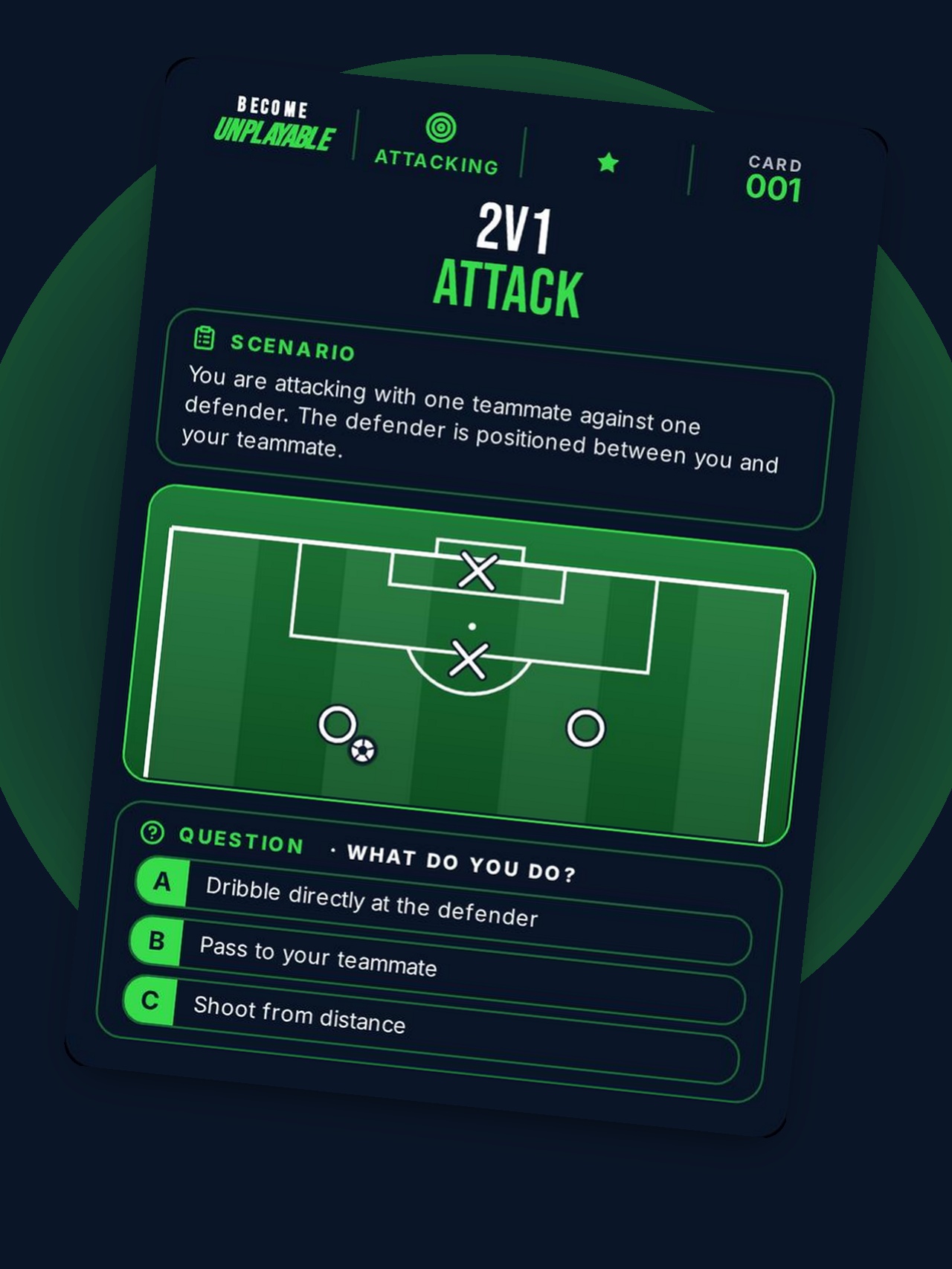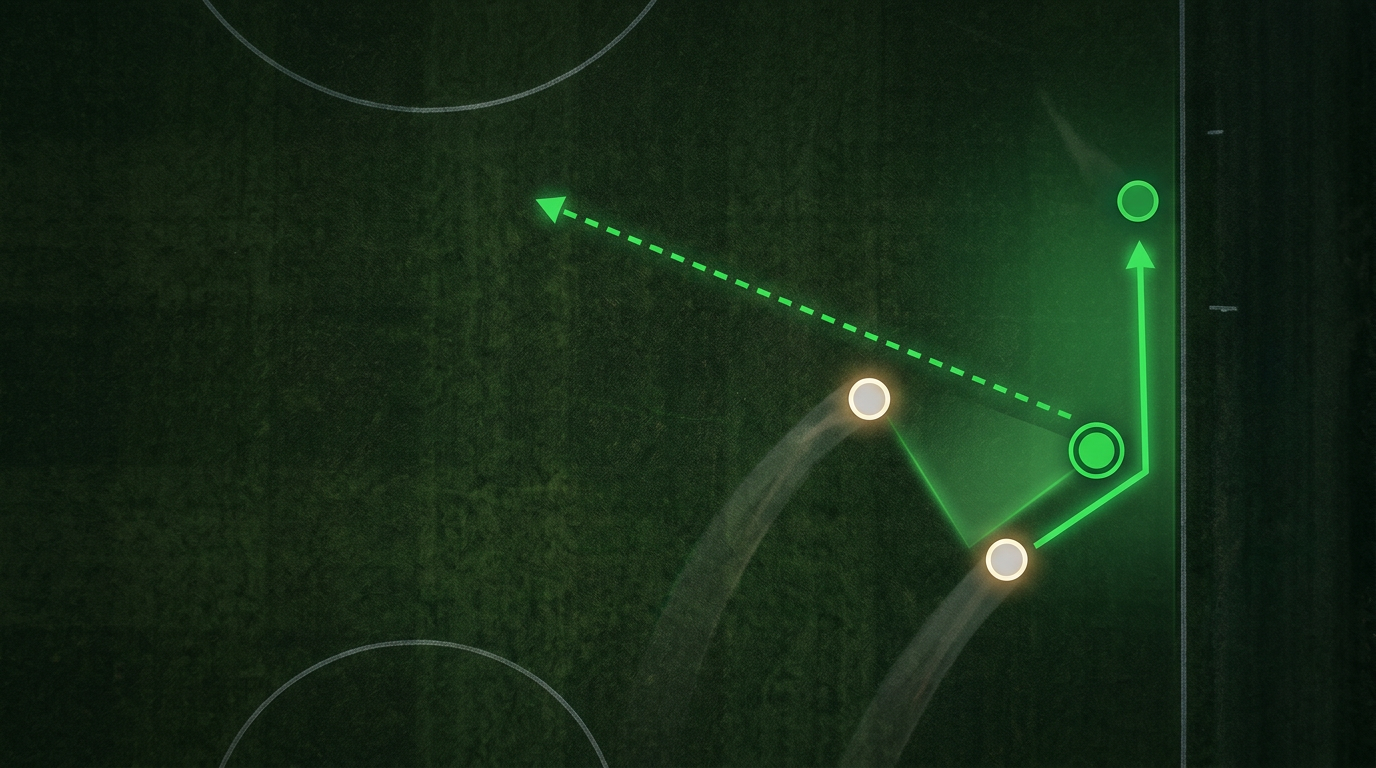
Picture this: Your child is watching from the touchline as their teammate receives the ball, quite wide on the pitch. A defender quickly closes down the teammate, standing directly in front of them, making it tricky for them to move forward. From where you're standing, you might spot an opportunity for your child to make a run, to offer some support or create some space. But often, what seems obvious from the sideline isn't always what happens on the pitch for a young player.
There are so many things going on in a match, so many moving parts, so many decisions to make in a split second. It's easy to forget just how complex these moments are for our young footballers, especially when they're still figuring out the game.
Seeing the Whole Picture
For a young player, just being aware of their teammate with the ball and the defender can be a lot. Adding in the idea of where *they* should run, and whether that run will actually help, requires them to process a lot of information very quickly. They need to see the space, predict where the ball might go, and anticipate what the defender might do. It's a bit like playing chess at high speed, but with all the pieces moving at once and only half the board visible.
Sometimes, they might not even notice the space opening up on the outside, or they might be so focused on not getting in the way that they don't realise they can actively help. Their perception of the pitch isn't always as wide or as deep as an adult's, and that's completely normal.
The Pull of the Ball
Young players are often drawn to the ball like a magnet. It’s the most exciting thing on the pitch, and instinctively, they want to be close to the action. This can sometimes mean they drift towards the ball, even if it brings them into a crowded area. They might not be thinking about creating space for others, but rather about being available for a pass themselves, or even just getting involved in the tussle.
Making a run *away* from the ball, even for a moment, to create an opportunity can feel counter-intuitive. It takes a certain level of game understanding to see that moving into a seemingly 'empty' space can actually be the most helpful thing to do for the team.
The Defender's Dilemma
When a player with the ball is faced by a defender, and a teammate makes a run around the outside – what we call an 'overlap' – it creates a real problem for that defender. Suddenly, they can't just mark one player. They have to decide: do I stick with the player on the ball, or do I try to cover the player making the run?
This moment of indecision, even if it's just a split second, can be enough to create a gap for a pass, or allow the player on the ball to dribble past. It's a simple concept for adults, but for a child, anticipating how their run will affect another player, and how that will then open up options, is a pretty advanced piece of thinking.