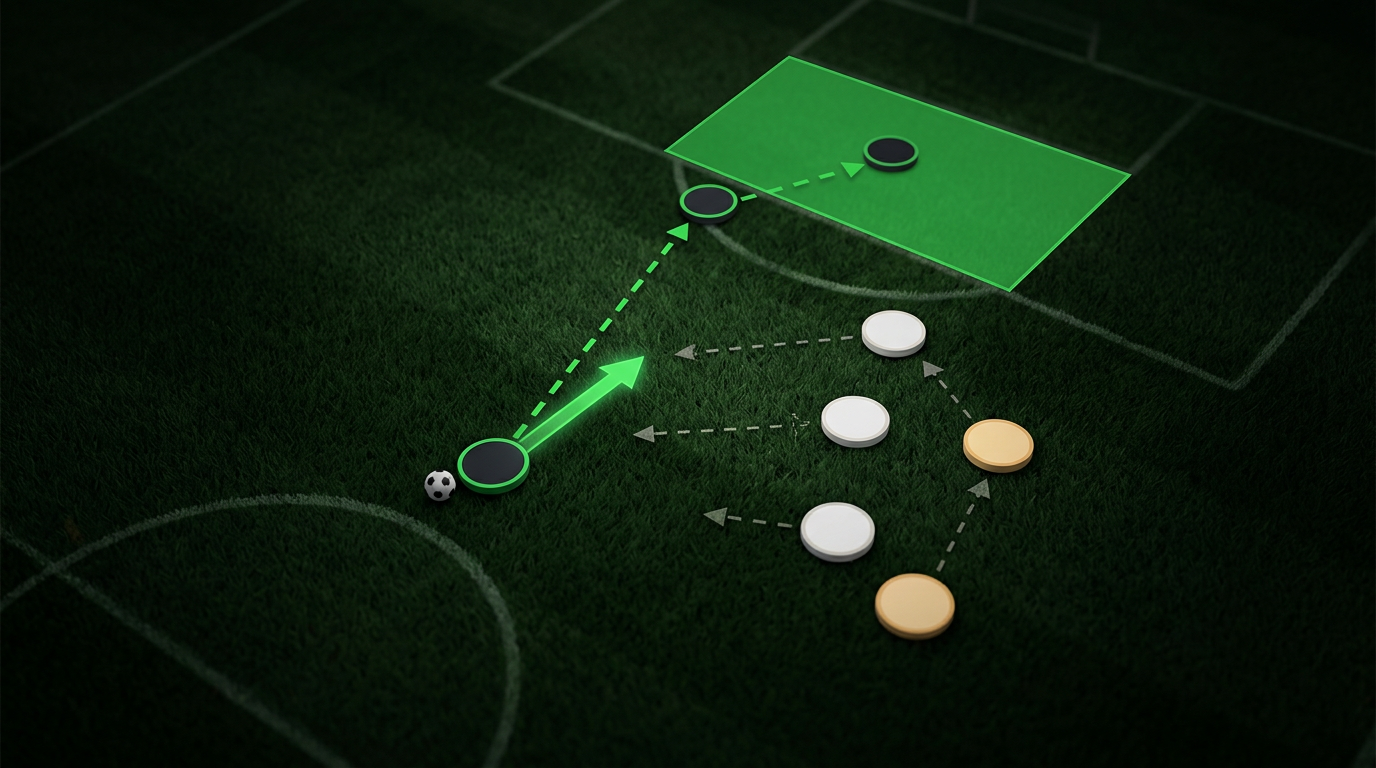
When is 'the extra pass' the right pass?

By Become Unplayable Team· 17 August 2026· 3 min read
When is 'the extra pass' the right pass? — Become Unplayable Playbook

We’ve all watched from the touchline as our child has the ball in a promising position, only to either force a shot or turn away from goal when a teammate was in a better spot. Why does this happen so often?

It’s a moment every football parent will recognise. Your child has the ball in a great position, perhaps just inside the penalty area. The crowd holds its breath. A defender is closing in fast, and your child’s teammate is standing completely unmarked, practically waving their arms for the ball. What happens next can feel like a roll of the dice.

Sometimes they shoot, sometimes they turn away, and sometimes – glorious sometimes – they make that perfect, unselfish pass to the unmarked player for an easy finish. But why is that 'extra pass' so hard to spot, or so hard to make, for young players?

Focusing on the ball, not the bigger picture

Imagine your child has just received the ball. Their primary focus, especially at younger ages, is often just to control it. The challenge of getting a foot on the ball, keeping it close, and not losing possession can be all-consuming. This intense focus on the ball itself means they might not have the capacity to take in everything else around them – where their teammates are, where the defenders are, and crucially, where the goal is relative to everyone.

The pressure of a defender rushing towards them only magnifies this tunnel vision. The immediate threat becomes the most important thing to deal with, leaving less room to process other, perhaps better, options.

The allure of scoring a goal

For many children, scoring a goal is the ultimate thrill. It’s what everyone celebrates, what gets talked about. When they find themselves in a scoring position, even if it’s a difficult one, the instinct to try and score themselves can be incredibly strong. It’s a very natural desire for any player, let alone a child learning the game.

They might not yet fully grasp the concept of 'expected goals' or the idea that an easier chance for a teammate is often far more valuable than a low-percentage shot for themselves. This isn't about selfishness; it's about the developing understanding of what makes a 'good' chance and the powerful, immediate reward of trying to score.

The quick decision problem

In these crucial moments, decisions need to be made in a fraction of a second. Even if your child sees the unmarked teammate, the mental processing required to decide to pass, execute the pass, and do it all before the defender gets there, is a complex chain of events. It requires quick thinking, technical ability under pressure, and the confidence to ignore the immediate instinct to shoot.

Sometimes, turning away from goal isn't a lack of awareness, but a subconscious reaction to pressure when no immediate, clear solution presents itself. It's a way of trying to buy time, even if it means losing a prime attacking opportunity.
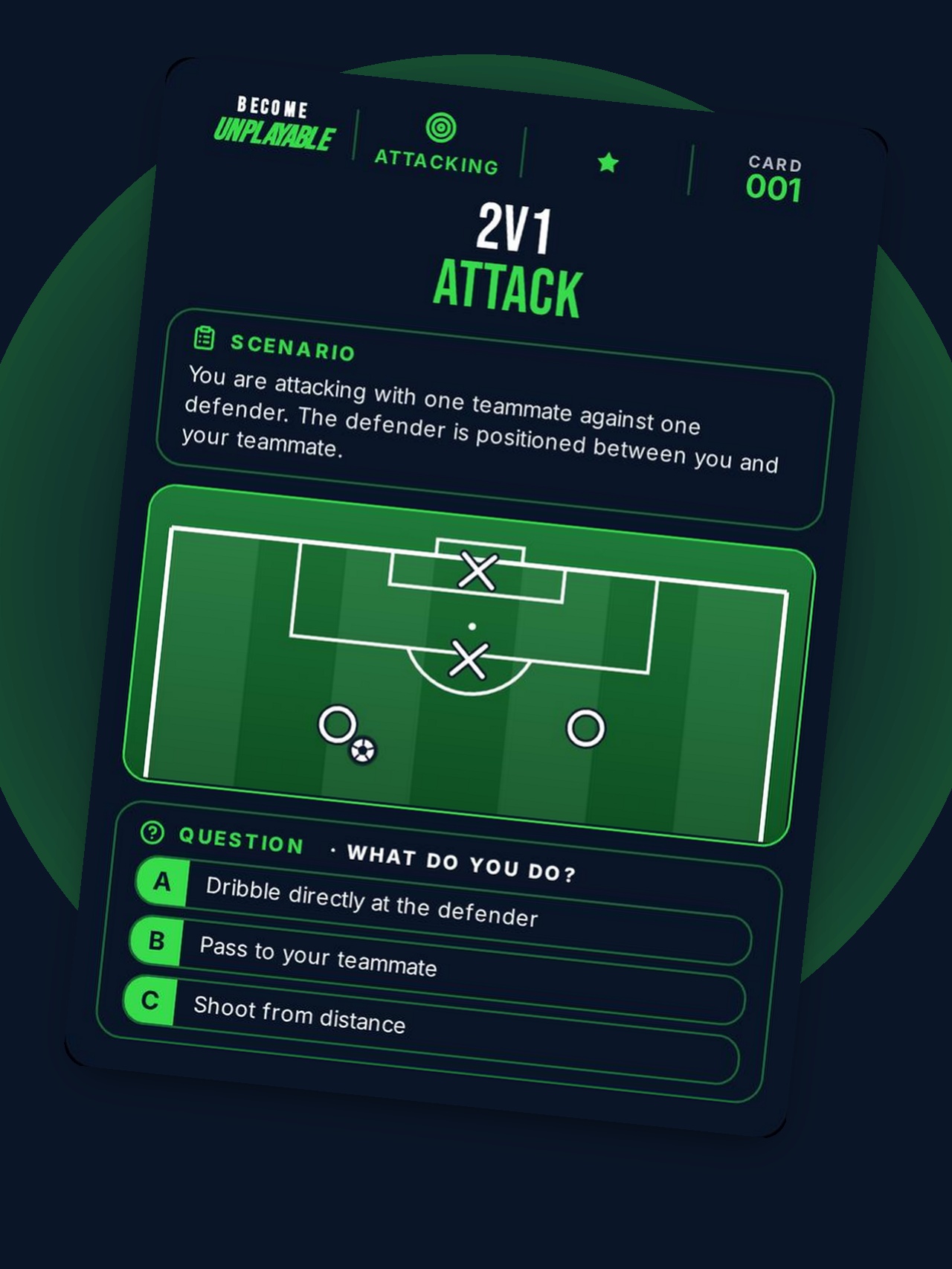
A moment to discuss

What do you think your child would do here?

Your child has carried the ball into the penalty area. A defender is rushing towards them from the side, but you can see that a teammate is completely unmarked, just a few yards away to their left, near the goal.

There isn't a right or wrong answer — the value is in the conversation that follows.

Common questions

Why does my child always shoot instead of passing to an open player?

Young players are often driven by the strong desire to score a goal themselves. It's a natural instinct and the most celebrated action in football. They might also be so focused on controlling the ball and dealing with immediate defensive pressure that they don't fully perceive the better options around them. It's not usually a conscious act of selfishness, but a developmental stage in understanding game awareness and optimal chance creation.

How can I encourage my child to make the 'extra pass' without telling them what to do?

Instead of instruction, focus on open-ended questions after the match. Ask them what they saw, how they felt under pressure, or what options they considered. You could also celebrate smart, unselfish plays when they happen, whether by your child or another player, to highlight the value of teamwork and better chances. Over time, as their game understanding grows, they'll start making those connections themselves.

Is it bad if my child turns away from goal when under pressure?

Not necessarily 'bad,' but it often indicates they felt overwhelmed or uncertain in that moment. Turning away can be an instinctive way for a player to try and shield the ball or buy time when they haven't identified a clear solution. It's a sign that they're still developing their decision-making and comfort on the ball under intense pressure.

About the author

Become Unplayable

Become Unplayable creates tools and resources designed to help young footballers think about the game, understand situations and develop better decision-making habits.

The card game that teaches kids how to think like a footballer.

Help young players improve their decision-making, positioning, teamwork and football intelligence through fun match-day scenarios. Designed for ages 7–13. No coaching experience required.

Become Unplayable Foundation Pack cards and box

Join the waiting list

By joining you agree to receive Become Unplayable updates by email. Unsubscribe anytime.

Continue reading

More from The Playbook to help you understand your young footballer.

Back to The Playbook

Explore all our articles for parents of young footballers.