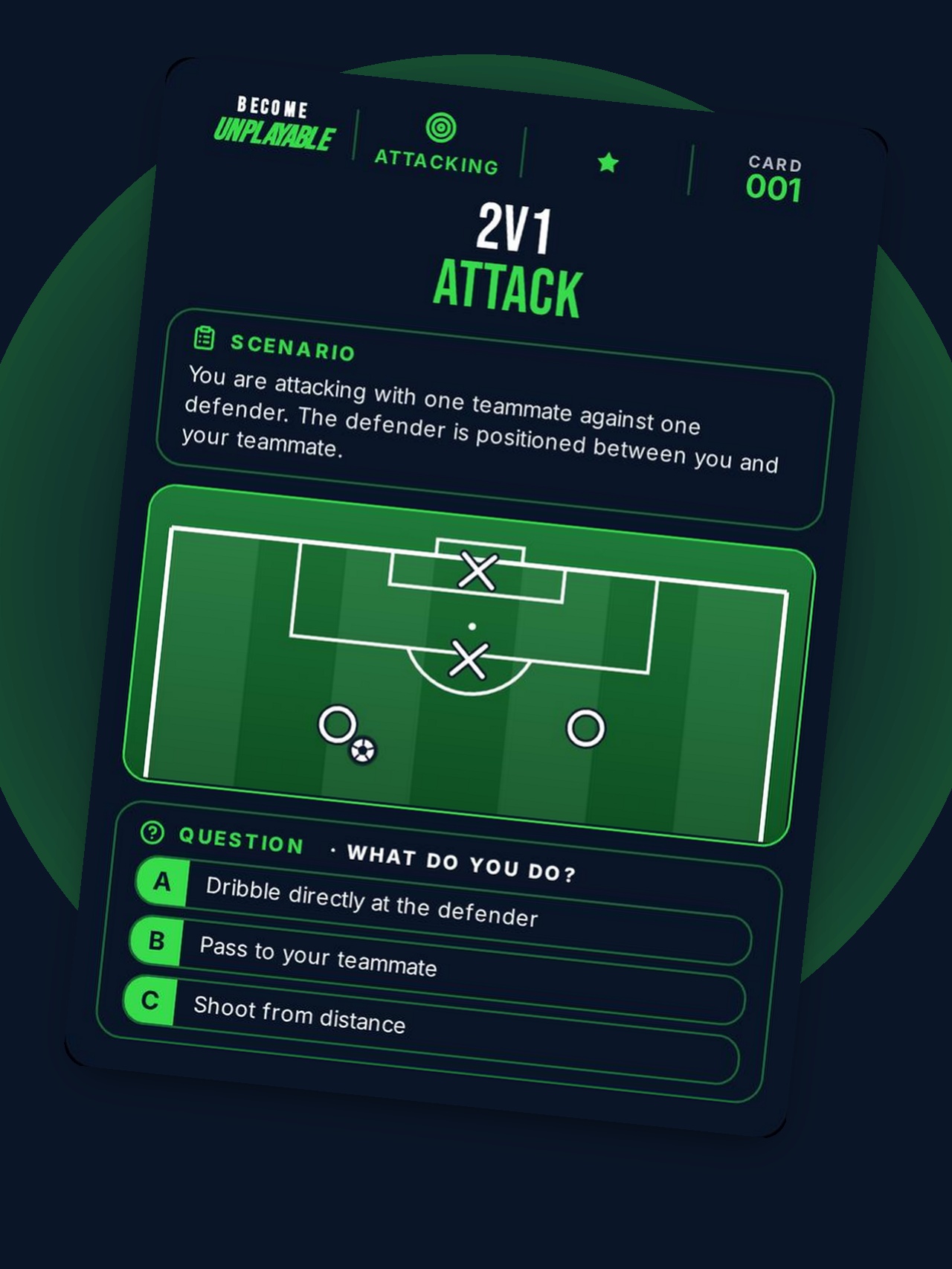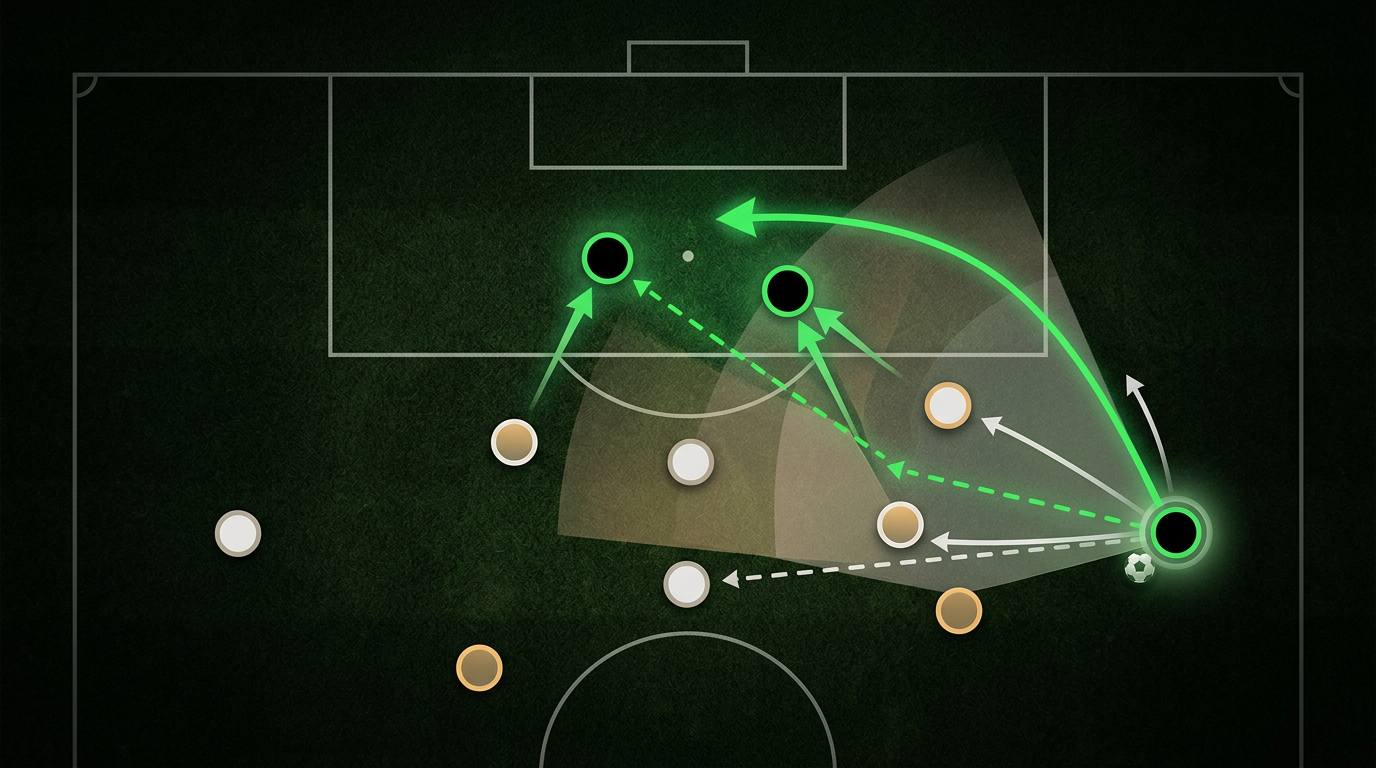
Picture the scene: Sunday morning, a brisk wind, and your child has the ball on the wing. They've dribbled past a defender or two, carried it a good distance, and now they're approaching the byline, getting closer to the goal. You can see two of their teammates, bright as can be, making eager runs into the penalty box, shouting for the ball.
As parents watching from the touchline, we might instinctively think, 'Cross it! That's the obvious choice!' But often, the ball doesn't go where we expect. Sometimes it's a shot from a tight angle, sometimes they stop, and sometimes a cross comes in that doesn't quite find its mark. It leaves you wondering what was going through their mind at that crucial moment.
Why crossing feels riskier than it looks
For a young player, getting the ball to their teammates in the box can feel like a big gamble. When they're dribbling at pace, their eyes are often focused on the ball and the patch of grass directly in front of them. Lifting their head, seeing the runs, and then executing a precise cross with the right weight and direction – all while defenders are closing in – is a complex sequence of skills.
It’s not just about the physical technique; it’s also about the bravery to try. A misplaced pass can feel more noticeable than a shot that goes wide. There's a fear of 'giving the ball away' or letting their teammates down, which can make a more direct, perhaps less effective, option feel safer in the moment.
The lure of the shot and the pause
Sometimes, when a player finds themselves in that wide position, their natural instinct might be to take a shot, even from a very tight angle. Why? Because the goal is still there, even if it's only a sliver of it. For a child, scoring a goal is a truly exhilarating experience, and the possibility, however remote, can be very tempting. It’s a direct action that feels decisive, even if the chances of success are slim.
Another common reaction is to stop with the ball. This often happens because the child hasn't quite processed all the information – where their teammates are, where the defenders are, and what the best next move is. Pausing gives them a moment to think, but it also gives the opposition time to recover, get back into position, and close down the space. It's a defensive decision born from a momentary overload of information.
Seeing the wider picture takes time
Developing the ability to see teammates' runs and choose the best option, like a cross, is a sign of a player starting to understand the bigger picture of the game. It means they're not just focused on their own immediate actions, but on how they can involve others and create chances for the team.
This vision doesn't just appear overnight. It's something that grows with experience, practice, and the development of their spatial awareness. As they play more, they start to recognise patterns, anticipate where teammates will be, and learn to make quicker decisions under pressure. It's about 'scanning' the pitch, not just looking at the ball.