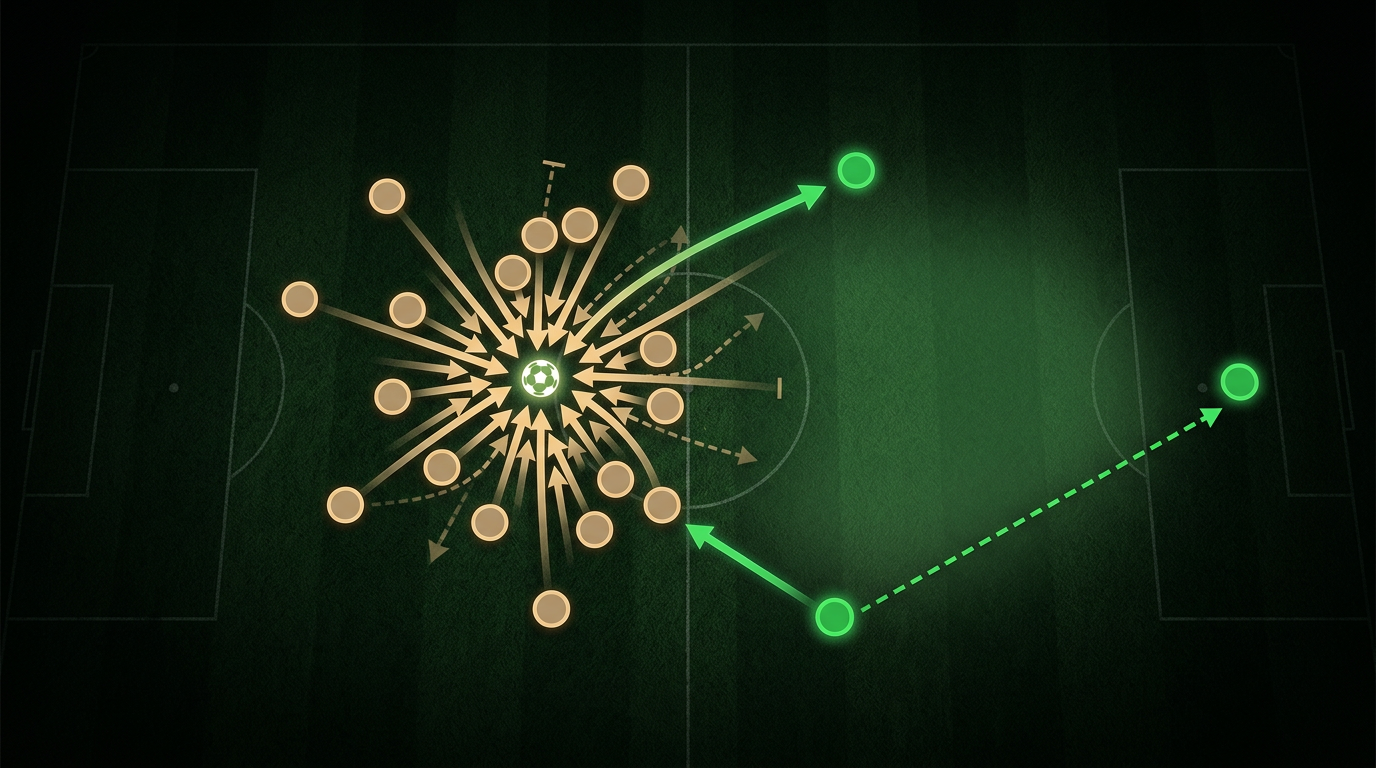
The other team has possession, and suddenly, like magnets to metal, your child and their teammates all converge on the same spot. From the touchline, it can look a bit like a swarm of bees, with everyone wanting to get to the ball. And then, just as quickly, the ball pops out, perhaps to an opponent who now has a clear run towards goal. We’ve all seen it happen, haven’t we?
It’s a natural reaction for many young players, this instinct to chase the ball. But it often leaves parents wondering: why don’t they spread out? Why does no one seem to be guarding the goal when everyone else is upfield?
The Immediate Reward of the Ball
For a young footballer, the ball is often the most exciting thing on the pitch. It's where the action is, where the challenge lies, and where the immediate thrill of winning it back happens. When the other team has the ball, the instinct is often to get it back, plain and simple. What could be more obvious than chasing it down?
Thinking about positions or defensive responsibilities, especially if their teammates are also chasing, can feel like a secondary concern. The 'now' of getting the ball back often overrides the 'later' of what might happen if the ball gets past.
Seeing the Bigger Picture is Hard
It's tricky for children to process multiple things at once during a fast-paced match. They’re focused on the ball, their immediate opponent, and maybe where their closest teammate is. They might not be actively registering that two of their teammates have already committed to winning the ball far up the pitch.
The idea of 'space' – especially the space behind them, near their own goal – is an abstract concept. It doesn't have the same immediate presence as the ball itself. Their brain is still developing the ability to scan the whole pitch, understand spatial relationships, and predict what might happen two or three passes ahead. That's a skill that takes years to hone.
The Pressure to 'Do Something'
Sometimes, a child might feel a strong internal pressure to 'do something' to help their team, especially when the other team is attacking. Chasing the ball feels like doing something proactive. Standing back and guarding an empty space, even if it's the right decision, can feel passive or even lazy to a young player who just wants to contribute.
They might worry their coach or teammates will think they're not trying hard enough if they're not diving into the thick of the action. It's a fine balance between commitment and tactical awareness, and it's one that develops over many matches and many experiences.