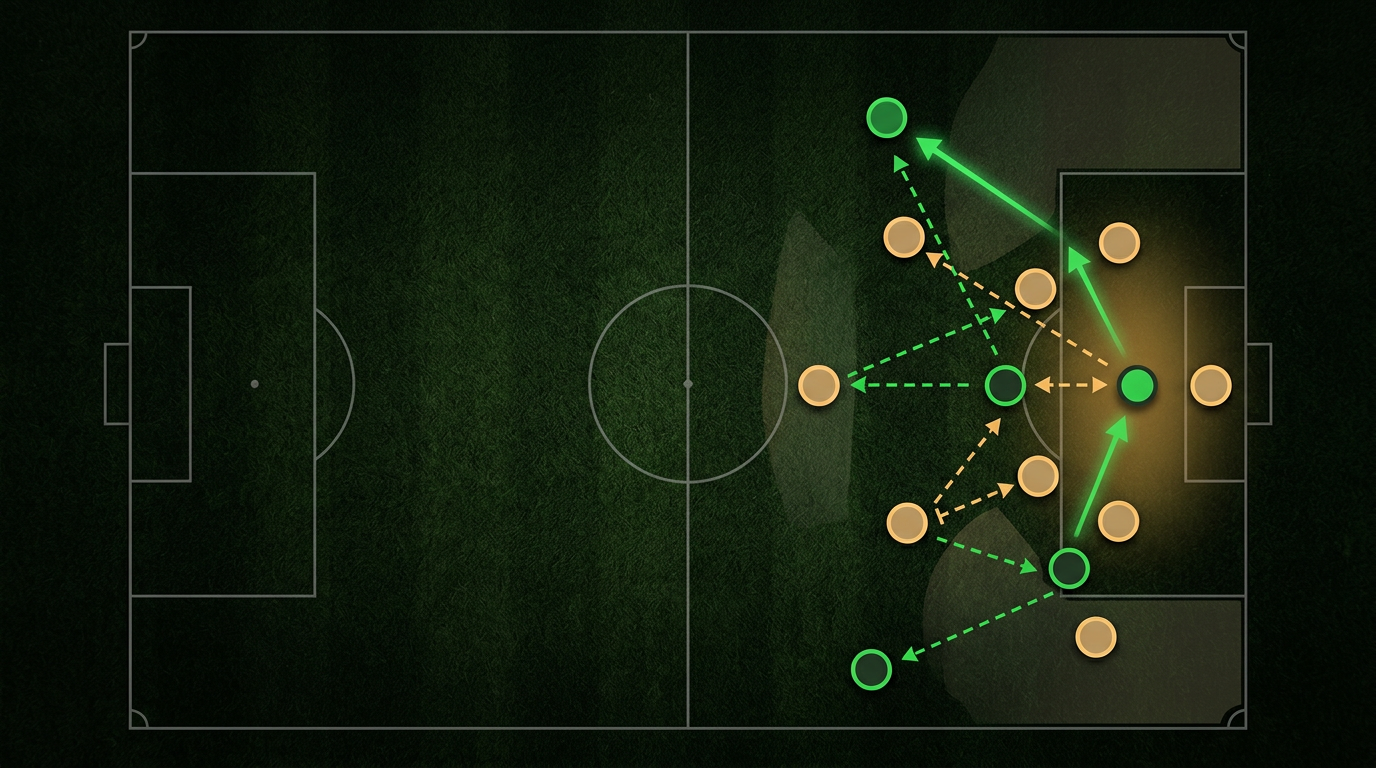
Picture the scene: your child’s team is defending. The opposition winger has broken free down the touchline, and they’ve got the ball. They’re running towards the byline, getting ready to whip a cross into your team’s penalty area. You can see the danger from the touchline, perhaps yelling a little encouragement for someone to 'get out to them!' or 'mark up!'
It seems straightforward enough, doesn't it? But from your child's perspective on the pitch, this moment is often a lot more complex than it appears, with multiple things vying for their attention and demanding a quick decision.
The Pull of the Goalmouth
When a cross is about to come in, many young players are instinctively drawn towards the goal. It's where the perceived action is, where goals are scored and conceded. They might worry about leaving an attacker free in the box or about the ball landing dangerously near the keeper. This natural urge to protect the most obvious danger zone can sometimes mean they neglect the source of the danger itself: the player about to deliver the cross.
It’s a balancing act. They're trying to keep an eye on the ball, their opponent, and the space behind them, all while anticipating where the ball might go next. That's a lot to process in a split second.
Spotting the Threat Early
One of the toughest things for young players is identifying the most immediate threat. Is it the player with the ball out wide, or is it the opposition striker lurking near the penalty spot? Often, by the time the cross is about to be played, the wide player has been left with too much space and time. Closing them down quickly is difficult if your child hasn't recognised that particular player as the primary danger a few seconds earlier.
This isn't about being 'switched on' or not; it's about developing the visual cues and understanding of spatial relationships that lead to proactive decision-making. They're learning to read the game as it unfolds, which takes many, many matches.
The Unpredictability of the Cross
Once that ball is airborne from out wide, it can go anywhere. It might be low, high, swerving, or dipping. It might go to the front post, the back post, or loop over everyone. For a young player trying to defend, this unpredictability can be overwhelming. They might worry about heading it into their own goal, or misjudging its flight, leading to a moment of hesitation or even turning away.
That split-second decision — 'do I attack the ball, or mark my opponent?' — is incredibly hard when the ball's trajectory is uncertain and attackers are on the move around them. It's a skill that develops with experience, helping them anticipate where the ball might land and how to react.