You will know the feeling from the touchline. Your child's team has been comfortable, perhaps leading 1-0, and then out of nowhere an equaliser slips in. The ball gets scooped out of the net, dropped in the centre circle, and the moment the whistle blows, the entire energy of the match changes. Parents shout encouragement, the opposing team suddenly looks twice as fast, and the children look frantic.
Thirty seconds later, the ball rolls back towards your child deep in their own half. The opposition are pressing like wolves, and you can almost see the gears grinding in your child's head. It is one of the toughest moments in youth football, yet we often wonder why children find it so hard to just take a breath and keep the ball.
The emotional rush to fix the mistake
When a goal goes in, a child's natural instinct is not tactical. It is emotional. They feel an immediate spike of adrenaline mixed with disappointment, frustration, or even guilt if they felt responsible for the goal.
That emotional spike creates an overwhelming desire to fix the situation immediately. In a child's mind, the quickest way to erase the bad feeling of letting a goal in is to score one back right now. So when they receive the ball near their own box, their internal compass points directly toward the opponent's goal. Taking two calm touches, looking sideways, or rolling a short pass to a fullback feels completely counter to what their heart is telling them to do.
Why the pitch suddenly feels half the size
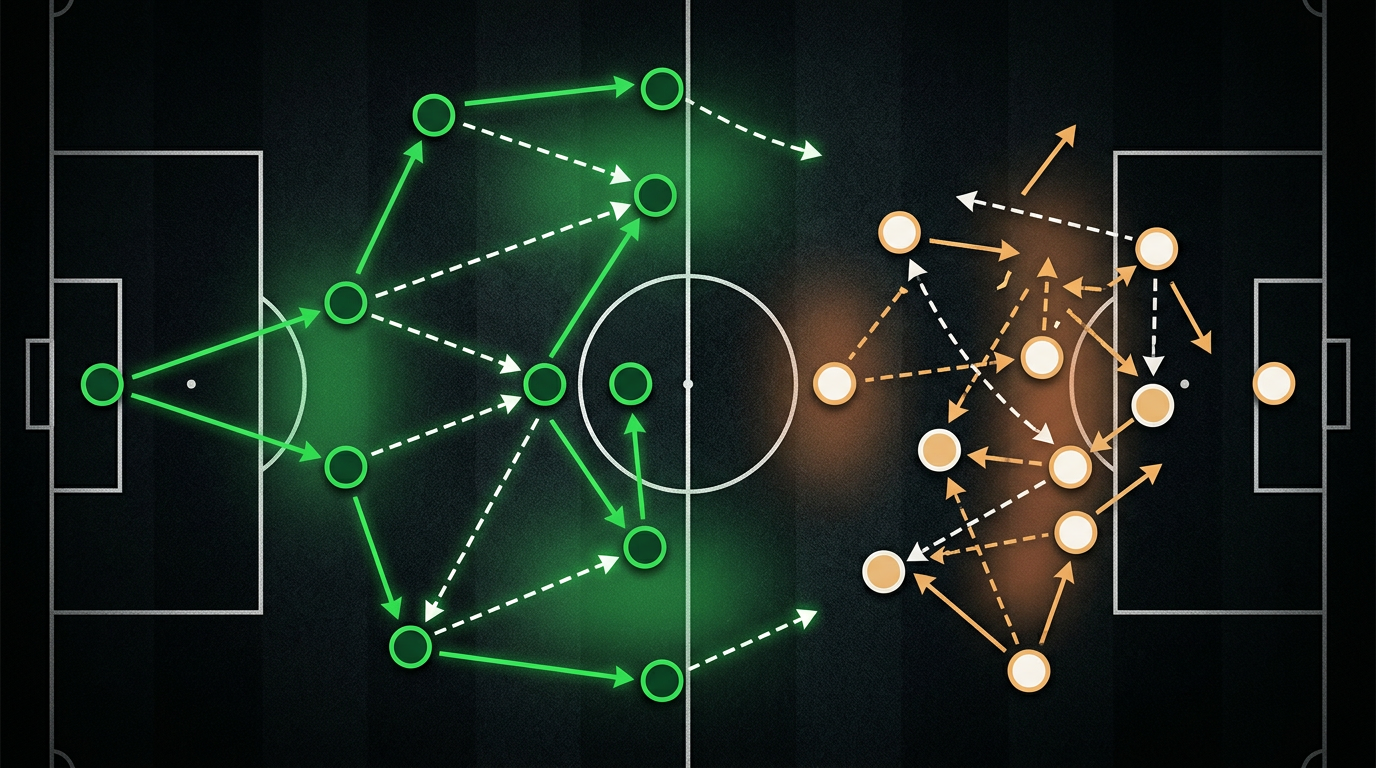
Have you ever noticed how the pitch seems to shrink after a goal? That is not an illusion. The team that just scored gets an enormous boost of energy and confidence. They smell hesitation, so they step higher up the pitch, sprinting forward in packs to capitalise on the momentum.
For the child receiving the ball near their own penalty area, the visual landscape has completely transformed from five minutes earlier. Teammates who were open a moment ago are now surrounded. The space around the ball has vanished. For an eight, ten, or twelve-year-old, processing this suddenly crowded picture while their heart is hammering in their chest is genuinely difficult.
In this moment, peripheral vision narrows. Sports psychologists call this tunnel vision under stress. The child might literally not see the simple, safe pass out wide because their eyes are locked onto the opponent charging directly at them.
The silence that makes things worse
Another quiet problem after conceding is what happens to communication. Usually, a conceded goal brings an eerie silence across the team on the pitch, broken only by shouts from the touchline. Children often retreat into their own heads.
When your child receives the ball in that high-pressure pocket, they are likely receiving it without any information from their teammates. Nobody is shouting 'man on' or 'you have time' or 'turn'. Without those vocal cues from friends, the child assumes the worst, panic takes over, and they either rush an impossible pass or try to dribble out of danger single-handedly.
Learning that calm is a superpower
Recognising that a match has phases is a developmental milestone. Adults understand that conceding is just a moment in time and the priority for the next ninety seconds is simply to steady the ship. For children, the whole match feels like one continuous, urgent story.
When young players learn that the best reply to conceding is simply completing three easy passes together, the frantic energy evaporates. But that understanding only comes with time, gentle reflection, and feeling safe enough to make mistakes while working it out.