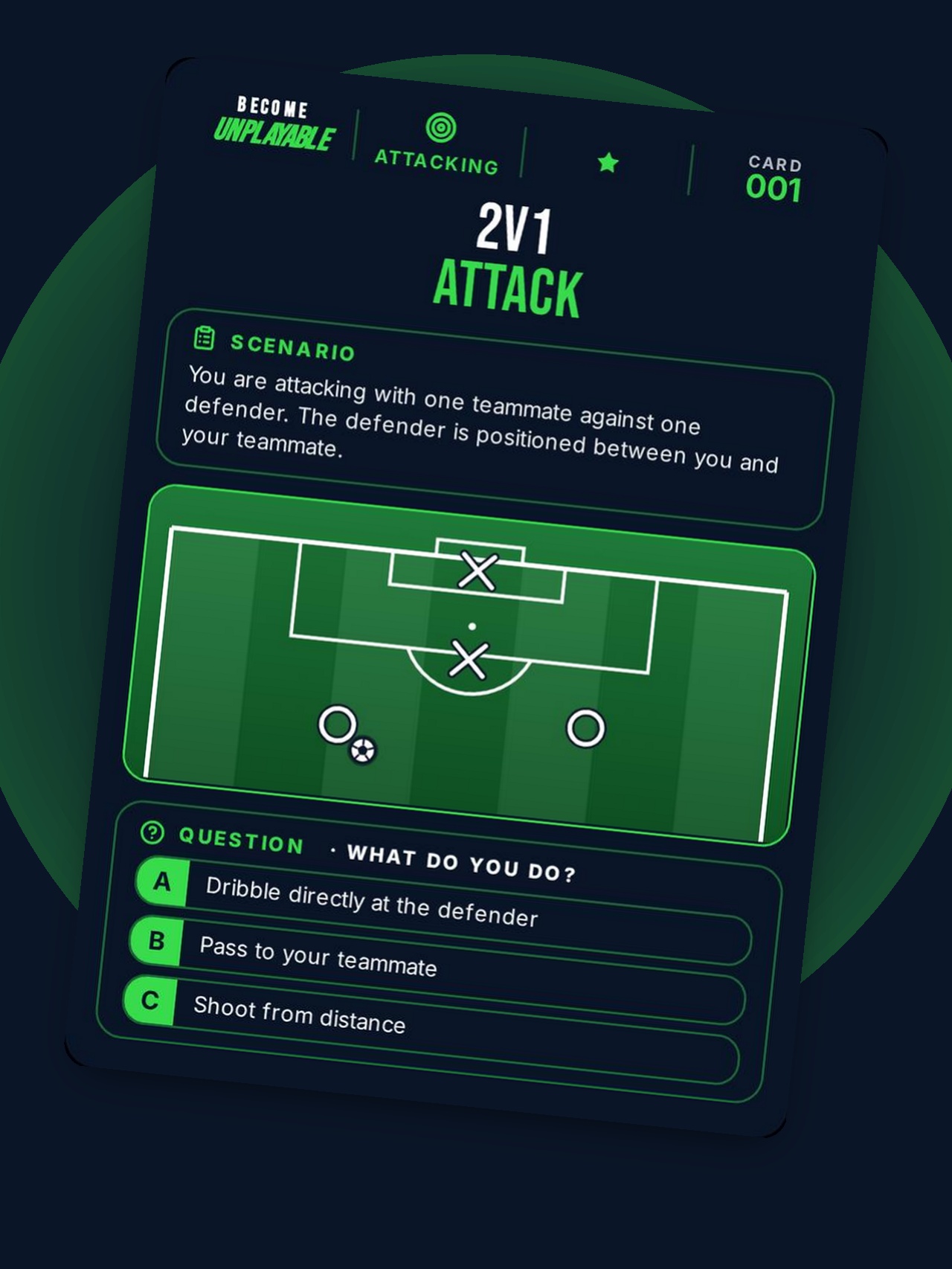
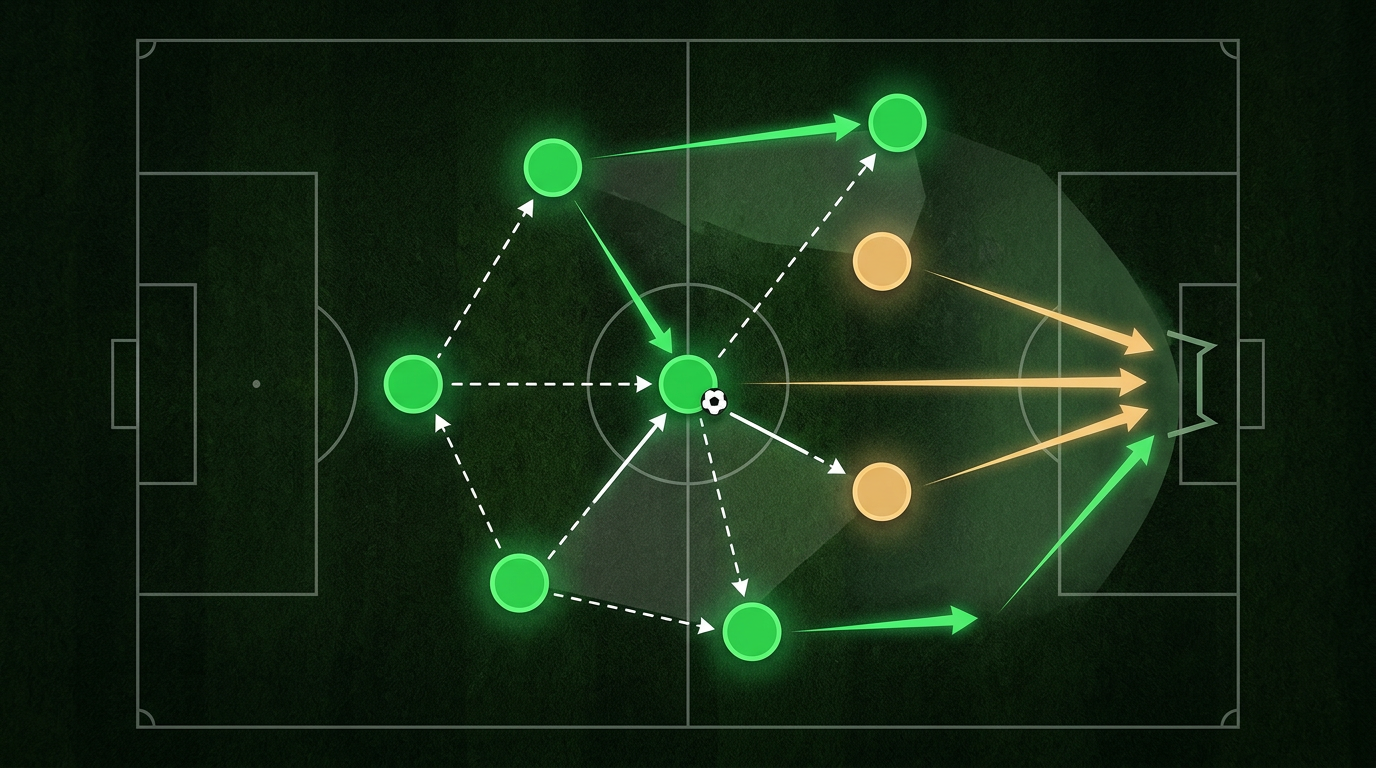
It is five minutes into a damp Sunday morning fixture and the score is still 0–0. Your team snaps into a tackle, wins the ball back, and suddenly there is acres of green turf ahead. Your child gathers the ball in the middle of the pitch. Two teammates sprint forward on either side, with only two backpedalling defenders between them and the penalty area. From the touchline, every parent leans forward. The pass looks obvious. The goal feels almost certain.
Then, in a fraction of a second, your child either releases the pass a yard too early, runs straight into traffic, or turns backwards to reset. The moment vanishes, and someone on the sideline lets out an involuntary groan. But what actually happened in those two seconds inside your child's head?
The sensory overload of sudden freedom
When adults watch a match from five yards back and elevated on a bank, we see angles, running lanes, and space. A child on the grass experiences something completely different. One second they are reacting to pressure, and the next, they are suddenly responsible for an entire attacking move.
Having too many good choices can be just as paralysing as having none. With a teammate charging forward on the left and another overlapping on the right, the brain has to process multiple moving targets at full sprint. Young players often feel an intense surge of urgency in this split second. They know they have an advantage, but they worry that any hesitation will make it disappear.
The difference between playing quickly and rushing
Children often conflate speed of thought with physical panic. When coaches or parents shout from the touchline to move it quickly, a child frequently hears that as get rid of the ball now. This is why you so often see an early, hopeful pass knocked towards a teammate who is not quite ready for it.
Releasing the ball immediately feels like the safest way to relieve the pressure of decision-making. Passing to the first player in view hands the responsibility to someone else. Yet, as defenders recover, that early pass often allows the opposition to slide across and shut down the angle. The bravery in these moments actually lies in doing something counterintuitive: taking an extra stride with the ball to force a defender to make their move first.
The weight of the match situation
Context matters enormously to how children play. At 0–0 in the opening stages of a match, players are still finding their rhythm. Some are terrified of giving away possession so early and creating an opportunity for the other team, so they pump the brakes and turn backwards.
Other children feel that an early breakaway is their golden chance to stamp their mark on the game, leading them to tunnel vision on the keeper. Neither response is a technical flaw. They are emotional reactions to opportunity and risk. Recognising how your child instinctively reacts to a big moment is the first step in helping them make sense of it on the journey home.