Picture this: a player from the other team has the ball, and one of your child's teammates charges in to try and win it back. From the touchline, it might look like a great show of effort, a real tackle in the making. But then, if that first challenge doesn't quite come off, suddenly there's a gap, a space where the opposing player can run right through.
We've all seen it happen. Sometimes it feels like another teammate should have been there, ready and waiting. But for young players, knowing exactly where to be in those moments of defensive chaos is a huge challenge.
The Challenge of Supporting a Teammate
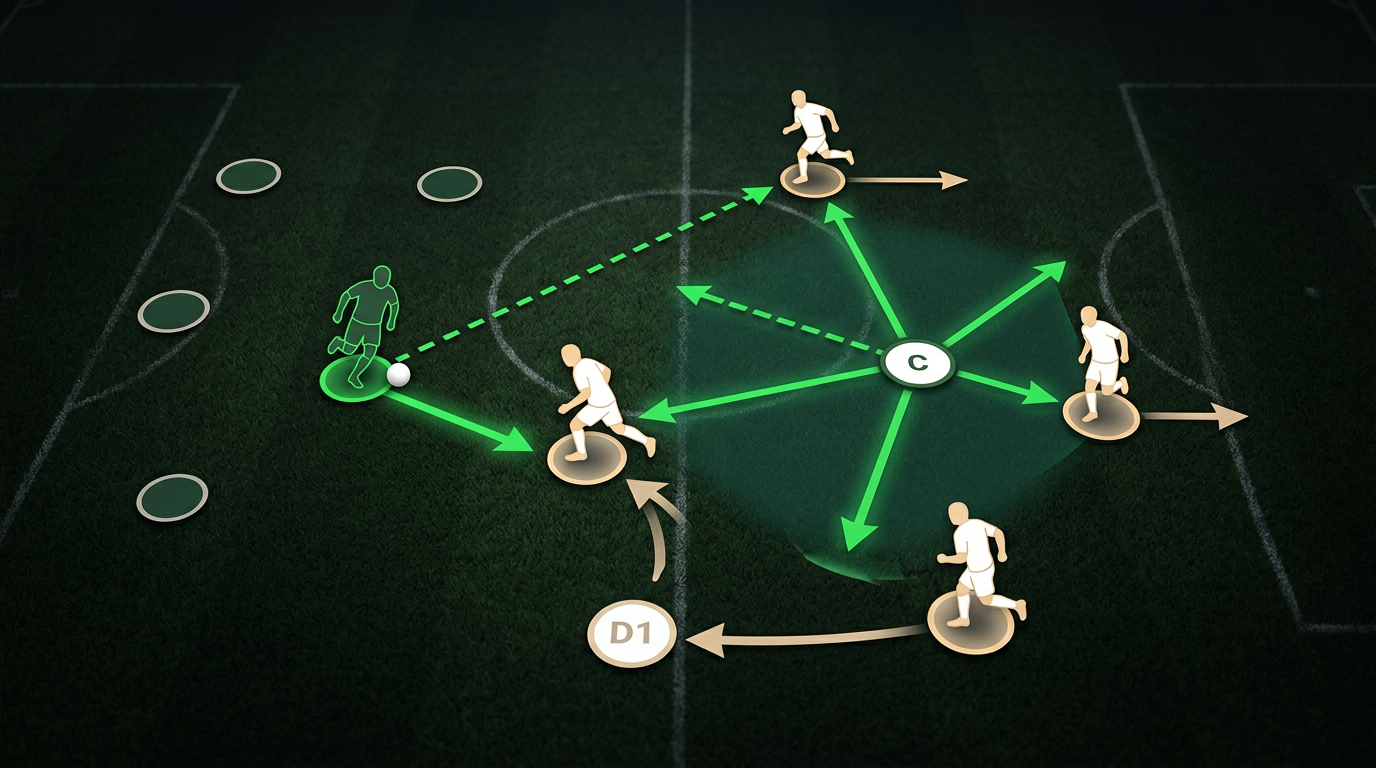
When one player goes to press the ball, it's a big decision. They're trying to win possession, but they're also leaving a space behind them. This is where the idea of 'cover behind' comes in – another player should ideally move into that space, ready to step in if the first tackle is missed.
For your child, understanding this isn't just about being told where to stand. It's about developing an instinct for anticipating what might happen next. They have to watch their teammate, watch the opponent, and make a quick decision about where their help is most needed. It’s a lot to process in a split second, especially when the match is fast-paced and emotions are running high.
Seeing the Whole Picture
Young players often focus intently on the ball. It's natural. Where the ball goes, their attention follows. But 'cover behind' means lifting their gaze, seeing not just the ball and the player with it, but also their own teammate and the space behind them. They need to imagine what might happen if the ball gets past the first defender.
It's a step towards understanding the bigger picture of defending, where everyone has a role in protecting the goal, not just the one chasing the ball. This kind of spatial awareness and forward-thinking develops over time, with practice and experience.
The Risk of Being Beaten Together
Sometimes, a child might try to be too helpful, moving right alongside their pressing teammate. While it feels like they’re supporting, it can actually make things harder. If two defenders are too close, a quick move from an opponent can take both of them out of the play in one go. Suddenly, there’s no one left to stop the attack.
Finding that sweet spot – close enough to help, but far enough to offer real cover – is a subtle art. It’s about balance, about positioning oneself to react, rather than just getting stuck in. It’s a concept that players slowly grasp as they learn the rhythm and flow of a match.