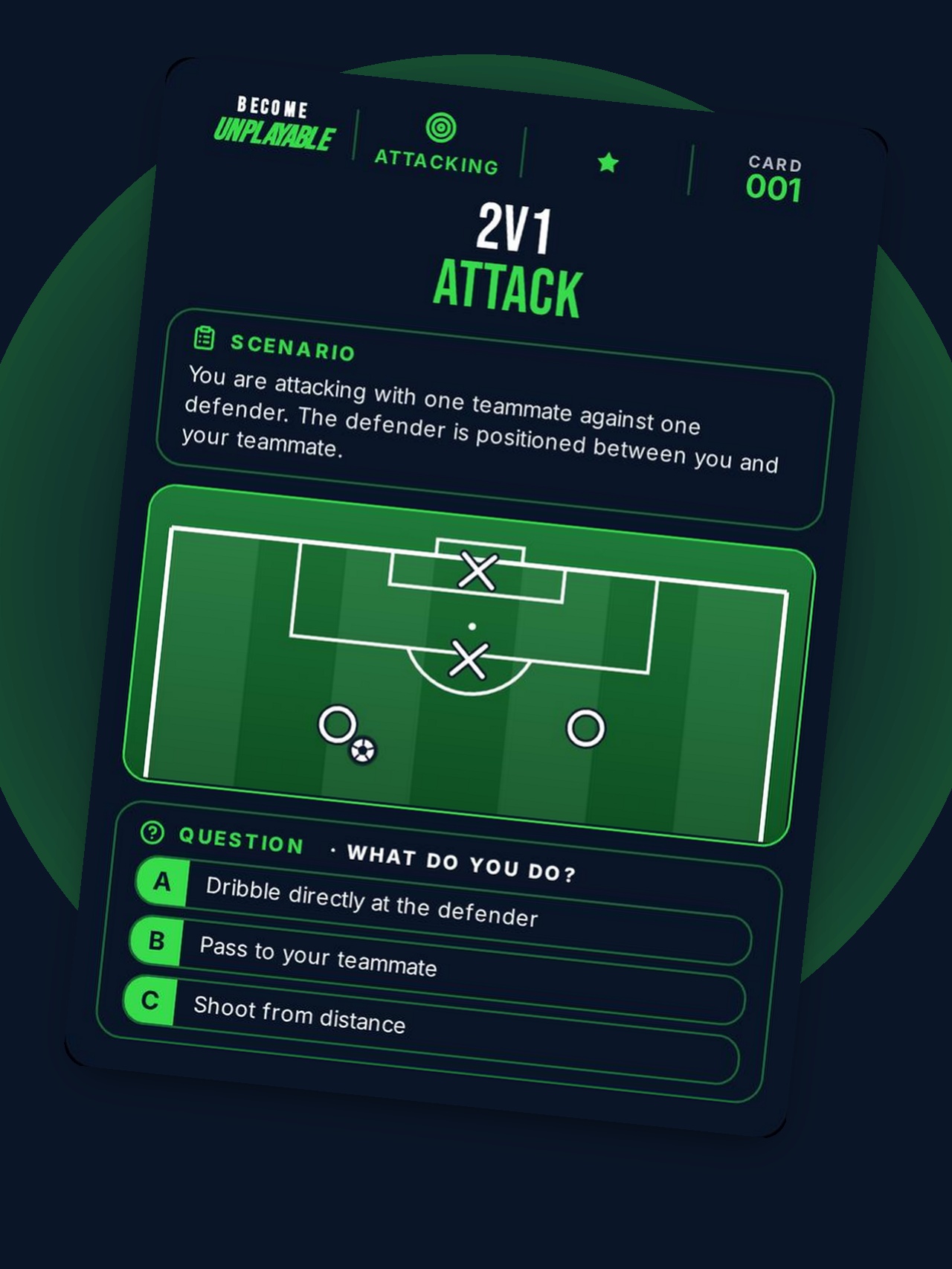
We’ve all watched a match from the touchline, perhaps in a 2-on-1 situation, where your child has the ball with a teammate running alongside them, unmarked. It seems like the perfect chance to pass it across for an easy tap-in, but then the moment passes. Maybe your child shoots weakly, or dribbles into trouble, or perhaps passes the ball straight to the only defender. It’s a moment that can feel incredibly frustrating as a parent, when the solution seems so obvious to us.
But for a young player, that moment on the pitch is far from simple. There are so many things vying for their attention, and what seems like a clear opportunity to us often looks like a complicated puzzle to them.
The Pull to Pass Early
Imagine your child has the ball, their teammate is a blur of motion next to them, and there's just one defender ahead. Many young players are taught to pass to an open teammate, and that instruction is firmly lodged in their minds. So, when they see an opening, even a small one, the natural inclination is often to get the ball away quickly, to 'do the right thing' and pass.
The problem is, if that lone defender hasn't yet committed, an early pass can be easily cut out. The defender hasn't been 'drawn' away, and can simply step in front of the pass or shift across to cover the teammate. It feels like an opportunity, but rushing it means the defender still has options to block both routes.
Why Dribbling Towards Danger Makes Sense
It might sound counterintuitive, but sometimes dribbling towards the defender can actually create more space for a teammate. For a young player, this requires a brave decision, pushing into what feels like a crowded area rather than away from it. It's about 'asking a question' of the defender.
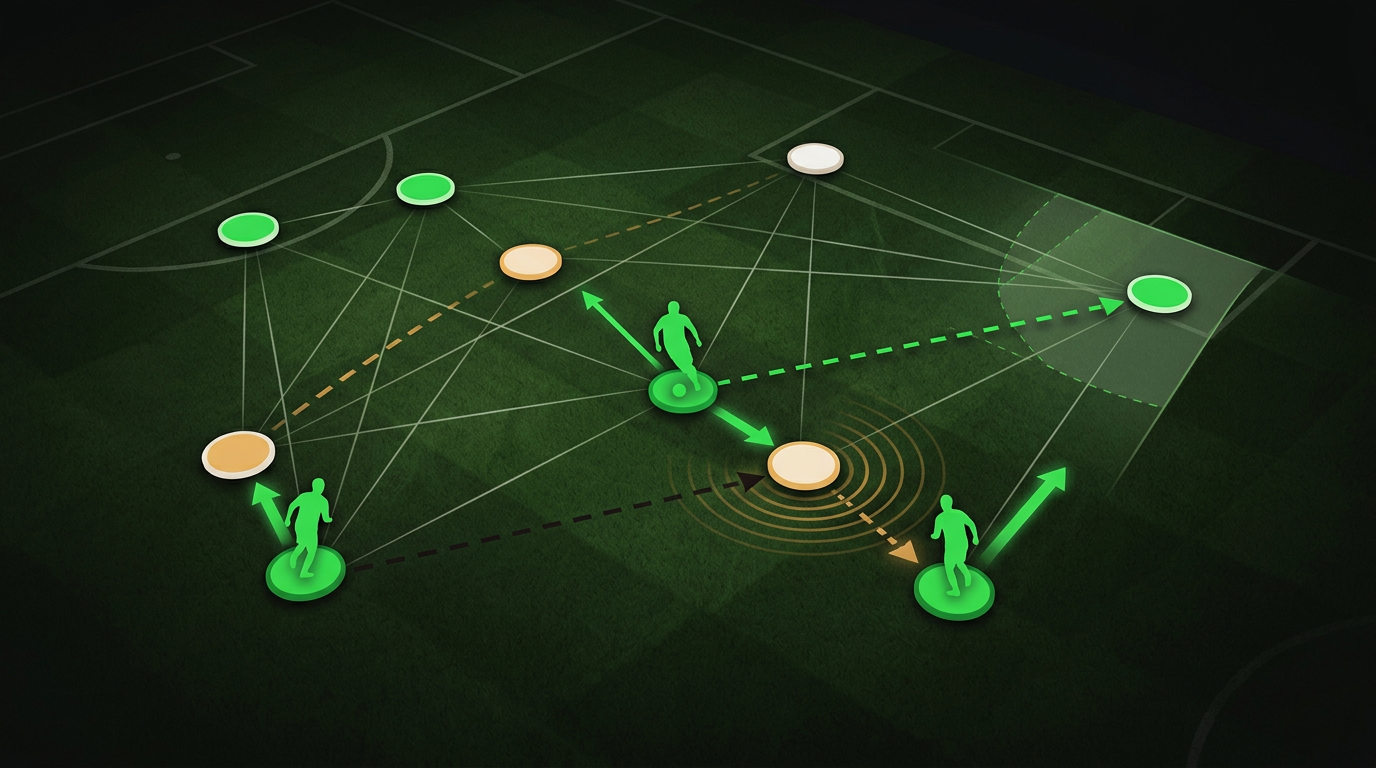
By driving forward, the defender is forced to make a choice: do they step in to tackle your child, or do they hold their position, risking being bypassed? When they finally do commit – stepping towards your child, for example – that's the moment the passing lane to the teammate often opens up significantly. The defender is now engaged, and can't cover two players at once. This split-second commitment is key, but it's a very subtle thing to spot for young eyes under pressure.
The Difficulty of Reading the Defender
Reading an opponent's intentions isn't something that comes easily. What does it mean for a defender to 'commit'? Is it a change in their body shape? A step in one direction? For an adult watching, these cues are often clear. For a 10-year-old in the thick of the action, with a ball at their feet and a teammate calling for it, these subtle signals can be incredibly difficult to process.
They might be so focused on not losing the ball, or on the teammate who seems 'open', that they miss the crucial moment when the defender shifts. It's less about missing a 'simple' pass, and more about not yet having the experience to read the game and understand the ripple effect of their actions – how one movement can open up another opportunity.