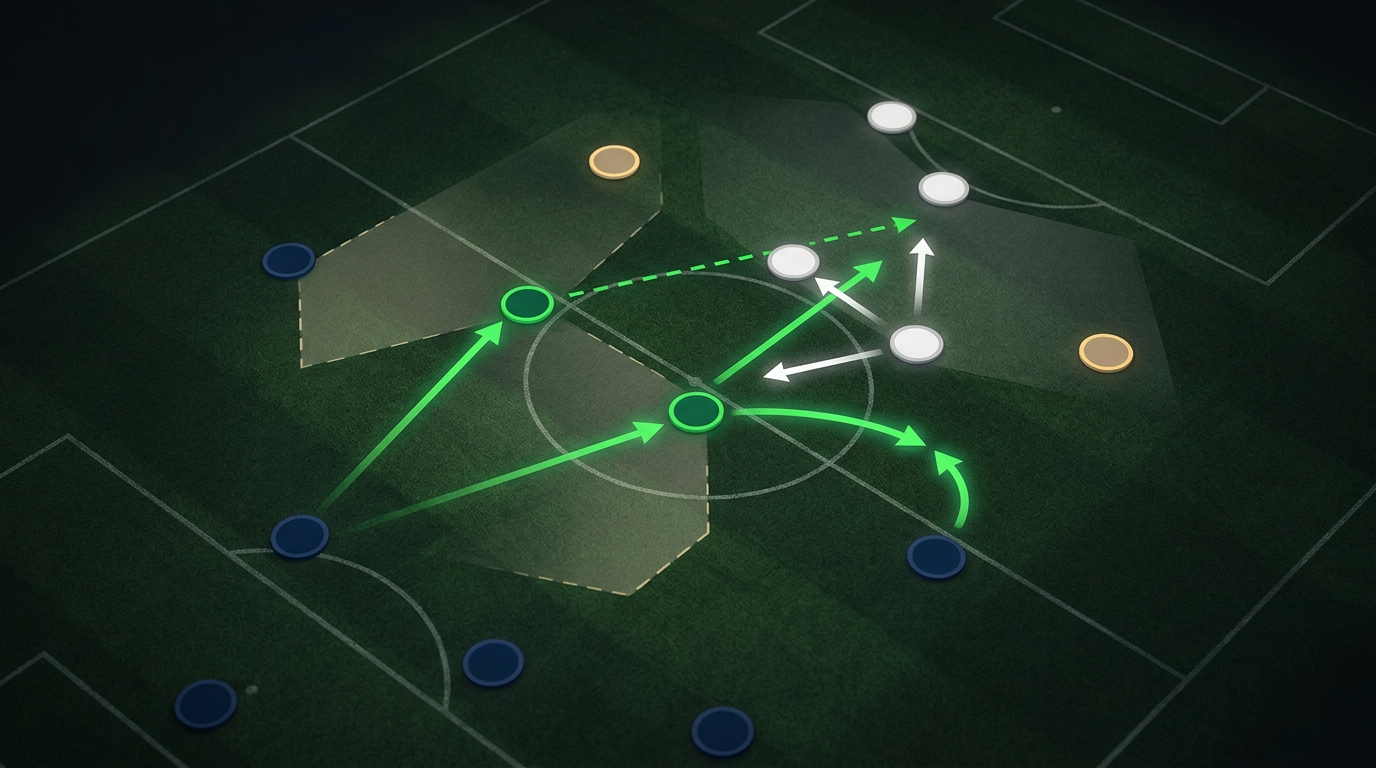
It's one of those heart-in-mouth moments from the touchline. Your child's team has just won the ball back, maybe near the halfway line, and the other team's defenders are still jogging back, looking over their shoulders. Space has opened up, and you can practically feel the collective intake of breath from the parents. This is it, you think – a chance to break quickly and get a shot on goal while the opposition are scrambling.
But often, the pass doesn't come. Or it goes backwards. Or it's a hopeful long punt that gives away possession. The moment passes, the defence reorganises, and the feeling of opportunity fizzles out. It leaves you wondering, 'What happened there? Why didn't they just go for it?'
Seeing the 'Picture' Takes Time
For an adult watching, the game often looks slower. We can see the gaps, the runs, the unorganised defenders. For a child on the pitch, it's a whirlwind. They're focused on the ball, their immediate opponent, the sound of the coach, their own teammates. To 'see the picture' of a counter-attack – the space opening up, a teammate making a run into that space, the speed at which the opportunity is closing – requires a complex blend of awareness and quick processing that develops over many, many matches.
Winning the ball back means a sudden switch from defending to attacking. In that split second, a child's brain is flooded with new information. 'Where's the ball? Who's near me? Is an opponent about to tackle me?' All of this happens before they can even begin to think about what opportunities might be available further up the pitch.
The Instinct to Stay Safe
One of the strongest instincts in young footballers is often to keep possession and avoid losing the ball. Making a forward pass into space, especially a longer one, carries a higher risk of giving the ball away. For many children, a 'safe' pass backwards or sideways, even if it slows down the play, feels like a more reliable option than trying something ambitious that might fail.
This isn't a bad thing – keeping possession is vital. But in moments of transition, like a counter-attack, the 'safe' option can sometimes mean missing a golden opportunity. It's a balance they learn to strike as they grow, understanding when the risk of a quick forward pass is worth the potential reward.
Timing is Everything (and Hard to Master)
A successful counter-attack depends on perfect timing: the pass, the run, the finish. If the pass is too early, the runner might be offside. Too late, and the defenders have recovered. Making a penetrating run into space requires a child to anticipate not just where they are going, but where their teammate might put the ball, and how quickly.
The speed at which defenders recover is also a huge factor. What looks like acres of space one second can be closed down rapidly the next. This 'window of opportunity' is often tiny, and recognising its existence and then executing the required action within it is a real challenge that players work on for years.