We’ve all been there, watching from the touchline, heart in our mouths. Your child is defending one-on-one, and instead of pushing the attacker wide, they seem to be ushering them towards the middle of the pitch. Our first thought might be, 'Oh dear, don't let them in there!' It can look like a lapse, a moment of indecision, or even a mistake.
But sometimes, what looks like a 'wrong' move from the sideline is actually part of a bigger picture, a tactical choice made by the team, even at grassroots level. It's not always about individual defending; sometimes it’s about collective defending.
The Instinct to Go Wide
For many young players, a core defensive principle they learn early on is to 'show them down the line' or 'force them wide'. The idea is simple: push the attacker into less dangerous areas, limit their options for a shot or a pass into the box, and use the touchline as an extra defender. It’s a really sound piece of advice for most one-on-one situations, and it quickly becomes ingrained.
So, when a child suddenly finds themselves in a situation where they're asked to do the opposite – to deliberately channel an opponent inwards – it can feel counter-intuitive. They're going against a strong habit, and that takes a lot of mental effort and confidence in the team's plan.
The Hidden Teammate
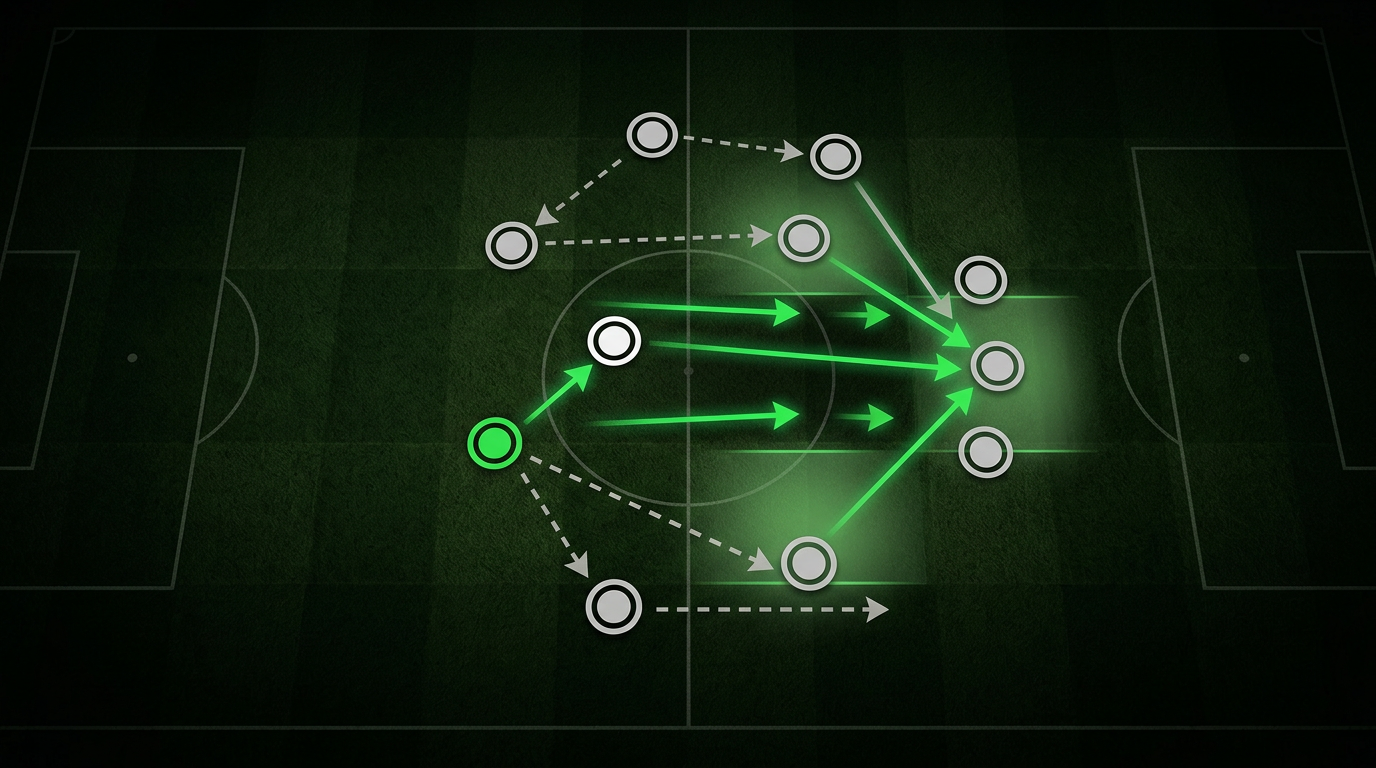
The reason a team might want to force an attacker inside usually comes down to another player. Perhaps there’s a holding midfielder who is particularly good at winning the ball, or another defender who has been instructed to 'step up' when play comes into a certain zone. The idea is to create a trap.
From your child's perspective, they’re not just defending one-on-one; they're working in tandem with a teammate they might not even be able to see properly in their peripheral vision, or who is positioned behind them. It requires trust and an awareness of what others are doing around them, which develops with age and experience.
Reading the Game and Their Role
This kind of defending isn't just about technique; it's about understanding tactics and playing a role within a system. For young players, grasping abstract concepts like 'forcing play' or 'channelling into a press' can be really challenging. They're still very much focused on what's directly in front of them and their immediate opponent.
It also asks them to make a quick decision under pressure: is this a 'force wide' situation, or is it a 'force inside' situation? Distinguishing between the two, especially when the game is moving fast and the coach's instructions might be a distant memory, is a huge ask for a developing footballer.