Why Moving the Ball Across the Pitch is Harder Than it Looks

By Become Unplayable Team· 31 August 2026· 3 min read
Why Moving the Ball Across the Pitch is Harder Than it Looks — Become Unplayable Playbook

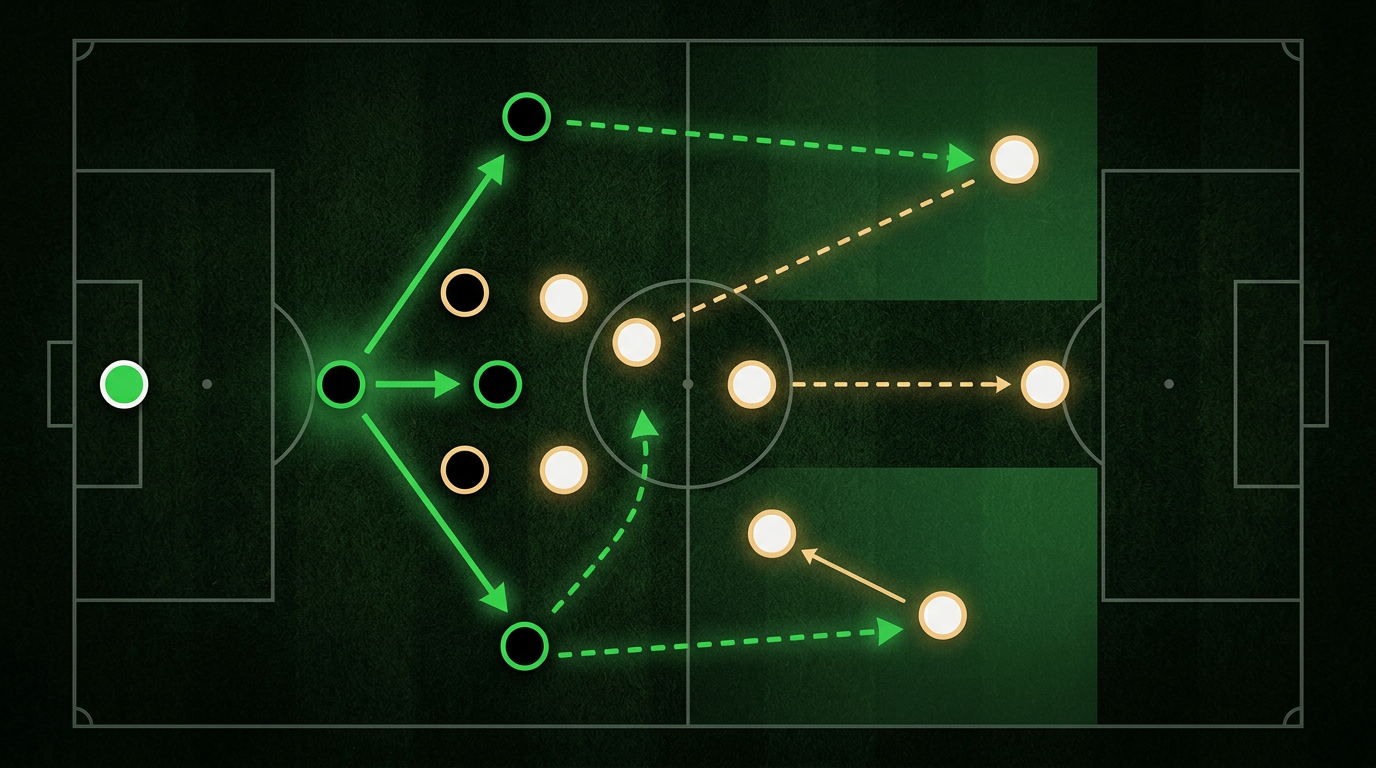
You've seen it countless times: your child has the ball, there's a sea of opponents in front of them, but a teammate is wide open on the other side of the pitch. Why don't they just pass it over there?

It's a common sight on a Saturday or Sunday morning. Your child gets the ball deep in their own half or perhaps just over the halfway line. They look up, perhaps take a touch or two, and then try to dribble through a crowd of defenders, or perhaps play a short pass into a congested area. Meanwhile, over on the far side of the pitch, a teammate is waving their arms, completely unmarked, with acres of space in front of them. From the touchline, it seems so obvious. Why didn't they see them?

This moment, often called 'switching the play', is one of the most challenging concepts for young players to grasp. It's not just about the skill of the pass; it's about seeing the whole picture, understanding pressure, and making a quick decision under duress.

The World Through Their Eyes: A Narrow Focus

When your child is on the pitch, especially when they have the ball, their world shrinks considerably. Their immediate focus is often on the ball itself, the defender closest to them, and perhaps one or two teammates nearby. This 'tunnel vision' is perfectly normal at younger ages. Their brains are still developing the ability to process a vast amount of information simultaneously.

Scanning the entire pitch, understanding where the opposition is pressing, and recognising where space is opening up on the other side takes a huge amount of mental effort. It's a skill that coaches work on for years, and it's not something that comes naturally to most children.

The Challenge of Distance and Direction

Even if your child does spot that free teammate on the far wing, the thought of actually getting the ball to them can be daunting. A cross-field pass often needs significant power, accuracy, and the right technique to keep it low or at a playable height. For many young players, hitting a ball that distance with precision feels like a huge risk.

It's far 'safer' in their minds to try a shorter pass to a nearby player, or to have a go at dribbling past a defender, even if it's less effective. The perceived risk of losing the ball with a long pass is often higher than the perceived risk of losing it trying to go through a crowd.

Pressure and the Urge to 'Do Something'

When an opponent is closing down, or when the team is struggling to get out of their own half, there's an internal clock ticking for the child with the ball. They feel a natural pressure to 'do something' quickly. This instinct often leads to them trying to force an attack down the most obvious, often most congested, path.

Taking the extra second to lift their head, scan wide, and then execute a longer pass requires a level of composure that develops with experience and confidence. It's a brave decision, and one that requires trust in their own ability and the ability of their teammate to receive the pass.
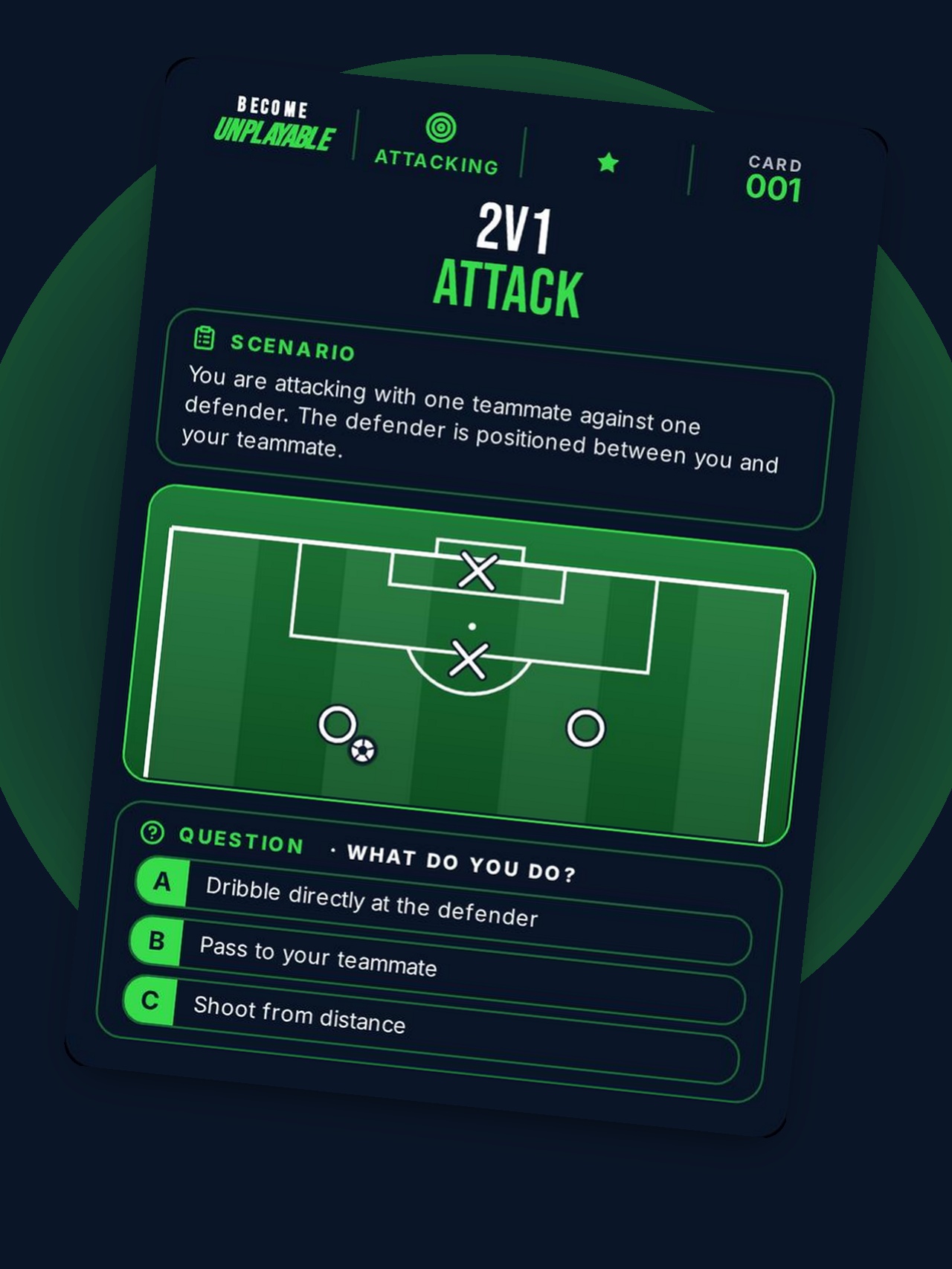
A moment to discuss

What do you think your child would do here?

Imagine your child has just picked up the ball around the halfway line. The opposition team has pushed most of their players onto your child's side of the pitch, trying to win the ball back high up the field. You can see a teammate on the opposite wing, completely free, calling for the ball.

There isn't a right or wrong answer — the value is in the conversation that follows.

Common questions

Why don't young footballers see open teammates on the other side of the pitch?

Young players often have a limited field of vision, focusing on immediate threats and opportunities rather than the entire pitch. Their brains are still developing the ability to process a large amount of visual information quickly, making it hard to spot distant space or teammates.

Is it normal for children to dribble into crowds instead of passing wide?

Yes, it's very common. Dribbling through a crowd or playing a short, safe pass feels like a lower-risk option to a child under pressure. A long, cross-field pass requires significant technical skill and confidence, which develops over time and with experience.

How can I help my child understand the concept of using the whole pitch?

Instead of instructing them during a match, try asking open-ended questions afterwards about what they noticed. For example, 'Did you ever feel like one side of the pitch was really crowded?' or 'What goes through your mind when you get the ball and there are lots of players around you?' This encourages them to reflect without feeling coached.

What's the difference between 'seeing' a teammate and 'playing' to them?

A child might briefly 'see' a teammate, but actually deciding to pass to them requires understanding the tactical benefit (creating space), the confidence in their own ability to execute the long pass, and the composure to take the extra moment needed to make that decision under pressure.

About the author

Become Unplayable

Become Unplayable creates tools and resources designed to help young footballers think about the game, understand situations and develop better decision-making habits.

The card game that teaches kids how to think like a footballer.

Help young players improve their decision-making, positioning, teamwork and football intelligence through fun match-day scenarios. Designed for ages 7–13. No coaching experience required.

Become Unplayable Foundation Pack cards and box

Join the waiting list

By joining you agree to receive Become Unplayable updates by email. Unsubscribe anytime.

Continue reading

More from The Playbook to help you understand your young footballer.

Back to The Playbook

Explore all our articles for parents of young footballers.