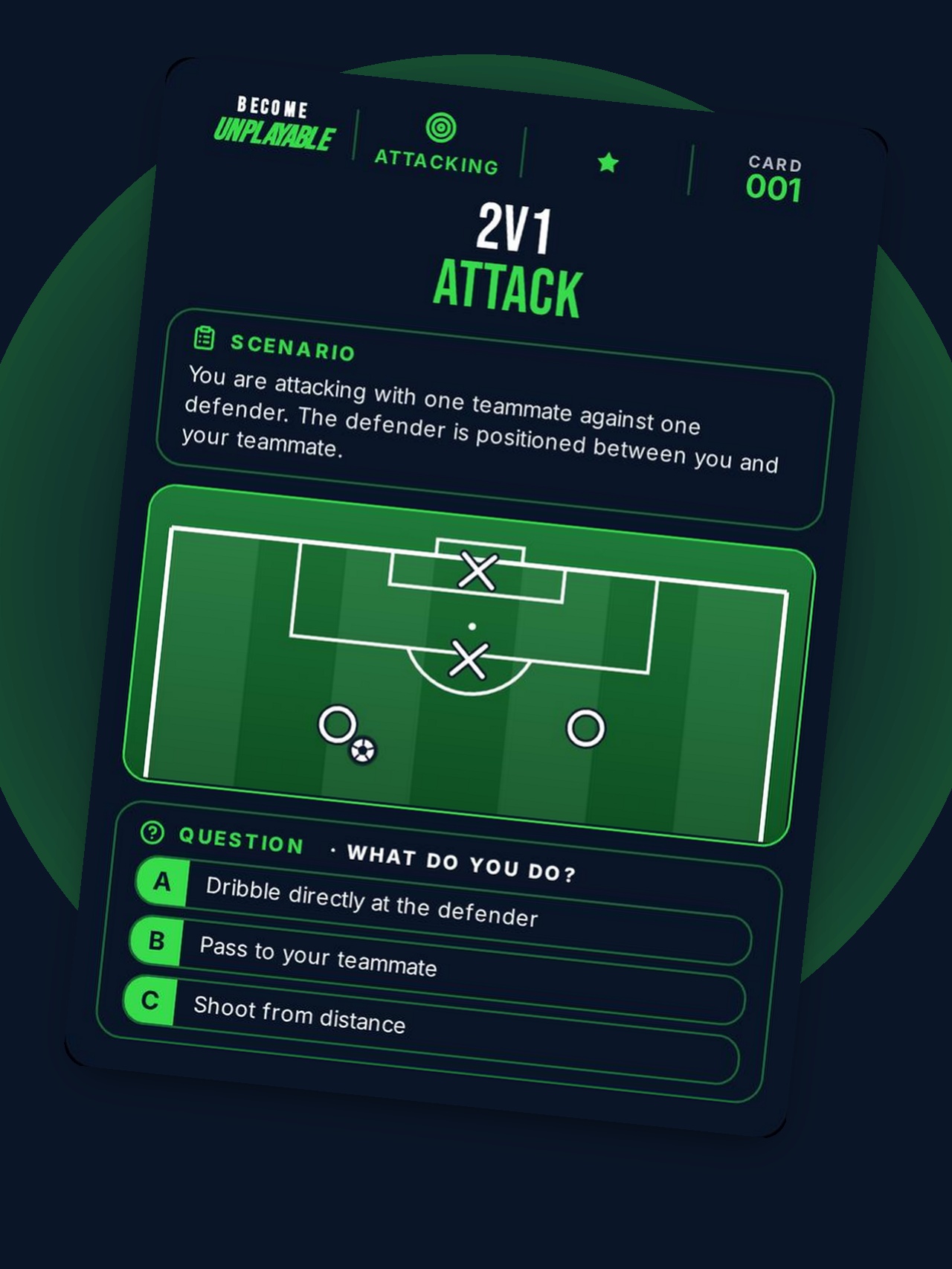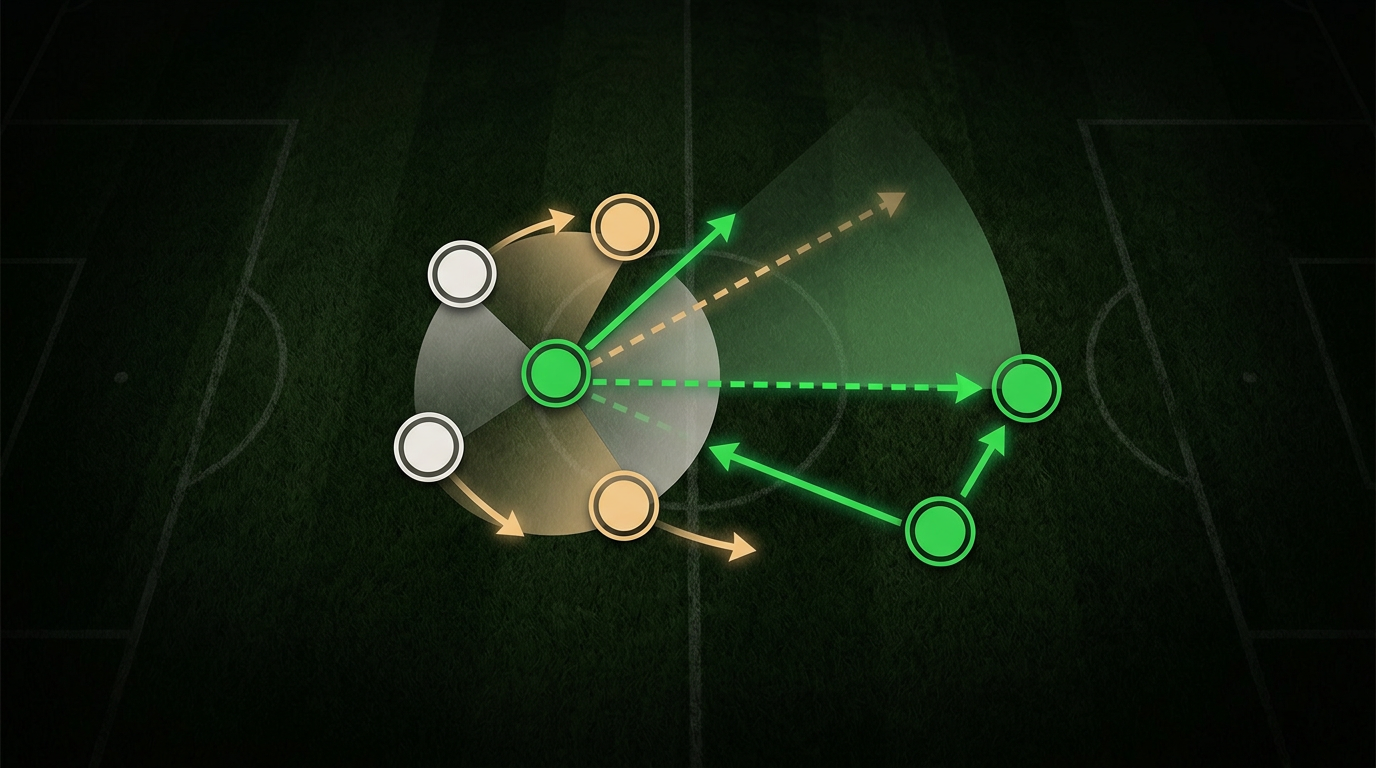
It’s a common sight from the touchline, isn’t it? Your child has the ball, driving forward, and suddenly two opposition players are converging on them. You can see a teammate, just a little further out, completely unmarked and waving for the pass. From where you’re standing, it looks like the obvious choice, but often, the moment passes, and the ball is either lost, or your child tries to take on both defenders.
It can be frustrating to watch, especially when the 'right' decision seems so clear. But for a young player, that moment, with defenders closing in and the pressure mounting, is far more complex than it appears.
Seeing the Whole Picture Under Pressure
When two defenders are rushing towards a child, their focus tends to narrow dramatically. The immediate threat becomes paramount – how to protect the ball, how to get past these two players. It’s a very natural human reaction. They might be so focused on the ball and the two players directly in front of them that they simply don't 'see' the wider pitch or the free teammate.
Scanning the pitch, looking up before receiving the ball, or checking over their shoulder for options – these are advanced skills. Under the adrenaline of a live match, especially when feeling threatened, a young player's world can shrink down to just their feet, the ball, and the immediate challenges.
The Instinct to Keep the Ball
Young players are often encouraged to be brave, to take players on, to keep possession. Sometimes, the instinct to hold onto the ball and try to beat the two defenders can stem from this. They might believe they can do it, or they might not fully appreciate that if two players are committed to them, it inherently creates space elsewhere for a teammate.
The idea that drawing defenders opens up opportunities for others is a tactical concept that develops over time. It's not always obvious to a child in the heat of the moment that their actions are creating space for someone else.
The Speed of the Game
From the touchline, everything can seem to happen in slow motion. But for the child on the pitch, decisions need to be made in a fraction of a second. Recognising two defenders, processing that a teammate must be free because of it, locating that teammate, deciding on the type of pass, and then executing it – that’s a lot to do in a very short space of time.
It's a testament to how quickly their brains are working, even if the outcome isn't always what we'd hope for. These are the moments where children are learning to process information, make rapid calculations, and try to execute a plan, all while managing the physical demands of the game.