Watching our own children play football, we’ve all seen those moments. That perfect pass that never arrived, the simple decision that suddenly seemed complicated, or the look of concentration that tells you their young minds are whirring at a hundred miles an hour. It’s easy for us on the touchline to see what ‘should’ have happened, but understanding what’s going on inside their heads is a different matter altogether.
These observations, watching countless Sunday morning matches and driving home with our own kids, are what sparked the idea for Become Unplayable. We wanted to understand the game from their perspective, not as coaches, but as parents trying to connect with what our children experience on the pitch.
The Coach's Voice vs. The Player's Experience
As parents, we often hear coaches shouting instructions: 'Look up!', 'Pass!', 'Man on!'. And while these calls come from a good place, they don't always translate into action for a young player in the heat of the moment. Why is that? Because what a coach sees from the sideline, or even what a parent sees, is very different from what a child sees and processes when they're actually on the ball.
A young player isn't just trying to kick a ball; they're trying to figure out where their teammates are, where the opponents are, where the goal is, and all under the pressure of trying not to make a mistake. There's a huge difference between knowing what to do and being able to do it consistently when things are moving fast. This cognitive load is immense, and it’s something adult minds often take for granted.
Understanding the 'Why' Behind the 'What'
We started thinking about all those little decisions. Why did they dribble into trouble? Why did they pass backward when going forward seemed obvious? It's easy to label these as 'mistakes', but that doesn't really help us understand our child's development. What if, instead, we tried to understand what information they were prioritising, or what they might have missed entirely?
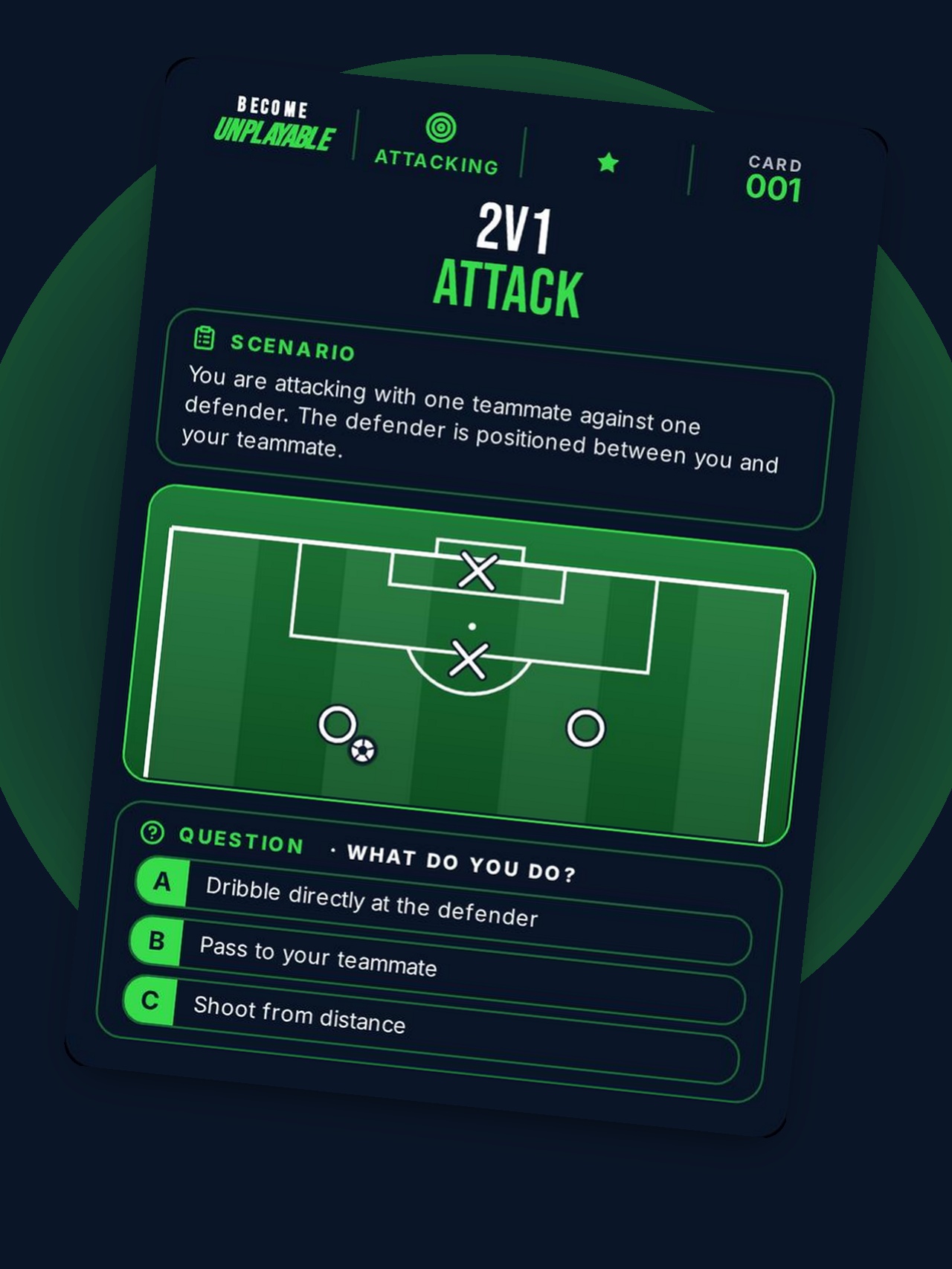
Become Unplayable was born from the desire to break down these moments. To explain, in simple terms, the complexities of decision-making, spatial awareness, and quick thinking that go into every touch of the ball. It’s about helping parents see the world through their child’s eyes on the football pitch, appreciating the challenges they face.
Beyond the Scoreline
For many of us, the immediate focus after a match naturally drifts towards the scoreline or individual goals. But we found that the most valuable conversations, the ones that really helped our children, were the ones that delved deeper. Not into 'what did you do wrong?', but 'what were you trying to do?', or 'what did you notice about their number 7?'
By shifting our focus, we can help our children build a better understanding of the game, rather than just fixating on outcomes. It helps them reflect on their own decision-making process, which is a key part of learning and developing, both in football and in life.
Encouraging a Deeper Conversation
Our goal with Become Unplayable is to provide a common language and framework for these sorts of conversations. The playing cards, and these articles, are designed not to coach your child, but to give you, the parent, a window into their world on the pitch. To help you ask better questions, offer more meaningful encouragement, and appreciate the journey of development.
It’s about celebrating the effort, the decisions they make, and the learning process, not just the spectacular goals. Because every touch, every pass, every moment of thinking (or not thinking) is part of their growth in the game.