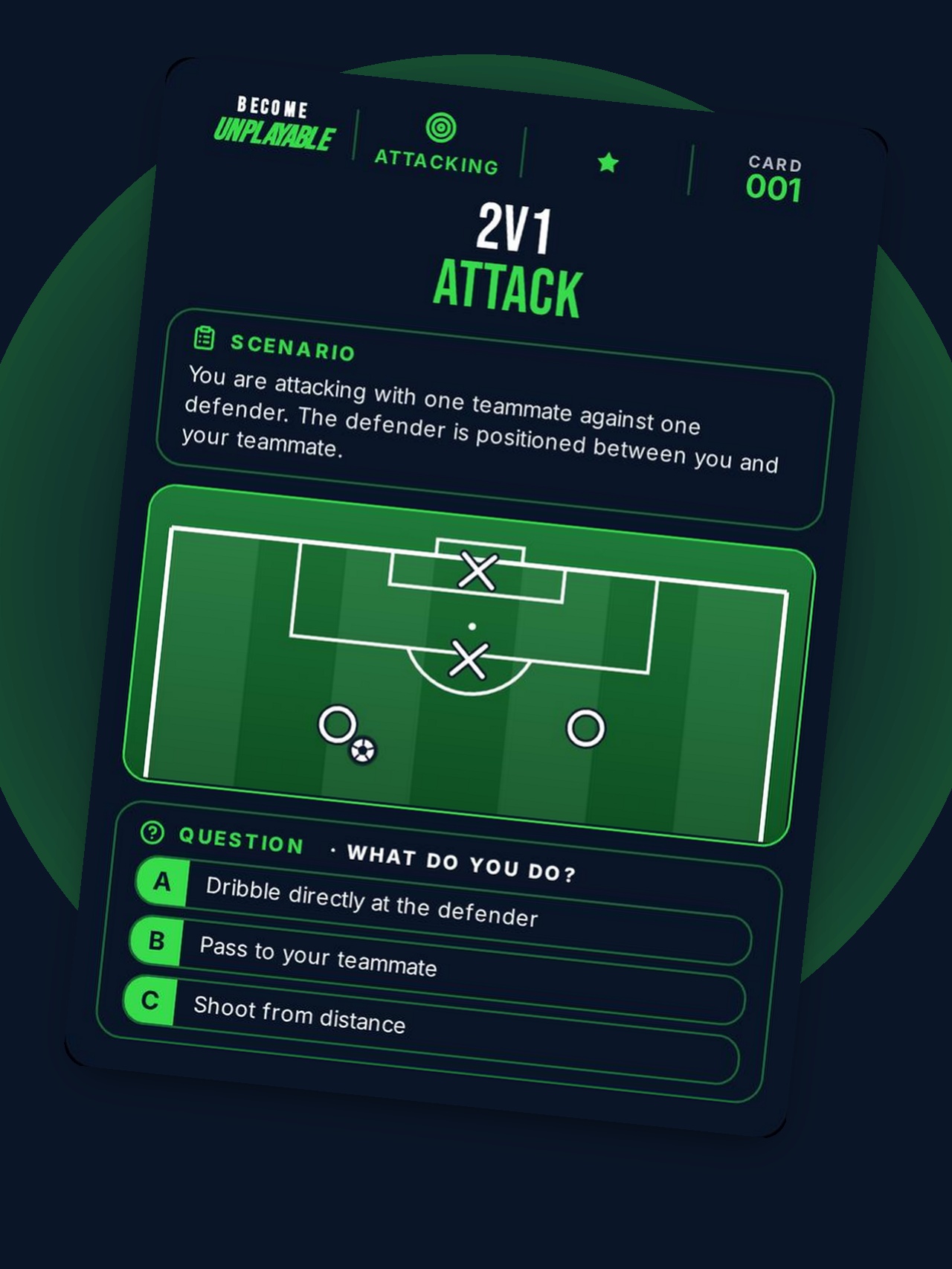
Every parent has seen it: your child picks up the ball, gets their head down, and absolutely flies up the wing. They beat one player, then another, eating up the grass. You're on the edge of your seat, convinced something brilliant is about to happen. Then, just as they reach the byline – that white line at the very edge of the pitch – everything seems to go quiet. The momentum stops, the defenders catch up, and the chance disappears.
Perhaps they try a shot from an impossible angle, or they get tackled, or the ball just rolls out of play. It can feel a little frustrating to watch, especially when you can see a teammate arriving in a great position. But what's it like from their point of view, right there on the byline?
The Allure of the Dribble
For many young players, getting past an opponent and carrying the ball forward is one of the most exciting things they can do. It feels good, it draws cheers, and it’s a tangible achievement. This 'success' often builds on itself, encouraging them to keep going, to keep dribbling, and to push as far as they can.
Reaching the byline feels like an accomplishment. It means they’ve beaten everyone in their path on that side of the pitch. In their mind, they’ve done the hard part. The next step, however, is often the trickiest.
Why the Angle is Everything (and Nothing)
Once a player reaches the byline, the angle to the goal becomes incredibly tight. What looks like a clear chance from the middle of the pitch now appears as a sliver of net from the edge. The keeper, having covered the near post, looks enormous.
From this tight spot, shooting is often a low-percentage option. It requires a really precise strike to beat the keeper, who has a much easier job covering that small space. Young players might still try it, driven by the momentum of their dribble or the simple desire to score, not yet fully appreciating how much the angle has changed the difficulty.
The Difficulty of Seeing the Wider Picture
As parents, we see the whole pitch. We spot the teammate steaming in towards the penalty spot, shouting for the ball, ready to put it in. Our child, however, is looking down at the ball, trying to control it while under pressure, and their vision is naturally focused forward or slightly to the side.
It’s genuinely difficult for young players to 'scan' – to quickly lift their head, see their teammate, and then execute the pass while maintaining control and dealing with defenders. This awareness of what’s happening behind them, or across the box, is a skill that takes years to develop. They might be aware of the teammate in a vague sense, but not fully grasp the quality of the opportunity that’s presenting itself.
The 'Cut Back' – A Skill That Takes Practice
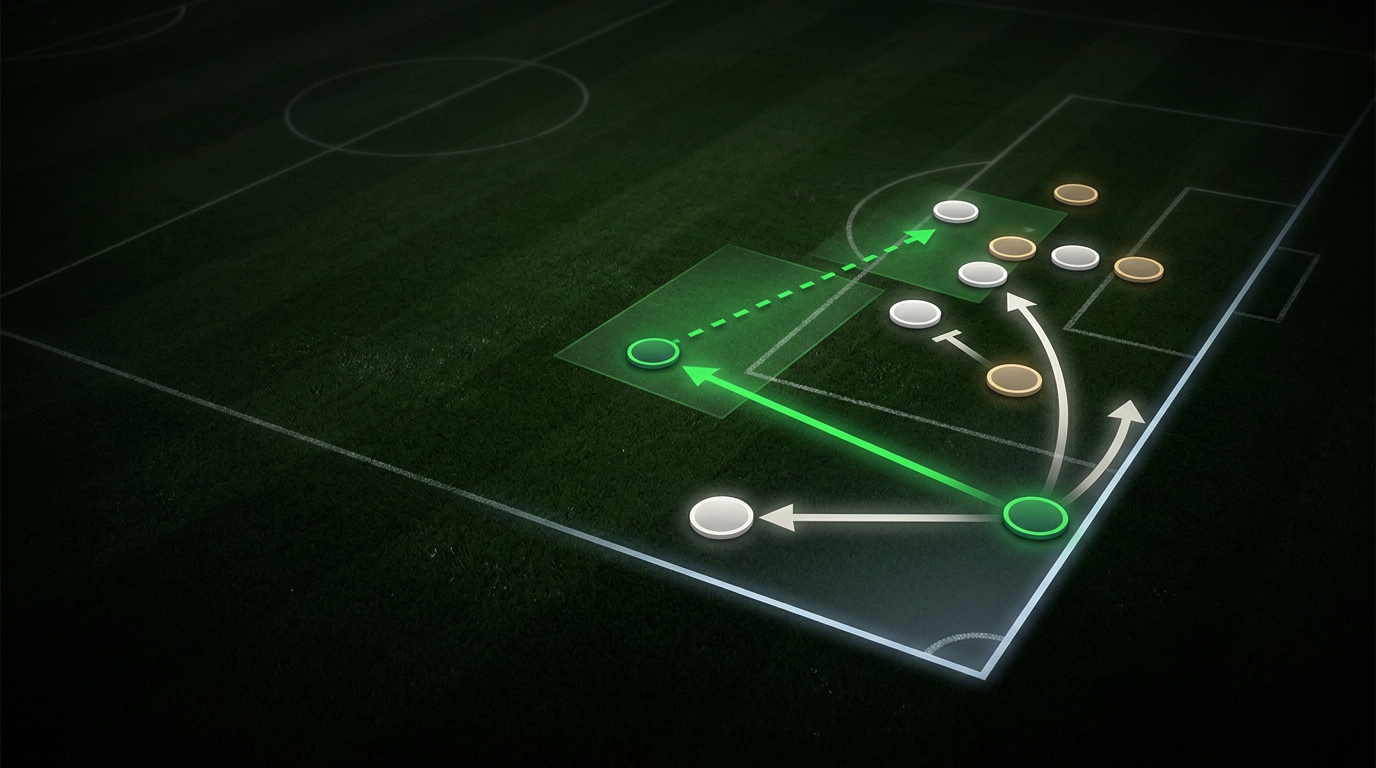
The 'cut back' – passing the ball back towards the centre of the goal for an arriving teammate – is often the best option from the byline. But it’s not an easy pass to make. It requires precision, the right weight, and the ability to look up and pick out a player who might be moving at speed.
Sometimes, players also simply run out of space and time. By the time they’ve arrived at the byline, the defenders have recovered, and the moment for a clean pass or shot has passed. It's a reminder that football is a game of tiny margins and split-second decisions.