How to Improve Decision-Making in Youth Football

By Become Unplayable Team· 29 September 2026· 4 min read
How to Improve Decision-Making in Youth Football — Become Unplayable Playbook

Learn practical, age-appropriate ways to help young players (U9-U12) improve their football decision-making through game-realistic practice and guided questions.

How can you improve decision-making in youth football?

To improve decision-making in youth football, focus on small-sided games and practices that mirror real match situations. Encourage players to scan the pitch before receiving the ball and ask them guided questions like 'What did you see?' after an action. This helps them connect perception to choice, building their ability to recognise space, teammates, and opponents. The goal is to develop their thinking process, not just teach them pre-set solutions for every scenario they face.

A player's ability to make smart choices under pressure is what separates good players from great ones. For young players in the U9 to U12 age groups, developing this skill is more important than mastering complex techniques. It’s about building the foundations of football intelligence.

What Is Football Decision-Making?

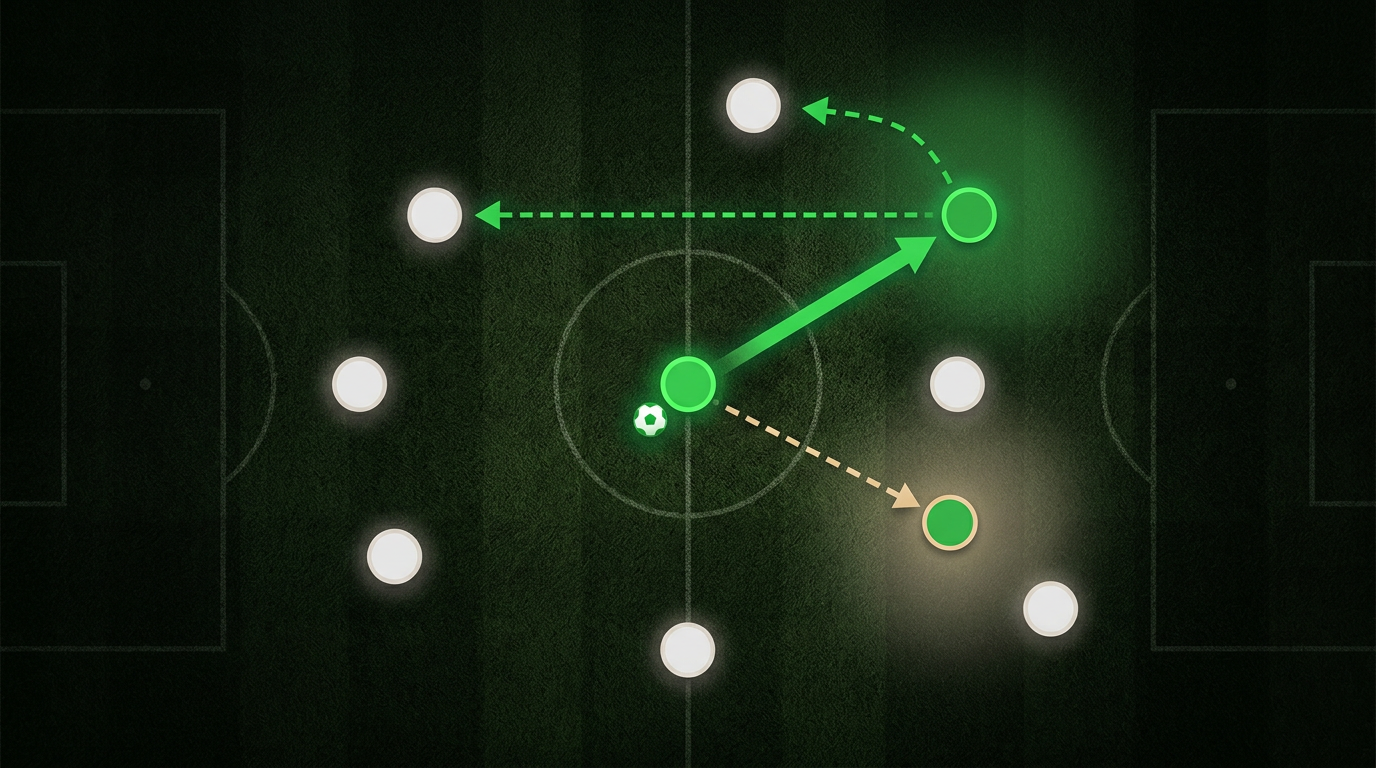
Football decision-making is the mental process of choosing and executing the best action in any given moment. It isn't a single event, but a rapid cycle: first perceiving the situation (where are my teammates, opponents, and the space?), then deciding on an action (pass, dribble, shoot?), and finally executing the technical skill required. The quality of the decision is directly linked to the quality of the information the player gathers before and as they receive the ball.

Can Decision-Making Be Coached?

Yes, but it requires a shift in coaching philosophy from instructing to guiding. Instead of 'joysticking' — shouting instructions from the sideline ('Pass it!', 'Shoot!') — the coach's role is to design practices that force players to think for themselves. By creating game-realistic problems and using guided questions, coaches help players build their own internal library of solutions.

What Coaches Can Do (U9-U12)

  • **Use Game-Realistic Practices:** Favour small-sided games over isolated drills. A 4v4 game forces more decisions about space, support, and possession than a simple passing line.
  • **Add Constraints:** Introduce rules that encourage a specific behaviour. For example, in a possession game, award extra points for switching play from one side of the pitch to the other. This encourages players to look up and see the bigger picture.
  • **Coach Through Questions:** During a break in play, ask questions instead of giving answers. 'What did you see when you got the ball?' is more powerful than 'You should have passed it wide'. It prompts the player to reflect on their own perception.
  • **Praise the Thought, Not Just the Outcome:** If a player spots a clever forward pass but mis-hits it, acknowledge the idea. 'Good thinking, you saw the run!' This reinforces the decision-making process, separating it from the technical execution.

How Can Players Practise Decisions Off the Pitch?

The thinking side of football doesn't have to stop when training ends. Discussing football away from the pitch, in a relaxed and positive way, can be hugely beneficial. This is an area where parents can provide fantastic support without becoming a second coach.

What Parents Can Do

  • **Watch Football Together:** When watching a match on TV, occasionally pause and ask, 'What would you do here?' or 'What do you think they're looking for?'. This makes them an active viewer, analysing decisions as they happen.
  • **Use Guided Questions:** After their own match, avoid 'Why did you...?' which can sound critical. Instead, try 'Tell me about the goal you scored' or 'It looked like you had a tough decision to make in midfield there, what did you see?'.
  • **Keep it Fun:** Frame these chats as being about the love of the game, not a performance review. The goal is to nurture their curiosity and understanding, not to analyse their every move.
Related reading

Common questions

How can you improve decision-making in youth football?

To improve decision-making in youth football, focus on small-sided games and practices that mirror real match situations. Encourage players to scan the pitch before receiving the ball and ask them guided questions like 'What did you see?' after an action. This helps them connect perception to choice, building their ability to recognise space, teammates, and opponents. The goal is to develop their thinking process, not just teach them pre-set solutions for every scenario they face.

At what age should a child start learning about decision-making in football?

A child starts making decisions from the moment they first play football. For the youngest players (U7/U8), this might be as simple as choosing between dribbling or kicking. For U9-U12s, you can start to introduce concepts like scanning and choosing between passing forward or keeping possession. The key is to keep it age-appropriate and based within fun, game-like activities, not formal instruction.

How do I stop my child from panicking on the ball?

Panic often comes from feeling rushed and not knowing what to do next. To help, focus on developing their awareness. Encourage them to take a quick look around (scan) before they receive the ball. This gives them a mental picture of their options earlier, which in turn gives them more time to decide. Practising in low-pressure, small-sided games builds the confidence to handle these moments in a match.

Should I shout instructions to my child during a match?

It is generally best to avoid shouting specific instructions like 'pass it' or 'shoot'. This can confuse the player, add pressure, and stop them from learning to solve problems for themselves. The player might have seen something you haven't. The most effective support from the sideline is positive encouragement. Save questions about decisions for a calm chat after the game.

Is it a bad decision if it doesn't work out?

Not necessarily. It's crucial to separate the decision from the outcome. A player might correctly decide to pass to an open teammate (a good decision) but execute the pass poorly (a bad outcome). When developing young players, praise the good decision even if it fails. This encourages them to keep thinking and trying the right things, knowing their technical skills will catch up over time.

About the author

Become Unplayable

Become Unplayable creates tools and resources designed to help young footballers think about the game, understand situations and develop better decision-making habits.

The card game that teaches kids how to think like a footballer.

Help young players improve their decision-making, positioning, teamwork and football intelligence through fun match-day scenarios. Designed for ages 7–13. No coaching experience required.

Become Unplayable Foundation Pack cards and box

Join the waiting list

By joining you agree to receive Become Unplayable updates by email. Unsubscribe anytime.

Continue reading

More from The Playbook to help you understand your young footballer.

Back to The Playbook

Explore all our articles for parents of young footballers.