
When your child first starts playing football, it's easy to get caught up in their development.
Are they passing enough? Are they finding space? Do they understand where to stand? Should they be making better decisions?
As parents, we naturally want to help our children improve.
But sometimes, the best thing we can do is let them play.
At Become Unplayable, we believe learning to make decisions is an important part of football. But we also believe there's a time and place for everything.
And for a six-year-old, enjoying football should come first.
Before Football IQ Comes a Love for the Game
I have a six-year-old son who plays football.
Like most football parents, I love watching him play, seeing him improve and celebrating those little moments when something clicks.
But I'm not standing on the sidelines telling him when to pass, where to run or how to position himself.
My advice is pretty simple.
“Listen to your coaches. Try your best. And most importantly, have fun.”
Because at his age, that's what matters to me.
I want him to look forward to training.
I want him to enjoy being part of a team.
I want him to feel comfortable trying something new, even when it doesn't work.
And I want football to be something he loves doing, not something he feels he has to get right.
Young Players Learn More Than We Sometimes Realise
Watch a group of six-year-olds playing football and you'll probably notice a few familiar things.
Everyone runs towards the ball.
Players forget where they're supposed to be.
Someone tries to dribble past three defenders when a teammate is standing completely free.
And sometimes, a child gets the ball and simply doesn't know what to do next.
It's tempting to shout instructions.
"Pass it!"
"Spread out!"
"Get back!"
But these moments are part of learning the game.
Young players are discovering how the ball moves, how other players react and what happens when they try different things.
They don't need to understand every decision immediately.
They need opportunities to experience football for themselves.
A child who dribbles into a defender might discover that passing was another option.
A child who runs towards the ball might eventually notice that staying in space gives them a better chance of receiving it.
These lessons can develop naturally through playing, repetition and encouragement.
Why 3v3 Football Could Be a Positive Step
With the introduction of 3v3 football at U7 level in England, there's understandably plenty of conversation about what the new format will mean for young players.
Smaller-sided games have the potential to give children more opportunities to get involved.
With fewer players on the pitch, children may experience more touches, more opportunities to attack and defend, and more moments where they need to make a choice.
But here's the important part.
“More decisions doesn't mean children need more tactical instructions.”
In fact, the opportunity is to let them explore those situations through playing.
They can try dribbling into space.
They can discover what happens when they pass to a teammate.
They can experience winning and losing the ball.
And they can begin to understand the game through their own experiences.
The format should help create opportunities for learning, without making football feel like a classroom.
Confidence Comes From Being Allowed to Try
One of the things I think we sometimes overlook in children's football is confidence.
Not necessarily the confidence to score goals or beat defenders.
But the confidence to try something without worrying about making a mistake.
Imagine a child who gets the ball and sees some space ahead.
They decide to dribble.
Maybe they get past a defender.
Maybe they lose the ball.
Either way, they've made a decision.
Now imagine that every time they lose possession, someone on the sidelines tells them what they should have done instead.
Over time, that child might become more concerned about avoiding mistakes than trying something new.
That's not what we want.
We want children who feel comfortable experimenting, making decisions and learning from what happens next.
Because confidence and curiosity are valuable foundations for everything that comes later.
Parents Don't Need to Become Football Coaches
This is something I feel particularly strongly about.
As parents, we want to support our children, but that doesn't mean we need to become another coach.
Their coaches are there to guide their football development.
Our role can be much simpler.
Encourage them.
Celebrate their effort.
Help them enjoy the experience.
And be there when things don't go their way.
Sometimes, the best conversation after a match isn't about the result or whether they made the right pass.
It's simply:
“"Did you enjoy yourself?"”
Or:
“"What was your favourite part of the game?"”
Those questions give children the opportunity to talk about football without feeling like they're being assessed.
And if they want to tell you about a goal, a tackle or something funny that happened, even better.
There's a Time for Understanding the Game More Deeply
As children grow, their relationship with football changes.
They start noticing more.
They begin asking questions.
They become curious about why something worked, why they lost the ball or what they could try differently next time.
That's where conversations about decision-making can become particularly useful.
And that's part of the thinking behind Become Unplayable.
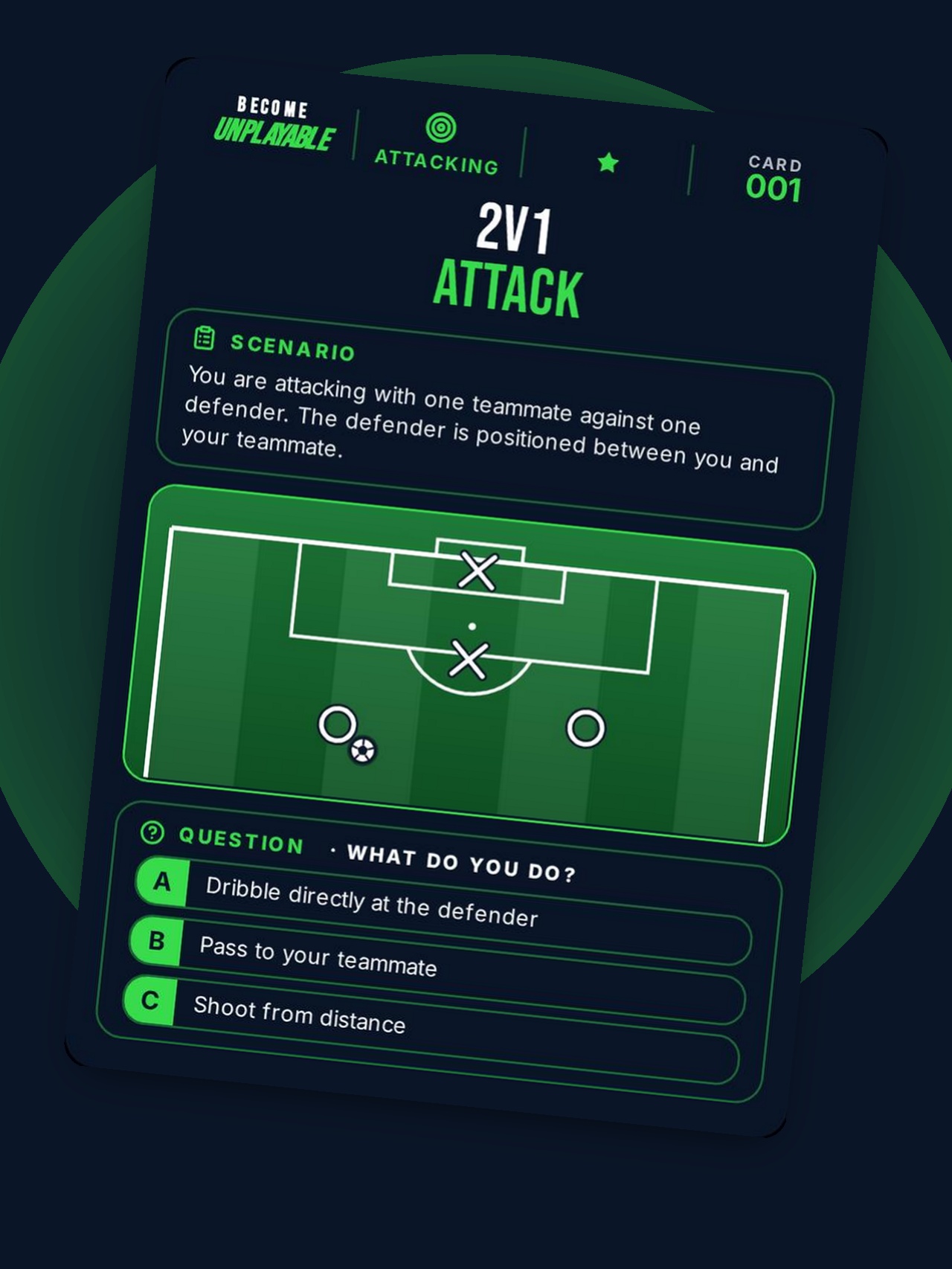
We created the Foundation Pack to help young footballers explore real game situations through simple, engaging conversations.
But it's not about turning every child into a tactical expert.
And it certainly isn't about putting pressure on younger players to understand things before they're ready.
It's about giving children who are interested in exploring the game a way to think, ask questions and discover different possibilities.
“The aim isn't to take the fun out of football. It's to build on the enjoyment that's already there.”
Let Them Fall in Love With Football First
There's plenty of time for children to learn about positioning, movement, tactics and decision-making.
But those early years are special.
They're about muddy boots, excited conversations on the way home, making friends, scoring that first goal and wanting to go back again next week.
They're about discovering what football feels like.
And as parents, perhaps the most important thing we can do is protect that enjoyment.
Because a child who loves football is more likely to want to keep playing, practising and learning.
And when they're ready to understand more about the game, those opportunities will be there.
“Fun first. Confidence next. Learning along the way.”
That's a foundation worth building.
About Become Unplayable
Become Unplayable creates football decision-making card games that help young players explore real match situations, consider their options and build their understanding of the game.
Our Foundation Pack is designed for young footballers aged 7–13, with an emphasis on discussion, curiosity and learning at their own pace.
Because developing a better understanding of football should add to the enjoyment of the game, not replace it.