The offside flag is a source of frustration for players, coaches, and parents alike. For young players, especially in the U9 to U12 age groups, it can feel like an arbitrary and confusing rule that stops them from scoring. But the struggle to understand it is not about a lack of effort; it’s rooted in the rule’s complexity.
How Can I Explain the Offside Rule to a Child Simply?
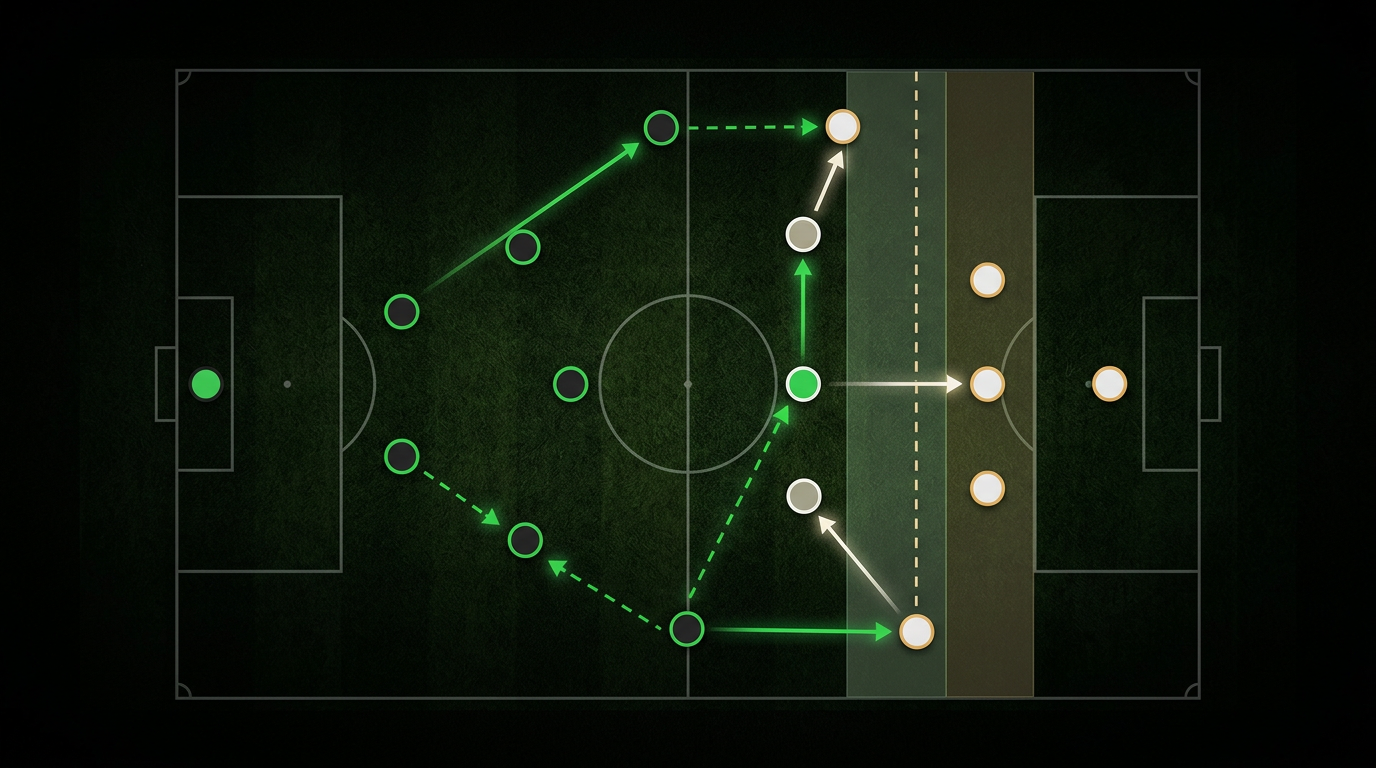
The simplest way to explain the offside rule is to break it down into a 'freeze frame' moment. You are in an offside position if, at the exact moment your teammate passes the ball forwards, you are nearer to the opponents' goal line than both the ball and the second-to-last opponent. It's not about where you are when you receive the ball, but where you were when it was kicked.
Use a simple analogy: imagine a race between you and the last defender. To stay 'onside', you can't have a head start on them when your teammate shoots the starting pistol (plays the pass). You have to start level with or behind them, and then you can sprint past them to win the race (receive the ball).
What Are Common Offside Mistakes Young Players Make?
Young players make predictable mistakes when learning the offside rule, which are usually signs of developing game intelligence, not a lack of listening.
- Ball Watching: The most common issue. The player is so focused on the ball they are completely unaware of the defenders' positions.
- Starting Runs Too Early: An eagerness to get in behind the defence leads them to sprint before the pass is made, rather than timing the run to coincide with the pass.
- Standing Still: Some players, afraid of being offside, will stand completely still in an advanced position, making them an easy target for an offside trap.
- Not Adjusting to the Defensive Line: As defenders push up, the attacker doesn't move back with them, leaving themselves stranded in an offside position.
- Misunderstanding the 'When': They think being offside is about where they are when they touch the ball, not where they were when the teammate played it.
What Coaches Can Do: Age-Appropriate Drills
For U9-U12 players, teaching offside should be done within game-like situations. The aim is to build awareness, not just to punish mistakes. Keep it fun and focused on decision-making.
- The 'Line' Game (U9/U10): In a small-sided game, use a line of flat cones across the pitch to represent the offside line. The coach can move the line up and down the pitch, and attackers must stay behind it to score. This makes the abstract 'line' a visible, concrete thing.
- 1v1 + Server vs Keeper (U11/U12): A server plays a pass for an attacker to run onto and try to score against a keeper. A single defender starts a few yards ahead of the attacker. The attacker's goal is to time their run past the defender to receive the pass without being 'offside' (starting ahead of the defender when the ball is played). This isolates the timing element.
- End-Zone Game (U11/U12): In a small-sided game, mark an 'end zone' in front of each goal. A goal only counts if the pass is played *before* the attacker enters the end zone. This encourages players to look up before passing and attackers to delay their final run.
What Parents Can Do
Your role is to encourage thinking, not to be another referee on the sideline. Shouting "You're offside!" doesn't teach the player how to avoid it next time. Instead, focus on praising the process.
- Praise Good Timing: If they time a run perfectly, even if they don't score, praise it. "That was a brilliant run, you timed it perfectly to stay onside!"
- Ask Curious Questions: After the match, instead of criticising, ask open questions. "That was a close one with the offside flag! What did you see when you decided to run?"
- Use the TV: When watching a match, point out how forwards curve their runs or watch the line. Pause the playback at the moment the pass is played to show the attacker's position.
- Don't Put Pressure On: Remember, understanding offside is a developmental process. It takes years. Keep your support positive and focused on effort and awareness.