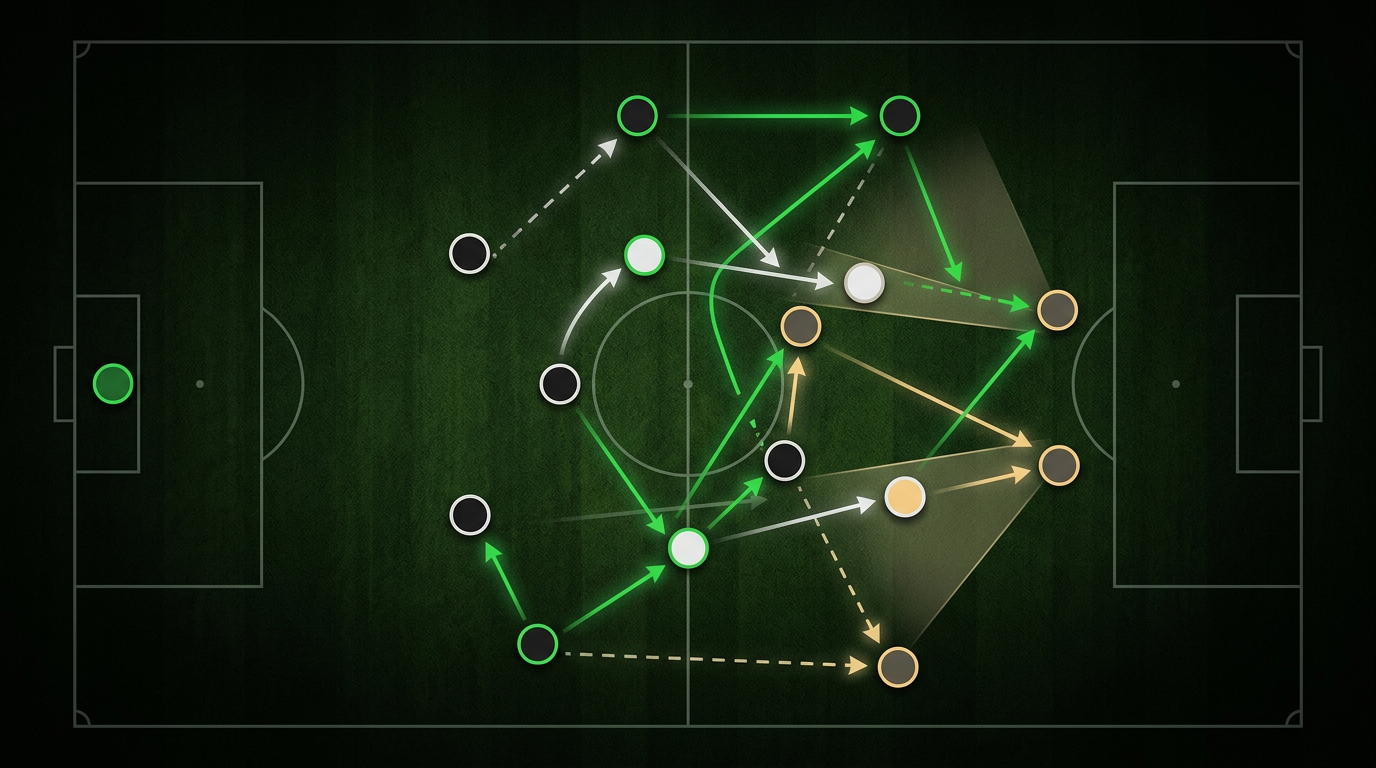
It's a common scene on any Sunday morning pitch. Your child's team is pushing forward, attacking with enthusiasm, perhaps even getting a shot off. Then, in a flash, the ball is gone. Maybe it was a misplaced pass, a strong tackle, or a deflection. Suddenly, the opposition has it, and they’re looking to break. Your child, who was just moments ago dreaming of scoring, is now caught in no man’s land, high up the pitch, watching the play unfold in the opposite direction.
As parents, we might instinctively think, 'Just run back!' But for a young player, that moment of transition, from attack to defence, is packed with split-second decisions that are far from simple. Their bodies and minds are processing a lot, and what might seem like an obvious choice from the touchline can feel like a complex puzzle on the pitch.
The Energy Drain of Transition
Imagine the effort involved in attacking. Your child has been sprinting, jockeying for position, perhaps dribbling hard. Their energy is focused on going forward. When possession is lost, there's often a natural moment of disappointment or even exhaustion. To then immediately switch gears and sprint back, sometimes a long way, requires a huge physical and mental effort. It's not just about speed; it's about the will to make that demanding run again, often after a burst of attacking play.
This quick shift from being an attacker to becoming a defender, sometimes known as 'transition,' is one of the hardest parts of the game at any level. For young players, who are still developing their stamina and understanding of game flow, it can feel like a sudden, unwelcome demand.
Too Many Things to Think About
When the ball is lost, a young player might be trying to process several things at once. Where's the ball now? Which opponent has it? Where are my teammates? Where are the gaps in our defence? Is it still possible to win it back right here, right now, or do I need to get back behind the ball? These are sophisticated questions, and for a child, the sheer volume of information can be overwhelming.
Sometimes, a child might linger for a moment, hoping a teammate will win the ball back, or perhaps expecting the referee to blow for a foul. This isn't laziness; it's often a moment of uncertainty, trying to make sense of a chaotic situation under pressure, with the added desire to get involved in the attack again if the ball is recovered.
The Instinct to Win it Back Now
Another powerful instinct for young players is the desire to win the ball back immediately. They’ve just lost it, and the competitive urge is to rectify that straight away. This can lead to them chasing the ball or pressing an opponent who is already past them, rather than prioritising getting back to help their defenders.
While pressing high up the pitch can be effective, it’s also a high-risk strategy. If it doesn't work, and the opponent moves the ball quickly, your child is now even further out of position, and the team's defence is left exposed. Understanding when to press and when to recover is a nuanced skill that develops over many matches.