Have you ever watched your child play football and wondered why they hesitate?
They've got the ball.
There's space in front of them.
A teammate is making a run.
But instead of making a decision, they pause.
And before they know it, the opportunity has gone.
It's something many grassroots football parents will recognise.
Your child might have the technical ability to make the pass, take the shot or run into space.
But knowing how to do something and deciding when to do it are two different things.
So how can you help your child become more confident making decisions on the pitch?
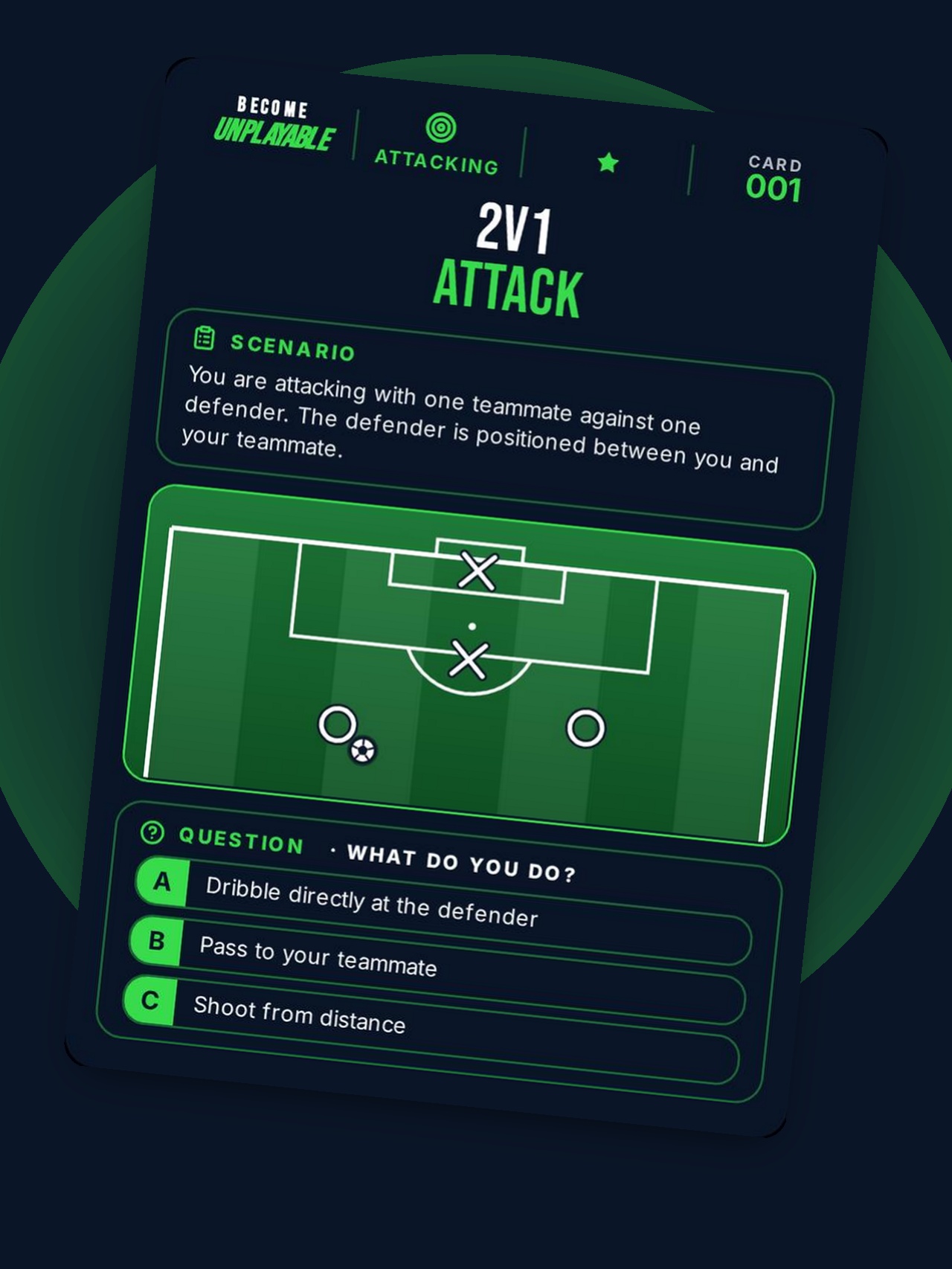
One simple place to start is at home, with Become Unplayable cards.
Sometimes it's not about ability
Think about what happens when a young player receives the ball during a match.
They might have only a few seconds to decide what to do.
Should they pass?
Should they dribble?
Is there space to run into?
Where are their teammates?
What are the defenders doing?
That's a lot of information to process.
And when a player is unsure, they might hesitate or choose the safest option.
It doesn't necessarily mean they lack ability.
Sometimes they simply need more opportunities to think through different football situations.
Without the pressure of a match happening around them.
Start with one card at home
You don't need to organise another training session.
You don't even need a football.
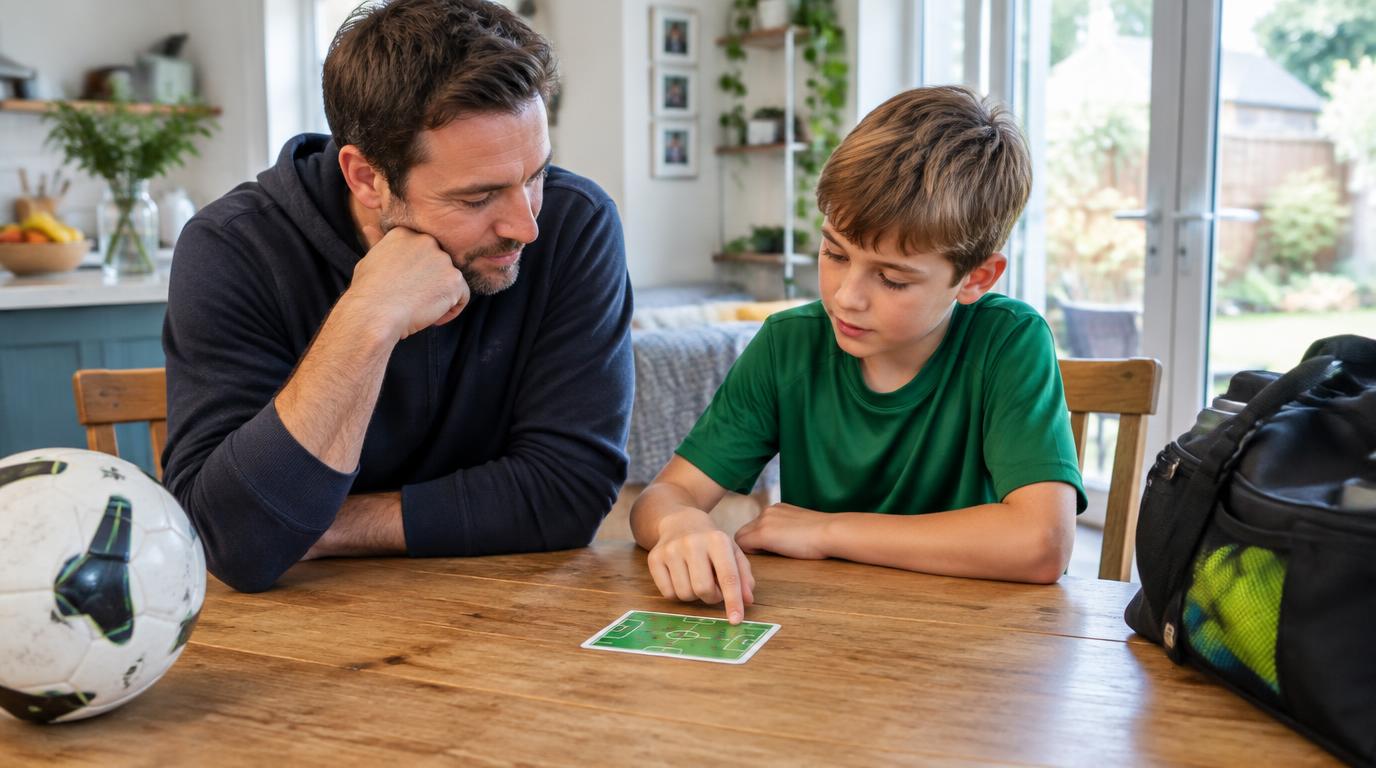
Find five minutes when your child is relaxed and grab a Become Unplayable card.
Choose a scenario that involves a decision they might face during a match.
Show them the card and ask:
"What would you do here?"
Let them look at the situation.
Give them time to think.
Then ask:
"Why would you choose that?"
That's it.
You're not testing them.
You're encouraging them to explain their thinking.
And because they're at home, there's no opponent closing them down or teammates calling for the ball.
They can take their time and consider their options.
Let them make their own decision
Here's something worth trying.
When your child chooses an answer, don't immediately tell them whether you agree.
Instead, ask another question.
"What else could you do?"
Perhaps they've chosen to pass to a teammate.
Could they dribble instead?
What would happen if the defender moved closer?
Would shooting be an option?
Now they're thinking about different possibilities.
And importantly, they're beginning to understand that football decisions depend on what's happening around them.
There isn't always one answer that works in every situation.
The aim is to help them recognise their options and explain why a particular decision might make sense.
Help them become comfortable explaining their choices
One of the things we want to encourage with Become Unplayable is independent thinking.
Young players receive plenty of instructions.
From coaches.
From teammates.
And sometimes from parents on the touchline.
But during a match, they need to make their own decisions.
That's why asking "Why?" can be just as valuable as asking "What would you do?"
When a child explains their decision, they're thinking about the situation rather than simply guessing an answer.
They might say:
"I'd pass because my teammate has more space."
Or:
"I'd dribble because the defender is too far away."
Or even:
"I'm not sure."
And that's fine too.
You can explore the situation together.
The important thing is creating an environment where they're comfortable thinking aloud and considering different possibilities.
Try the same card again a few days later
Here's a simple idea.
Instead of moving straight on to another card, revisit the same scenario later in the week.
Ask your child what they'd do.
Have they chosen the same answer?
Have they noticed something different?
Perhaps they've spotted another passing option.
Maybe they've changed their mind about whether to dribble.
That's useful.
It shows they're considering the situation from different angles.
You can even ask:
"What would make you change your decision?"
Now they're beginning to think about how football situations change.
And that's an important part of decision-making on the pitch.
Take that thinking into their next match
The next time your child plays, you don't need to give them a long list of instructions.
Instead, you could simply say:
"Remember to look at your options and trust yourself to make a decision."
Then let them play.
They might still make mistakes.
They might choose an option that doesn't work.
That's part of football.
The aim isn't to eliminate mistakes or guarantee that every decision will be correct.
It's to help young players become more comfortable recognising situations, considering their options and making decisions for themselves.
Over time, practising this way may help them approach familiar match situations with greater understanding and confidence.
Confidence isn't about always getting it right
This is something worth remembering as a football parent.
A confident player isn't necessarily someone who makes the right decision every time.
Even professional footballers make poor decisions.
They misplace passes.
They shoot when they could have passed.
They miss opportunities.
What matters is being willing to make a decision, learn from it and keep playing.
And as parents, we can help create an environment where children feel comfortable doing exactly that.
Not by telling them what to do in every situation.
But by giving them opportunities to think for themselves.
Five minutes can start a useful conversation
You don't need to work through an entire pack of cards in one sitting.
Start with one.
Ask what they'd do.
Ask why.
Explore another option.
Then put the cards away.
Keep it relaxed and enjoyable.
Because the goal isn't to turn home into another football classroom.
It's to help your child see more, think quicker and become more confident making decisions on the pitch.
And sometimes, that starts with a five-minute conversation around the kitchen table.
Help Your Child Become a More Confident Decision-Maker with Become Unplayable
The Become Unplayable Foundation Pack uses visual football scenarios to encourage young players to think about the decisions they face during matches.
Each card gives children a situation to explore, with different options to consider and discuss.
Parents don't need to be football coaches to use them.
Simply choose a card, ask what your child would do and encourage them to explain why.
Whether you're at home, travelling to training or watching football together, Become Unplayable gives you a simple way to support your child's understanding of the game.
Help them see more. Think quicker. Make better decisions.