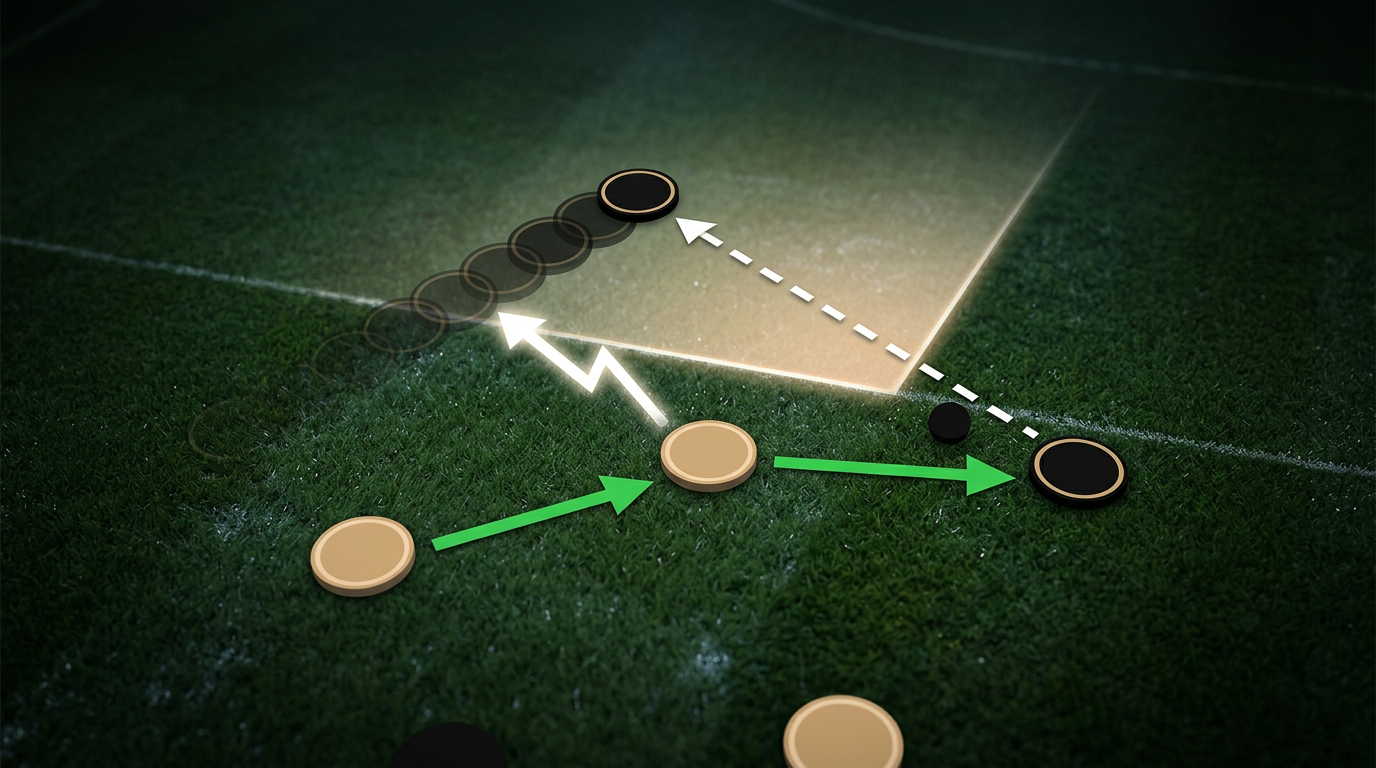
You’re watching from the touchline, the match is flowing, and suddenly an opposition player bursts from deep, making a run towards your child's goal. They’re running in behind the defence, perhaps even behind your child. For a moment, it looks like your child might not have seen them at all, or perhaps they’re glued to the ball. The runner gets away, a pass is made, and the moment is gone. What just happened?
This isn't about blaming anyone; it's about understanding how incredibly difficult it is for young players to process everything that's happening around them in the heat of the moment. That disappearing runner isn't just a simple detail; it's a complex problem for a developing brain to solve.
The Ball is a Magnet
For young footballers, the ball is often the most important thing on the pitch. It's the focus, the object of desire, the reason they're playing. Their eyes are drawn to it like a magnet, and it takes a huge amount of concentration to shift that focus, especially when the ball is moving quickly or in a dangerous area. Losing sight of the ball feels instinctively wrong, even if another threat is emerging.
When a runner moves behind them, they’re effectively asking the child to look away from the 'main event' – the ball – and track something that isn't immediately impacting them. This is a big cognitive leap, requiring an understanding of potential future threats, not just current ones.
Two Threats, One Brain
Imagine trying to track a moving object with your eyes, while simultaneously keeping another moving object in your peripheral vision, and understanding that the second object might suddenly become the most dangerous. That’s what’s happening for a young player when a runner goes in behind them.
Their brains are still developing the ability to process multiple pieces of information at once, especially under pressure. Do they follow the ball and react if it’s passed? Or do they trust the ball player for a moment and focus on the runner? It’s a split-second decision with imperfect information, and either choice carries a risk.
The Challenge of Communication
Sometimes you'll see a young player point at a runner or shout for a teammate to pick them up. This might seem like a good solution, but for children, it's often more about 'doing something' than effectively solving the problem. Shouting isn’t the same as covering the run yourself, especially if the player making the shout is also the one closest to the threat.
What they’re doing here is trying to offload responsibility in a moment of panic or confusion, which is a very natural human reaction. They know there’s a problem, but they haven't quite developed the mental models to resolve it themselves, or to coordinate effectively with teammates under pressure.