When Two Against One Isn't As Simple As It Sounds

By Become Unplayable Team· 21 September 2026· 3 min read
When Two Against One Isn't As Simple As It Sounds — Become Unplayable Playbook

You're watching from the touchline, your child's teammate has the ball, and there's just one defender nearby. A clear chance to create an advantage, right?

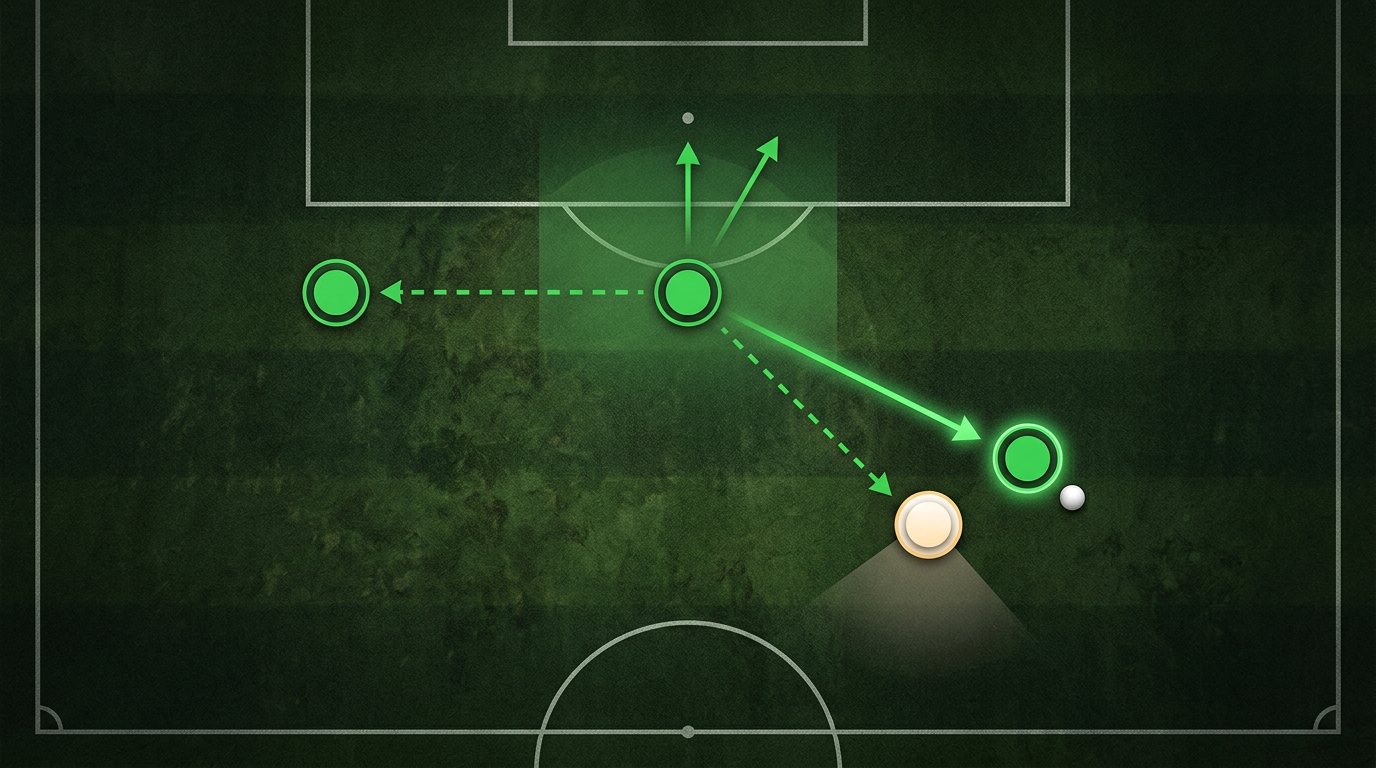
It’s a familiar sight on the pitch. Your child's teammate has the ball, dribbling forward. A lone defender steps up to challenge them. You might be thinking, 'Great! We've got an extra player here, they can make it two against one and get past the defender.' But then, sometimes, the moment passes, the ball is lost, or the advantage isn't taken.

It’s easy for us as adults, watching from a distance, to see the space and the passing options. But for a young player in the thick of it, under pressure, what seems obvious to us can be incredibly complex for them.

The Challenge of Finding the Right Space

When their teammate has the ball and is facing a defender, a young player has to quickly process a lot of information. They need to see their teammate, the defender, and the space around them. Then, they have to decide where to move to be helpful. This isn't just about running into any open patch of grass; it's about finding a spot where their teammate can actually pass to them, and where that pass won't be easily cut out by the defender.

Often, a child might run too far away, making the pass difficult, or they might run too close, getting in the way or drawing another defender. They might even try to run behind the defender, which seems clever but often means the ball is out of reach for a pass.

Seeing the Whole Picture Under Pressure

Imagine being seven or eight years old, with the ball coming towards you, noise all around, and coaches shouting. It's tough to keep your head up and scan the field. It's even tougher to anticipate what your teammate needs before they even need it. This ability to 'read' the game – to predict where the ball and players will be next – takes years to develop.

When a child isn't constantly looking around, they might miss the opportunity to offer support. They might be focused only on the ball or the goal, and not see the bigger picture of where their teammates and opponents are. This tunnel vision is a natural stage of development.

The Importance of Communication (Without Words)

In a 2v1 situation, the player without the ball effectively 'communicates' with their movement. If they move into a good position, they are telling their teammate, 'I'm here, you can pass to me.' If they don't move, or move poorly, that message is lost.

For young players, this silent communication is tricky. They might be waiting for their teammate to tell them what to do, or they might assume their teammate can see them even if they're in a difficult spot. It's a delicate dance of anticipation and cooperation that doesn't just happen overnight.
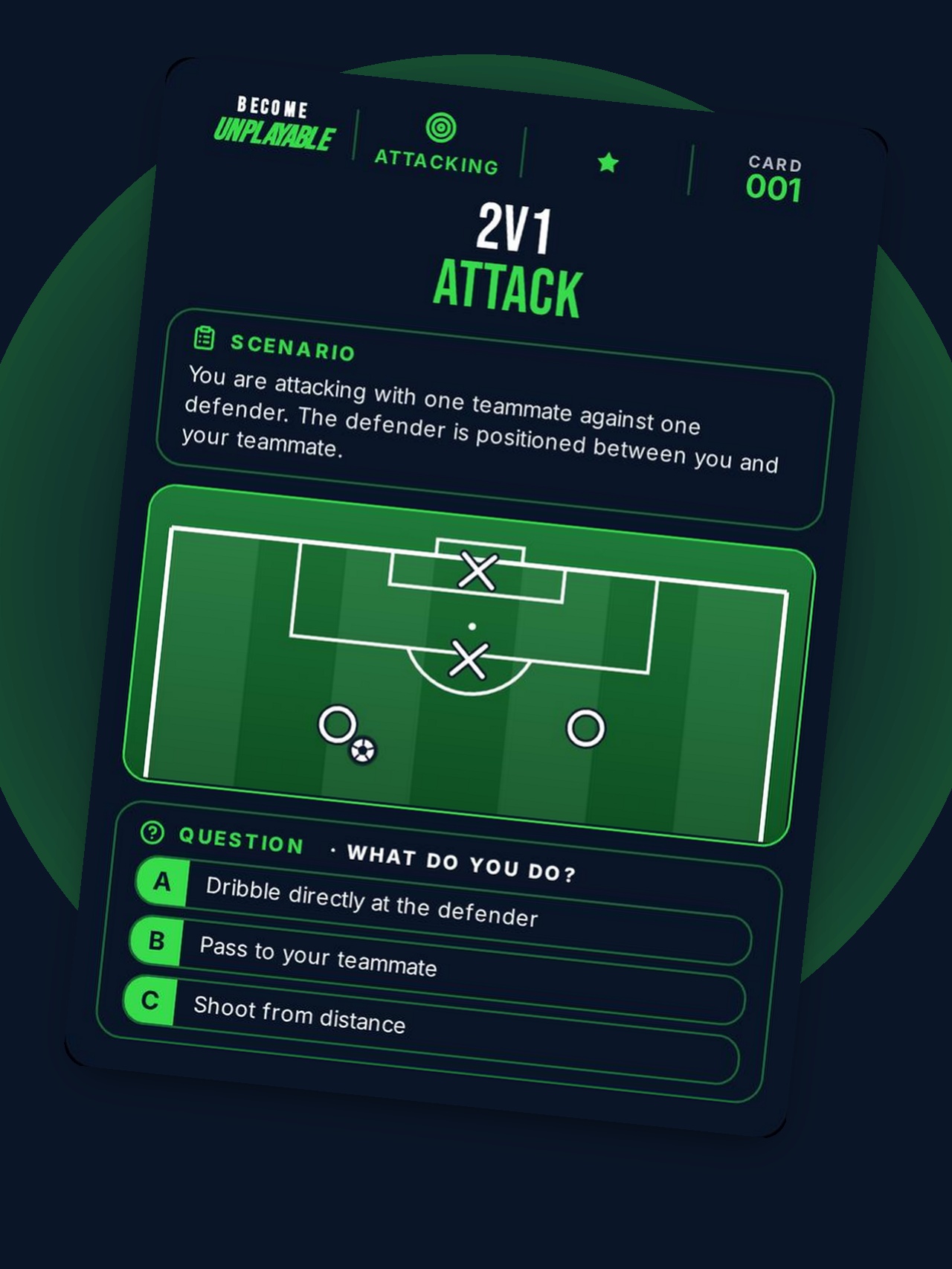
A moment to discuss

What do you think your child would do here?

Imagine the ball is with your child's teammate on the wing, just inside the opposition's half. One defender is tightly marking the teammate. Your child is a few yards away, slightly behind their teammate. What do you think your child would do here?

There isn't a right or wrong answer — the value is in the conversation that follows.

Common questions

Why do young footballers struggle with 2v1 situations?

Young players often struggle with 2v1s because they need to quickly identify optimal space, communicate with movement, and read the game under pressure—skills that take time to develop. They might focus too much on the ball, miss scanning the field, or misjudge where to position themselves effectively.

How can I help my child understand 2v1 situations without coaching them?

Instead of coaching, observe their games and ask open-ended questions about specific moments. For instance, 'What did you see when your teammate had the ball and one defender?' or 'What options did you think you had in that moment?' This helps them reflect on their decisions and understanding without feeling lectured.

Is it normal for a child to get in the way during a 2v1?

Yes, it's very common. Children are still learning spatial awareness and how their movement affects others. They might want to help but haven't yet mastered the timing or positioning to be effective, sometimes even running into the same space as their teammate or the defender.

About the author

Become Unplayable

Become Unplayable creates tools and resources designed to help young footballers think about the game, understand situations and develop better decision-making habits.

The card game that teaches kids how to think like a footballer.

Help young players improve their decision-making, positioning, teamwork and football intelligence through fun match-day scenarios. Designed for ages 7–13. No coaching experience required.

Become Unplayable Foundation Pack cards and box

Join the waiting list

By joining you agree to receive Become Unplayable updates by email. Unsubscribe anytime.

Continue reading

More from The Playbook to help you understand your young footballer.

Back to The Playbook

Explore all our articles for parents of young footballers.