Every parent watching from the touchline has had that moment. The ball is locked on one side of the pitch, perhaps near your child. Defenders are rushing in, bodies everywhere. But then you glance across the pitch, and there he is: your child’s teammate, completely unmarked, waving his arms in acres of space. From your vantage point, the solution seems so clear: 'Just switch it!' you might think. But the pass never comes, or it goes astray, and the moment is gone.
It’s easy for us, with a full overview of the game, to spot these opportunities. For a young footballer, however, seeing that big picture and executing a precise pass under pressure is much harder than it looks.
The Tunnel Vision Trap: What They See
Imagine your child is dribbling, looking up, but all the immediate danger is right in front of them. Their focus narrows to the ball, the nearest opponent, and perhaps a teammate within a few yards. This isn't a lack of awareness, but a natural response to pressure. The brain prioritises immediate threats. It takes significant practice and development for a child to process information from the entire width of the pitch while simultaneously controlling the ball and making decisions.
They might literally not see that free player on the opposite wing because their eyes are fixed on the battle unfolding directly around them. Scanning the pitch effectively, especially under pressure, is a skill that develops over many years.
The Challenge of Execution: Making the Pass
Even if your child spots the open player, the next hurdle is the execution. Switching the play often requires a longer, more powerful, and accurate pass – perhaps with their weaker foot, or from an awkward body position. It’s not just about seeing the option; it’s about having the technical ability and confidence to attempt it under match conditions.
Many young players will opt for a safer, shorter pass to a nearby teammate, even if it’s into a crowded area, simply because it feels more achievable and less risky than trying a difficult cross-field ball. Losing possession from a long pass can feel worse than losing it in a tangle of legs.
Understanding the Reward: Attacking Open Space
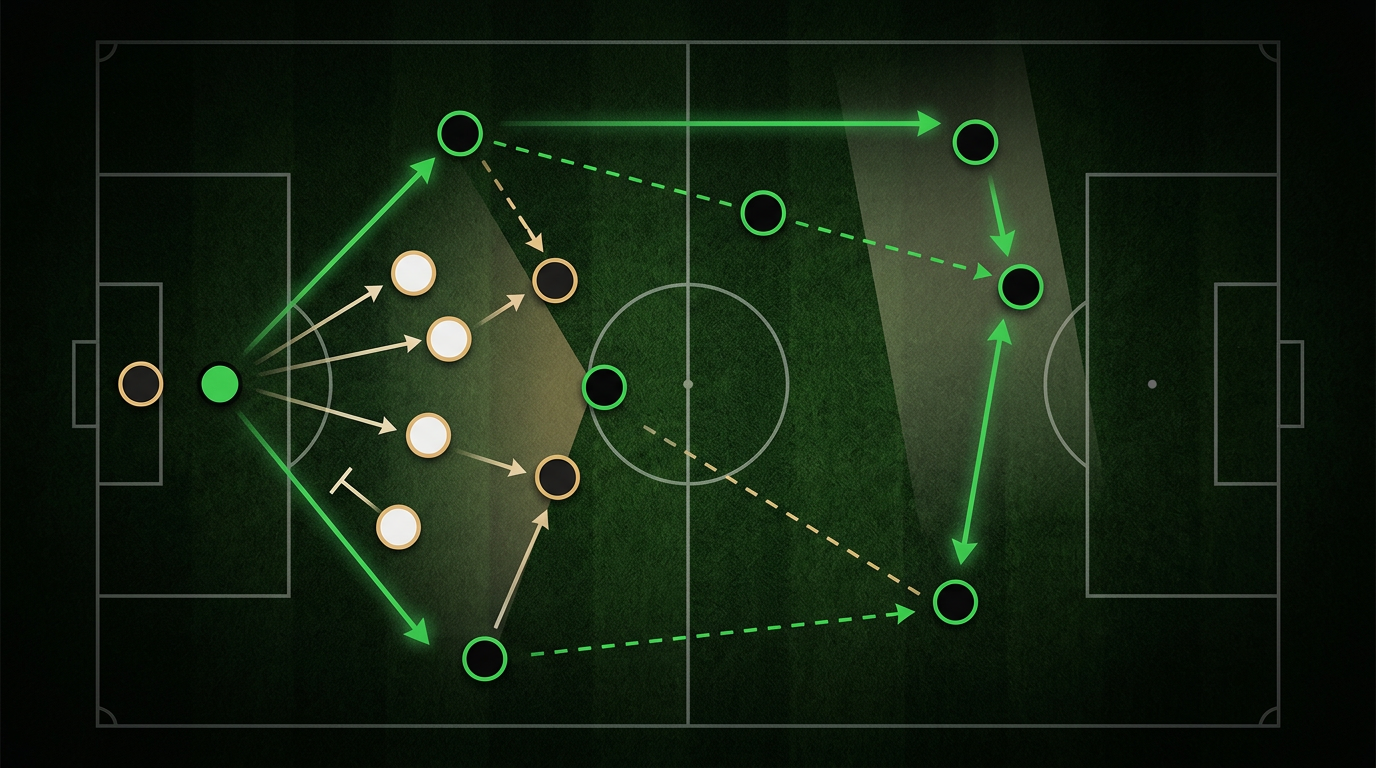
The concept of 'attacking where the defenders aren't' is a cornerstone of football strategy. When a team's defence shifts over to one side, they naturally leave space elsewhere. A well-executed switch of play forces the opposition to scramble and reorganise, creating immediate attacking opportunities.
For younger players, this understanding is often intuitive but not yet strategic. They might feel the pressure of the crowd but not yet fully grasp the tactical advantage of moving the ball quickly to the empty side. It’s a sophisticated concept that comes with experience and coaching, but it starts with simply noticing the space.