How to Teach a Child to See the Whole Pitch in Football

By Become Unplayable Team· 17 August 2026· 5 min read
How to Teach a Child to See the Whole Pitch in Football — Become Unplayable Playbook

Practical advice for parents and coaches on how to help young players improve their pitch vision, scanning, and spatial awareness to make better decisions.

How do I teach my child to see the whole pitch when playing football?

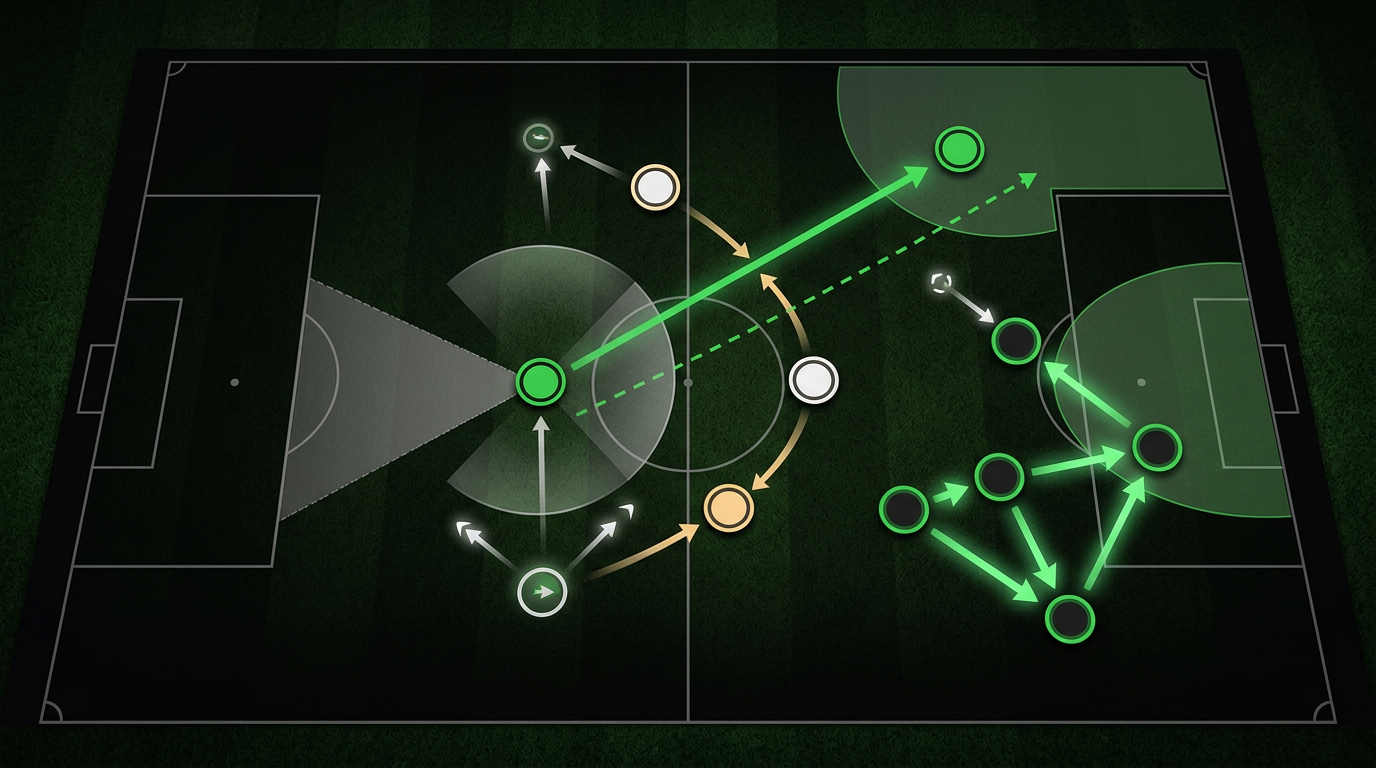
To teach a child to see the whole pitch, focus on developing the habit of 'scanning'—frequently looking around before they receive the ball. This builds a mental map of where teammates, opponents, and space are. Encourage them to take a 'picture' of the pitch before acting. This is more effective than telling them to 'get your head up' once they are already on the ball, as the key information is gathered before possession.

Helping a young player develop the ability to 'see the pitch' is less about literal eyesight and more about teaching them when and where to look to build a picture of the game around them.

What Does 'Seeing the Pitch' Really Mean for a Young Player?

For a young player, 'seeing the pitch' does not mean having a perfect, bird's-eye view of all 21 other players. It means developing an awareness of their immediate surroundings and the most important tactical elements. It’s the ability to gather crucial information in the moments before and as they receive the ball to make a good decision. This process involves two key components: scanning and spatial awareness.

How Can Young Players Learn to Look Up More Often?

Young players often stare at the ball because they are concentrating on their first touch or are worried about losing control. To encourage them to look up, we must build their confidence and shift their focus from the ball itself to the pictures around it. The key is to encourage looking *before* the ball arrives.

  • **Praise the Look, Not Just the Pass:** When you see a player check their shoulder, praise that action specifically. Say, “Great look before you got the ball!” This reinforces the process, regardless of whether the subsequent pass was successful.
  • **Use Simple Cues:** Instead of complex instructions, use short, memorable cues. “Scan,” “Picture?” or “Shoulder?” are quick reminders that prompt the action without distracting from the game.
  • **Reduce Technical Fear:** In training, let players practice receiving the ball without the immediate pressure of a defender. This allows them to focus their attention on looking up first, then controlling the ball, building the correct sequence in a less stressful environment.

What are Practical Ways to Improve Spatial Awareness?

Coaches and parents can use simple games and constraints in training to naturally develop a player's awareness of space. The goal is to create environments where looking around is not just helpful, but essential to succeed.

For Coaches: Training Ground Practices

  • **The 'Two-Colour Bib' Game:** In a simple possession game (e.g., a rondo or 4v4), have players wear bibs that are a different colour on the front and back. Before they can pass, they must call out the colour of a teammate's bib they are *not* passing to. This forces them to look away from the ball and their immediate target.
  • **Numbered Cones:** Place four different coloured or numbered cones around the edge of a playing area. As a player receives the ball, the coach shouts a colour or number. The player must take their first touch towards that cone. This connects a visual search with their first action.
  • **Gates to Score:** Instead of large goals, use multiple small 'gate' goals (two cones a metre apart) that players can pass through to score a point. This encourages them to constantly look up to see which gate is open.

For Parents: How to Help from Home

Parents can play a huge role by fostering a thinking mindset away from the pitch, without becoming a sideline coach.

  • **Watch Football Together:** When watching a match on TV, occasionally pause it just before a player receives the ball. Ask your child, “What have they seen? Where could they go next? What would you do?” This develops their analytical eye in a no-pressure setting.
  • **Ask Better Questions:** After a match, instead of “Did you score?”, try asking, “Was there a time you saw a great pass but it was too risky to make?” or “What was the space like in midfield today?” This encourages reflection on awareness and decision-making.
  • **Play in the Garden:** Simple games of 'keep-away' or piggy-in-the-middle, even with just three people, are fantastic for developing awareness. The player in the middle is constantly scanning and anticipating.
Related reading

Common questions

How do I teach my child to see the whole pitch when playing football?

To teach a child to see the whole pitch, focus on developing the habit of 'scanning'—frequently looking around before they receive the ball. This builds a mental map of where teammates, opponents, and space are. Encourage them to take a 'picture' of the pitch before acting. This is more effective than telling them to 'get your head up' once they are already on the ball, as the key information is gathered before possession.

At what age should players start learning about scanning?

Players can start learning the basic concept of scanning from as early as U8 or U9. Initially, it's just about encouraging them to look before they get the ball. As they get older (U10-U12), coaches can introduce more detail, explaining what they should be looking for—space, teammates, and pressure. The key is to build the habit early in a simple, positive way.

What are good verbal cues to encourage scanning?

The best cues are short, simple, and timely. Instead of shouting instructions, try quick prompts like “Scan!”, “Picture?”, or “Check your shoulder!” just before the ball travels. Another effective technique is to ask a question after the action, such as “What did you see behind you?” This encourages them to reflect on what information they are gathering.

My child just stares at the ball. How can I break this habit?

This is very common and usually stems from a focus on technical control. To break the habit, praise the act of looking, not just the outcome. Use games that force looking, like requiring them to call out a teammate’s name before passing. Most importantly, ensure they practice in low-pressure situations where they feel confident enough to lift their eyes from the ball without fear of losing it.

Are there specific drills for young footballers to develop pitch vision?

Yes. Effective drills create problems that can only be solved by looking. For example, possession games with 3 or 4 teams in one area force players to constantly check for different coloured bibs. Using multiple small 'gate' goals instead of one large goal rewards players for spotting open passing lanes anywhere on the pitch. The key is to design practices where awareness is the primary route to success.

About the author

Become Unplayable

Become Unplayable creates tools and resources designed to help young footballers think about the game, understand situations and develop better decision-making habits.

The card game that teaches kids how to think like a footballer.

Help young players improve their decision-making, positioning, teamwork and football intelligence through fun match-day scenarios. Designed for ages 7–13. No coaching experience required.

Become Unplayable Foundation Pack cards and box

Join the waiting list

By joining you agree to receive Become Unplayable updates by email. Unsubscribe anytime.

Continue reading

More from The Playbook to help you understand your young footballer.

Back to The Playbook

Explore all our articles for parents of young footballers.