When we think of 'drills', we often picture players queueing up to perform a single, repetitive action. While these have a place, the most beneficial practices for young players look and feel much more like the game itself.
What Makes a Good Football Drill for a Child?
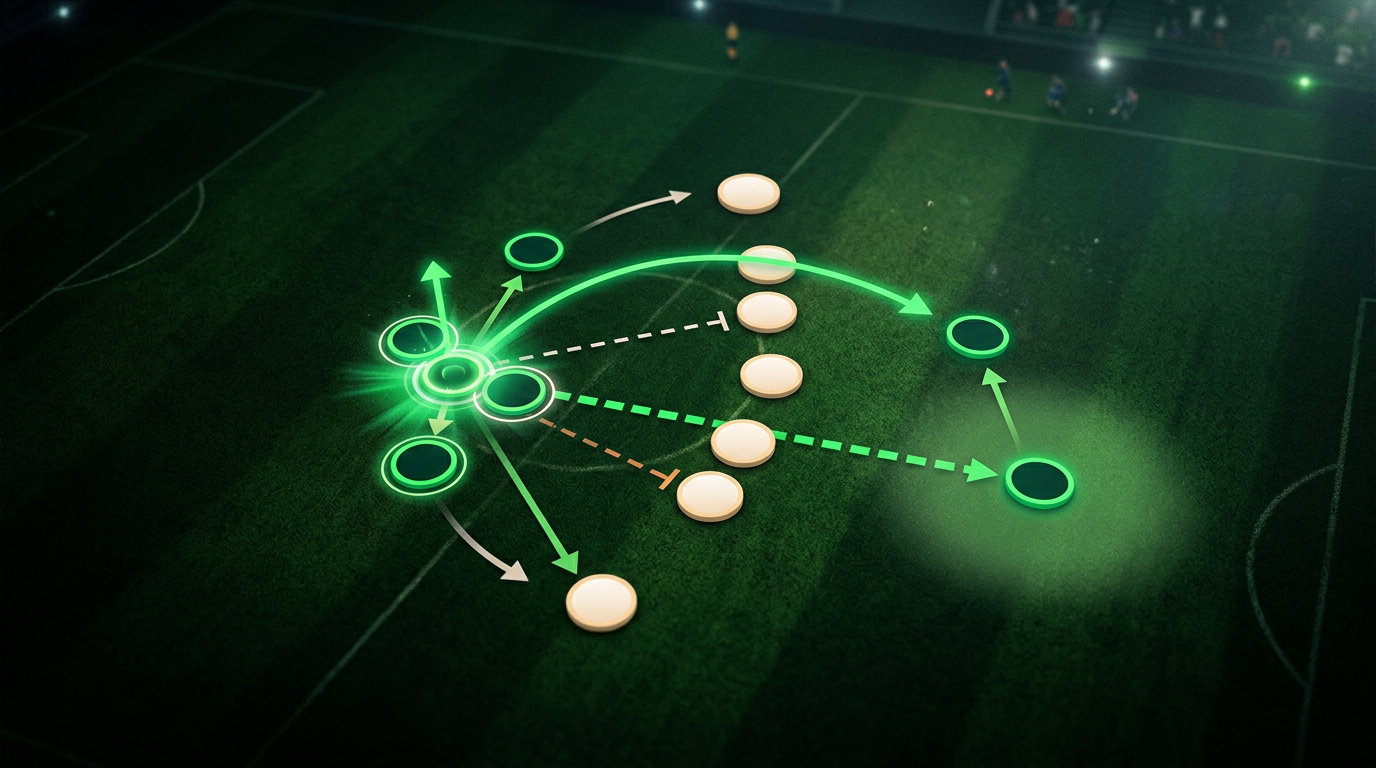
A good football drill for a child is one that doesn't feel like a drill at all. It should be engaging, challenging, and directly related to the situations they will face in a match. Old-fashioned drills with long queues and no opposition teach players to perform a skill in a vacuum. Modern, game-like practices create adaptable thinkers.
- **It's Game-Like:** It includes opposition (defenders) and a clear objective (e.g., scoring in a goal, keeping possession).
- **It Involves Decisions:** The player must read the situation and make choices. Pass or dribble? Shoot now or wait?
- **It's Fun:** Children learn best when they are enjoying themselves. Use imagination, stories, and friendly competition.
- **Lots of Touches:** Players should be constantly involved, not standing in a line waiting for their turn.
- **It's Safe and Inclusive:** Every child feels involved and has a chance to succeed. The focus is on development, not on winning or losing the drill.
Fun Football Drills by Age Group
Children's abilities and concentration spans change dramatically as they grow. A great activity for a 12-year-old would be unsuitable for a 6-year-old. Here's how to adapt.
Ages 5-8: Fun and Imagination
At this age, the focus is purely on fun, building comfort with the ball, and learning basic movements. Use stories and imagination to frame activities.
- **Sharks and Minnows:** Each player (a 'minnow') has a ball. One or two players without a ball (the 'sharks') try to tackle them and kick their ball out of a defined area. It's a fun-filled way to teach dribbling, awareness, and changing direction.
- **Gates:** Set up lots of small 'gates' (two cones a metre apart) around an area. Players score a point by dribbling through a gate. This encourages them to lift their head to find the next gate.
- **1v1 to Two Goals:** Two players, one ball. Place two small goals at each end of a small area (e.g., 10x15 metres). The attacker tries to score in either goal, while the defender tries to win the ball and do the same. This introduces the core principles of attacking and defending in a simple, dynamic way.
Ages 9-12: Introducing Game Intelligence
Players can now handle more complex situations and begin to develop a better understanding of teamwork and space. Game-like practices are essential here.
- **Rondos (Keep-Ball):** The classic 'piggy in the middle'. Start with 4v1 or 5v2 in a circle or square. The players in possession try to keep the ball away from the defenders. This is superb for passing, receiving, movement, and decision-making under pressure.
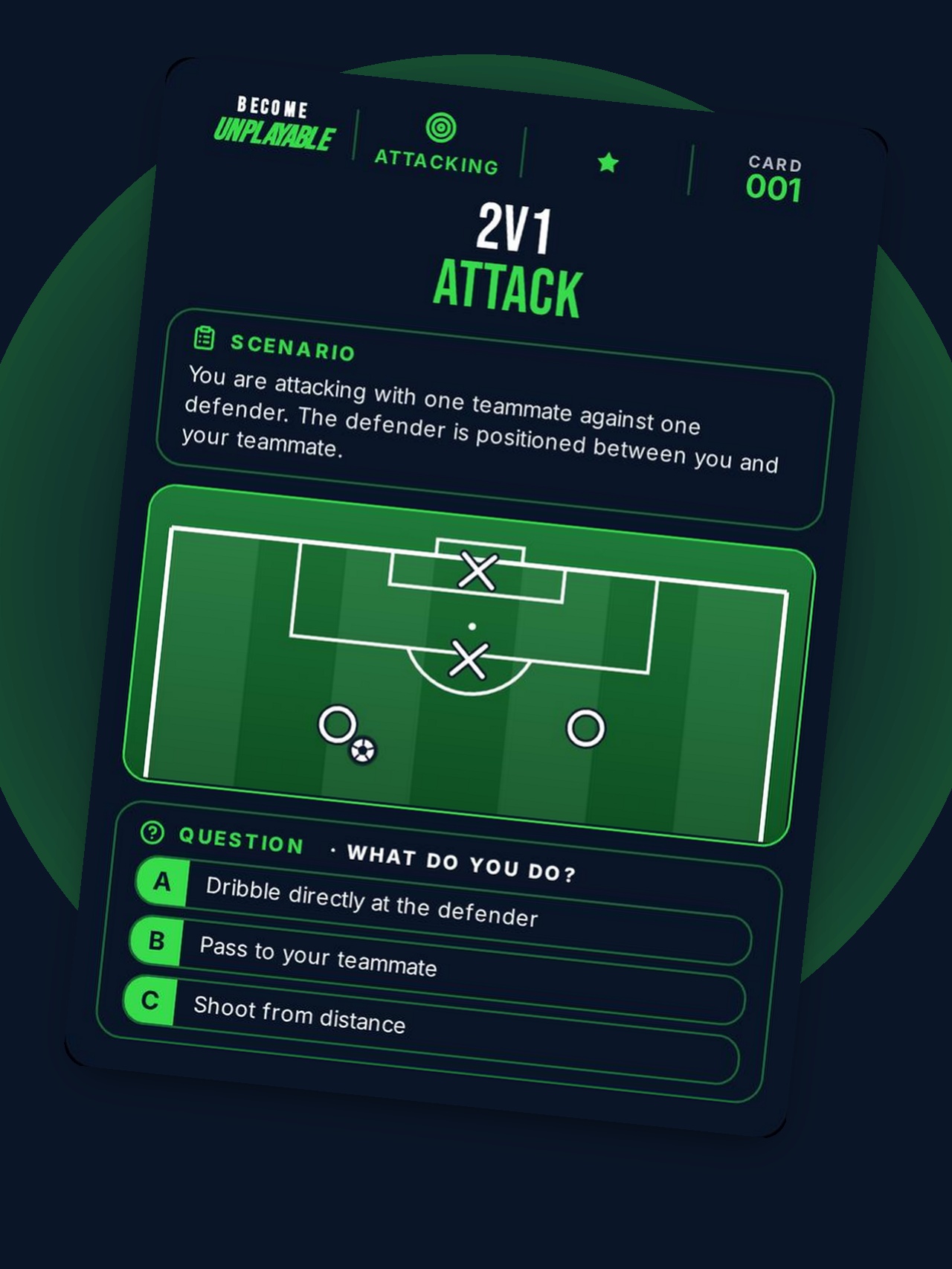
- **2v1 / 3v2 Overloads:** Set up a playing area with a goal at one end. Attackers start from the halfway line and try to score. This forces the attackers to make decisions about when to pass and when to dribble, based on the defender's position.
Ages 13+: Tactical Understanding
Older players can work on more specific tactical elements within larger games. The principles remain the same: make it game-realistic and decision-focused.
- **Possession vs Transition Games:** A 6v6 game in a tight area where one team of 6 tries to keep the ball. When the other team of 6 wins it, they must quickly try to score in one of two mini-goals at either end. This teaches the difference between patient possession and a fast counter-attack.
- **Pattern Play with Opposition:** Practice a specific attacking pattern (e.g., a full-back overlap), but always against live defenders who are trying to stop it. This is much more effective than running through the pattern unopposed.
What Drills Can We Do in the Garden?
You don't need a full squad or a pristine pitch. Simple garden games can be incredibly beneficial, as long as the focus is on fun and encouragement. The parent's role is to be a supportive partner, not a critical coach.
- **Wall Ball:** Passing a ball against a wall is a classic for a reason. It's excellent for improving first touch and control. Encourage using both feet. To make it a game, see how many you can do in 30 seconds.
- **Keep-ups:** Juggling the ball improves touch, balance, and coordination. The key is perseverance. Start with one bounce, then try two.
- **Mini 1v1s:** Use jumpers for goalposts and play. This is perhaps the most fun and effective practice of all. It teaches dribbling, shielding, and shooting in a dynamic, competitive way.
Should Young Children Do Fitness Drills?
No, young children should not do dedicated fitness drills like running laps or shuttle runs. This kind of training is demotivating and unnecessary for their development. A well-designed, game-based session provides more than enough physical activity. Small-sided games, with their constant starting, stopping, and changing of direction, are a form of high-intensity interval training in themselves—but the kids just think they're having fun playing football, which is exactly how it should be.
How Long Should a Kids' Football Drill Last?
Keep activities short and sharp to maintain engagement. A single drill or game should last between 8 and 15 minutes. It's better to have four different 15-minute activities than one hour-long drill. Total session length should also be age-appropriate: 45-60 minutes is plenty for 5-8 year olds, while 75-90 minutes works well for players aged 9 and older. Always allow for drink breaks between activities.