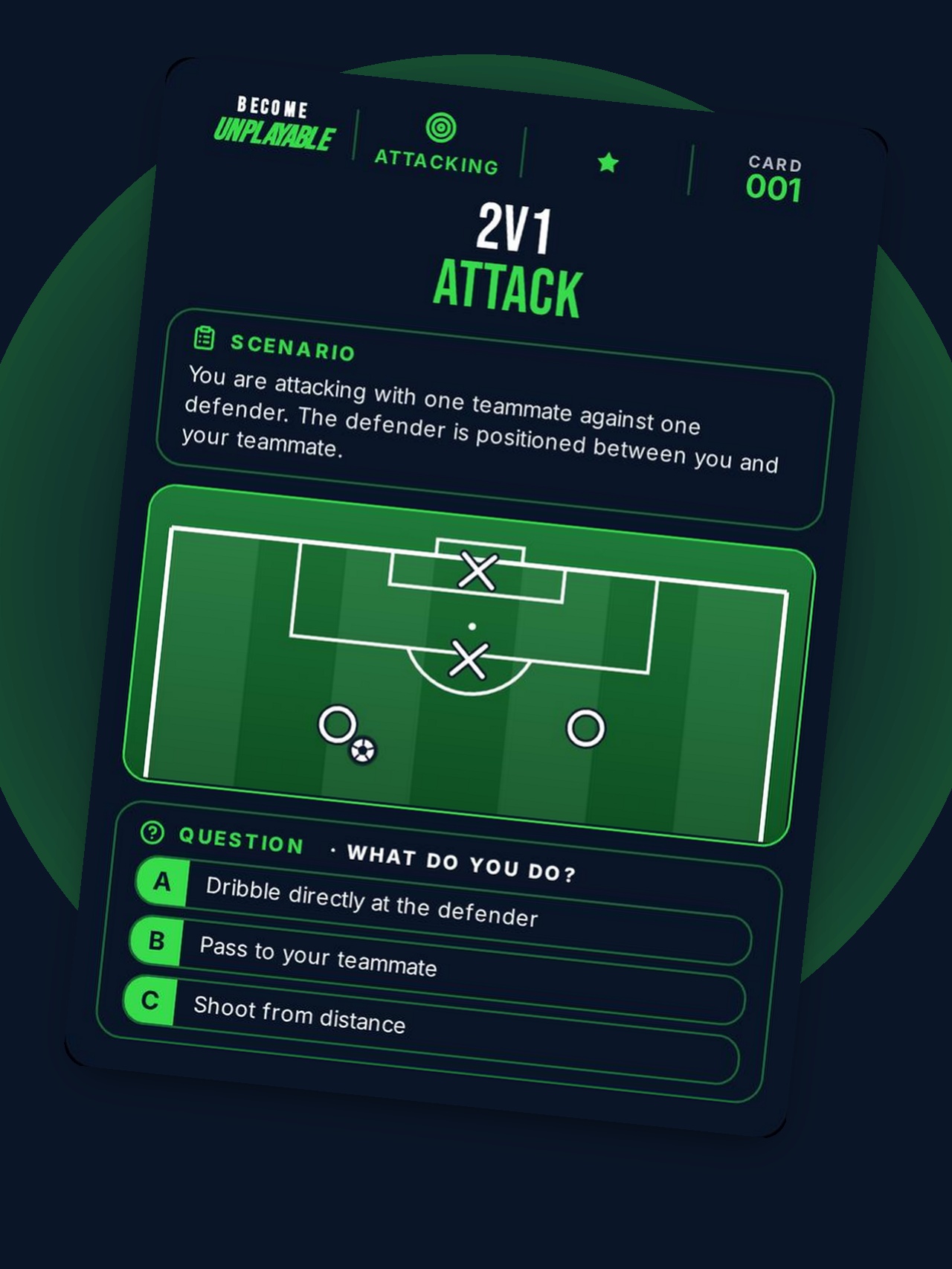
The move to 9-a-side football for U11 and U12 players marks a significant step in a young player's development. The pitch gets bigger, there are more players on the field, and the game becomes faster and more complex. Drills that simply focus on technique in isolation are no longer enough; practices must now help players understand space, time, and the decisions that the 9v9 game demands.
What Makes a Good Drill for U12s?
A good drill for this age group presents players with problems that they will face in a match. Rather than pre-programmed patterns with no opposition, effective practices include opponents, a clear direction (like scoring in a goal or passing to a target), and choices for the player on the ball. The move to the larger 9v9 pitch means space is the most important new factor. Drills must help players learn to recognise, create, and exploit this space, moving beyond the congested feel of 5v5 and 7v7 football.
How Do You Practise Switching Play at U12?
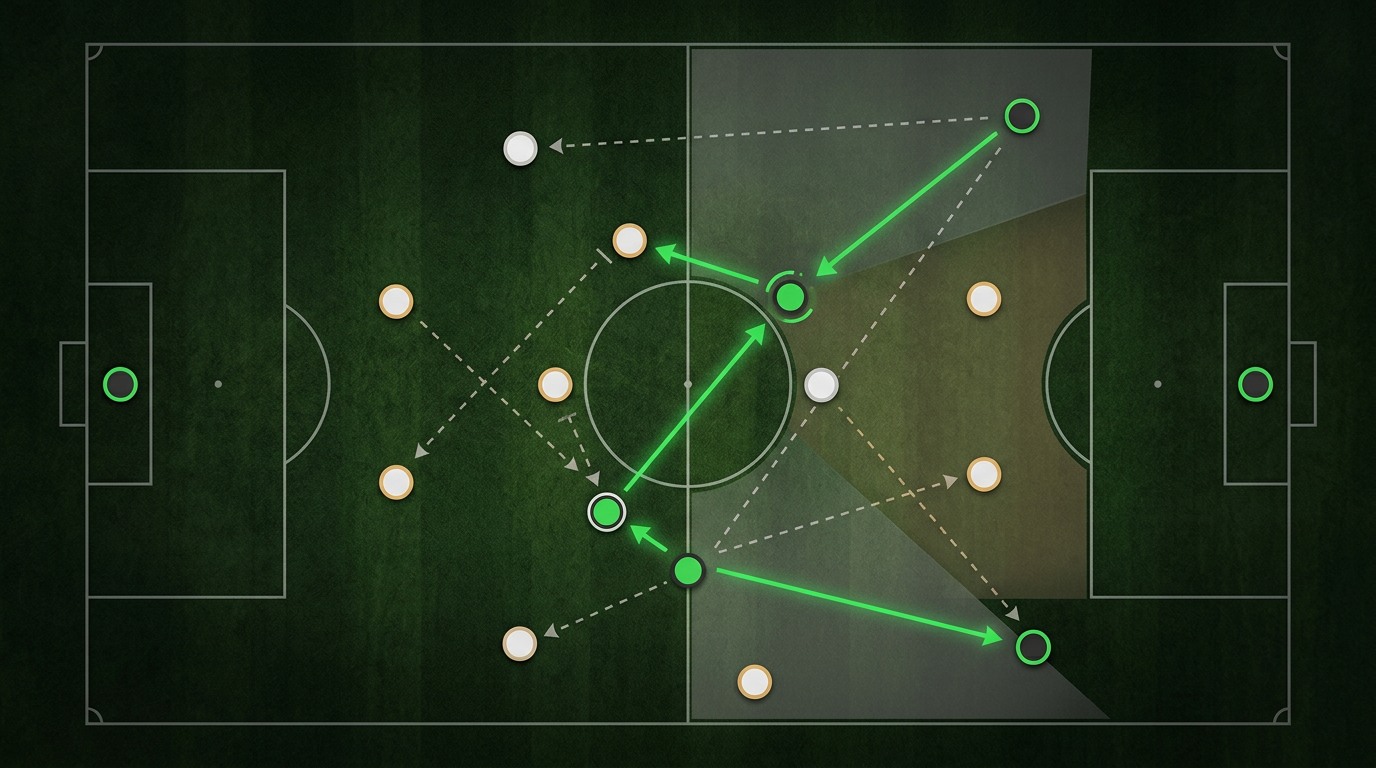
Switching play is moving the ball from one side of the pitch to the other, usually with a longer pass, to get away from defensive pressure and attack weaker areas. It becomes essential at 9v9 because there is more space to exploit. You can practise this with a possession game designed to reward players for recognising the opportunity to switch.
How Do You Improve Decision Speed at U12?
Improving decision speed is not about forcing players to rush. It is about helping them see the game earlier so they have more time to think. This is achieved by developing the habit of scanning. Good players are constantly taking quick looks around before they receive the ball, building a mental map of where their teammates, the opposition, and the space are.
Rondos ('piggies in the middle') are one of the best tools for training this. A simple 5v2 rondo in a small circle naturally encourages scanning. With two defenders closing them down quickly, the players in the middle must look before the ball arrives to know where their next pass is going. This directly trains the habit of thinking one step ahead.
What Does 'Receiving on the Half-Turn' Mean?
This fundamental technique becomes crucial on the bigger 9v9 pitch as it is the key to playing forwards quickly.
When a player receives the ball facing the person who passed it, their only options are to pass back or sideways. By opening their body 'on the half-turn', they can see options in front of them and can use their first touch to move into space or play a forward pass. This simple adjustment is vital for linking the defence with the attack and helping the team progress up the pitch.
What Parents Can Do
Your role is to encourage your child's thinking, not to give them answers from the sideline. Shouting "Switch it!" during a match adds pressure and bypasses their own decision-making process. Instead, use questioning after the game to prompt reflection. Ask things like, "It looked crowded in midfield today, did it feel that way?" or "Was there much space on the other side of the pitch?" This helps them recall and analyse game situations, reinforcing the ideas their coach is working on in training.